Showing posts with label psychedelic. Show all posts

Monday, November 15, 2010

Miles Davis-On the Corner (1972)


There's no introduction necessary, is there? I mean, he's MILES. But I wanted to draw some attention to this one, which kind of seems like one of those "lost" albums that a minority discover in a classic musician's massive discography. I'm probably wrong but that doesn't change how fucking incredible this is. Possibly more psyched out than "Bitches' Brew." Essential.

Vote for Miles

Wednesday, November 10, 2010

Purling Hiss-S/T (2009)


From the label...

"Purling Hiss has recently released records on Richie and Woodsist and garnered rave reviews from just about everybody who's heard 'em. This eponymous album is where it all began! Here's the story: Purling Hiss is the side-project of Holy Mountain recording artists Birds of Maya guitarist Mike Polizze. Birds of Maya are a full-on psychedelic rock band from Philly. Apparently, Birds just aren't full-on enough to satisfy Polizze's far-out tendencies. On his debut solo record Polizze plays bass drums and guitar relentlessly as if he's playing to save his life. For Fans Of- Birds of Maya Earthless, Loop, High Rise, Les Rallizes Denudes, and lo-fi, blown-out psych. Obviously, this one comes highly recommended." - Permanent Records

If you are fiending for some over the top guitar driven psych, this shall surely do the trick. Intense

Buy it HERE

White noise machine

Tuesday, April 20, 2010

Sleep-Dopesmoker (2003)


"When my all-smiling, all-visionary, all-grimming partner in sonic grime Stephen O’Malley (Khanate, Sunn0))), Burning Witch) sent me this Sleep album as a gift late last year, I immediately thought it was the most ground-breaking record in years because it took an essentially unmeditational musical form (i.e. early Black Sabbath) and sacralised it into the highest form of barbarian sonic code you could ever wish to trip out to. It monged my senses within the first five minutes, then set about my inner structures with sheer weight of adamant repetition and monotony. The CD featured one 60-minute long Sabbath Re-hash plus a nine minutes live-in-concert extra to wake you at the end in case you’d fallen asleep under the sonic assault of the main track and your home was burning down. What pragmatic motherfuckers, I thunk to myself. You could chew up some of the good hash and neck a few beers and lie in bed and sleep to it, leave your body to it, probably even shag to it though I was too busy to set up such an experiment. But it was such a forever trip that the whole room, nay the whole of my life, soon became secondary to this one seemingly eternal track. It was neither fast nor slow, operating somewhere between Black Sabbath’s own self-titled track from their first LP and the Flower Travellin’ Band’s own more ambient sludge-trudge version of the same song from their 1970 LP ANYWHERE, then gradually building into a rhythm something akin to MASTER OF REALITY’s ‘Lord of this World’ and ‘Into the Void’. However, there was herein an added bonus in the drumming of Chris Hakius, whose utter relentlessness allowed the sound to transcend Sabbath considerably and obtain a total hold on this listener’s mind. After hearing so many recent so-called Sabbath imitators whose muse really appealed to me intellectually but always ultimately failed to make me instant replay the suckers (Boris, Electric Wizard, Gonga), this Sleep album seemed to be the realest of real shit and then some… And as a Krautrocker who’d always professed to have preferred UFO-period Guru Guru’s extended Sabbalongs more than the real thing, I realised that these San Jose lunatics had taken their own proto-metal into much the same ‘LSD-March’ type territory, then continued out of that track’s city limits across the railways tracks and out into nether lands that even Mani Neumaier woulda never thunk to venture. Furthermore, the lyrics (all ten repeated lines or so) were the kind of accessible pseudo-religious genius that started genuine religions:
‘Drop out of life with bong in hand
Follow the smoke to the riff-filled land
Drop out of life with bong in hand
Follow the smoke to the riff-filled land…

Proceeds the Weedian – Nazareth
Proceeds the Weedian – Nazareth…’

New lows in redundant amphibian shamanism or watt, Motherfucker! Gimme gimme gimme, and then gimme some more. When I was a kid making 1/72 scale model plane kits by Airfix and Revell, I used to paint flies with Humbrol gloss and watch them drag themselves around slower and slower until they… finally… dried up underneath the sheer weight of the glossy overalls I’d painted them into. Now, listening to DOPESMOKER, I was a fly dying of paint inhalation and loving every exoskeletally en-crisping moment. Lying comatose and aware of nothing but the thousands of glow-in-the-dark stars on my bedroom ceiling, I wondered what could have been behind such a fundamentalist statement as DOPESMOKER. Of its three creators, I visualised them (in my hash-mashed mind’s eye) inhabiting a world in which the first four Black Sabbath LPs - BLACK SABBATH, PARANOID, MASTER OF REALITY and VOLUME 4 – had become sacred testaments on which to base their entire belief system (this wasn’t really too hard to envisage – Mormonism and Rastafarianism were based on far less). But then, as I sunk deeper into Sleep’s San Jose psyche, I began to think… imagine that you first came to these four Sabs LPs not in their British Vertigo swirl guises, but in their U.S. Warner Brothers versions, with the first LP losing its gatefold and (therefore) controversial inverted cross, but (more positively) side two opening not with the original slightly incongruous Fontana 45 ‘Evil Woman, Don’t You Play Your Games with Me’ but with the far more typically doomaholic stop-start Iommi-heavy multi-parted B-side ‘Wicked World’ – an altogether more auspiciously damned beginning to side two of such an iconic rock’n’roll debut. Imagine, if you will allow me to continue this metaphor, that being a teenage American stoner and already of the opinion that, being in possession of the aforementioned 4 LPs, you have your hands on some sort of holy sonic reliquary umpteen times greater than Islam’s piece of sacred meteorite at the centre of Mecca’s Haram enclosure, you begin as time goes by to read more and more into the titles of those ‘extras’ that Warner Brothers had insisted Black Sabbath added to their tracklisting to stop the general public from thinking they wuz buying some too-short LPs. And imagine that the addition of those extra U.S.-only titles on BLACK SABBATH (‘Wasp’, ‘Bassically’), PARANOID (‘Luke’s Wall’, ‘Jack the Stripper’), MASTER OF REALITY (‘The Haunting’, ‘Step Up’, ‘Deathmask’) and VOLUME 4 (‘The Straightener’, ‘Everyday Comes and Goes’) to the already murky official Sabbath tracklisting contributed further confusion to the thorny question of exactly when songs ended and others began, so much so in fact that each already oft-changing riff-o-thon now appeared to meld seamlessly and tidally, each into the next until your teenaddled stoner cranium saw, heard and inhaled it all as a single ever-undulating ever-spiralling ever-squirming Midgardian Worm of sonic oil spill building and building layer upon relentless layer on a seashore until the whole beachscape, complete with sunbathers, coastguards and concession stands, had been lacquered under a one-metre-thick obsidian black layer of petrified chemo-gunk… I visualised Sleep in their pre-Sleep configuration, their teenage stoner minds fixating collectively on these first four Sabbath LPs to such an extent that certain repeated words in the song titles became iconic mantras to be treated (Brigit Riley-stylee) as repeatable motifs almost in the psychedelic manner of 6,000-year-old Western Atlantic passage grave art. In this mood, titles such as ‘Sweetleaf’, ‘Behind the Wall of Sleep’, ‘Planet Caravan’, ‘Under the Sun’, ‘Warning’, ‘Snowblind’,1 ‘Luke’s Wall’, Supernaut’, ‘A Bit of Finger’, ‘Tomorrow’s Dream’, ‘The Wizard’; each becomes a useful jugglable commodity on which to hang your own variant of Geezer’s lyric, of Iommi’s heavy up-the-neck wound-string S.G. riffs and of Bill’s Bible-throwing drum fills. I heard evidence within these Sleepian grooves that a genuine cult had grown up in San Jose, a cult dedicated to the results of Black Sabbath’s controversial decision to rip off2 a song title (‘Sweetleaf’) from Clear Blue Sky, their eighteen-year-old Vertigo label-mates, and write it not as a soft homage to grass but as a riff-heavy ‘Pot as THEE Sacrament’ John Sinclair/MC5ian-type Odin-receiving-the-wisdom-of-Urd’s Well thank you thank you you-saved-my-life Shaman’s gift to the Goddess eulogy. I imagined that on hearing Ozzie’s echoplex’d coughs at the beginning of the song, and the desperation in his voice when he sung to Sweetleaf ‘I love you… you know it… my life was empty… my life was down… my life is free now’, the Cult-that-would-become-Sleep had heard it as such a rallying cry from within that it finally motivated their otherwise Total Pot Refusenik Butts enough to get up from the couch long enough to lay down some extreme sonic monotony on behalf of the Vegetation Goddess who had spoken so eloquently to them, their few close stoner mates, and Messrs. Osbourn, Butler, Iommi and Ward. But after I’d imagined all of the above, I had to stop imagining such things because this thing had actually happened and the results were amazing.

Then came the cruncher… this DOPESMOKER album was an old recording from 1995CE, and was the culmination of years of Sleep’s collective (and terminal) Sabbophilia. Yup, there was loads more great Sleep stuff AND they’d stuffed their record company (London Records) with this sucker by scoring unbelievable amounts of the green, inhaling it all then buying even vaster amounts of the Orange (amplification, that is) and recording one 52-minute track entitled ‘Jerusalem’ which they then delivered to London Records on a DAT tape contained in a porcelain skull bong wearing a U.S. military police helmet. Legal wrangling took over and miserable London Records suits wearing extremely brown trousers eventually dropped the band, who had on their hands the greatest bootleg since High Rise’s aberrant live double NOT WEARING A HARD HAT IN A HARD HAT AREA (THAT HARD). I needed to do some sonic investigation and I knew it would be one of the great joys of recent history. Indeed, it was…" - The one and only Julian Cope, Head Heritage

What can you say about a classic that hasn't already been said? So sludgy, so droney, so amazing. Mandatory for those looking to be pummeled with epic stoner riffs and guitar tones that could start an earthquake. And that bass rig, holy shit. Tasteful tribal drumming to top it all off, what more do you need? Wow.

Sleep

Tuesday, April 13, 2010

Bill Holt-Dreamies (1973)


"Inspired by the aural collage of the Beatles' "Revolution Number 9," as well as the musique concrete of composers such as John Cage and Terry Riley and Bob Dylan's conscientious rock lyricism, Bill Holt quit his straight job in 1972 to follow his musical muse, hoarding various electronic gadgets and an acoustic guitar and holing up in his basement. He emerged a year later with Dreamies, one of the finest pieces of experimental pop from the era. Unlike the Beatles' White Album collage, though, the pair of sidelong, 26-minute epics -- "Program Ten" and "Program Eleven" (as if progressing directly from "Revolution Number 9") -- that Holt created were much more than symbolic representations of the chaotic times. At its heart, the album is a blend of folk and pop/rock, and in many respects, Dreamies fits in with the singer/songwriter scene that flowered in the early '70s. Instead of relying simply on the juxtapositions of his sound samples to impart subjective meanings, Holt composed lovely, downhearted melodies (very much recalling John Lennon) and trippy lyrics as a jumping-off point for each collage and then let acoustic guitar guide them through the gauntlet of sound. In fact, "Program Ten" is a combination of two identifiable songs, "Sunday Morning Song" and "The User," the two melodies weaving in and out of the cacophony of noise-crickets, atmospheric sounds, a John Kennedy speech, NASA chatter, news reports, glass breaking, a thunderstorm, sports broadcasts, and gunfire while a synthesizer spits out spacey alien sounds or cuts like a kettle whistle, and an ominous bassline oscillates beneath it all. "Program Eleven" exchanges that white noise for airport sounds, creepy Sgt. Pepper-style chants that bubble up from beneath the single melody fragment ("Going for a Ride"), game show catch phrases, and popping corn. Of the two pieces, "Program Ten" is the more socially charged commentary, setting the innocent recollections of youth -- the sounds of summer and nature -- against the misanthropic confusion of war and politics to powerful effect. "Program Eleven" is more psychedelically eerie and haunting, aurally dense, and thick with bad vibes, but wonderful nonetheless. The spoken samples are mostly more buried in the background and difficult to make out. It adds both intrigue and mystery to the piece, a foreboding end to what began optimistically. The music, in other words, ingeniously mirrored the sort of evolution of consciousness that was so much a part of the era. Dreamies went virtually unheard when it was released, perhaps because it was the antithesis of commercial rock at the time, but, despite its grounding in the ambiance and issues of the '60s, it still sounds outstanding decades after the fact." - Allmusic

A wonderful piece of music. Found a section of Program 10 on Beyond The Wizards' Sleeve "Ark 1" and had to track this down. One of the earliest examples of sampling in modern music as well. Another highly recommended album.

Dreamin'

Monday, March 29, 2010

Harvester-Hemat (1970)


"Perhaps you read about or bought the Terry Riley-influenced Parson Sound double cd we've raved so much about? Well, Harvester (after releasing another LP under the full name of International Harvester -- reviewed elsewhere on our site) was a future development of the Parson Sound band. And after Harvester, they became the semi-legendary Trad Gras Och Stenar (Trees, Grass and Stones). Though we think the absolute best stuff we've heard from these guys dates from their Parson Sound incarnation, this disc is pretty darn cool too. Hemat ("Homeward") has been described by someone in the know as "mastodon waltz-drone / acid soaked free jam psychedelia." Which is not only a pretty accurate description, but also a cool phrase to quote. The disc starts with a lovely mellow hippy-folk tune that matches the dreamy landscape painting on the album's cover. Then with track two things get heavier and more Parson Sound-like. The mastodon waltz has begun, as flutes trill and Swedish freaks chant. The disc progresses into ethnic-tinged free rock/jazz ("Nepal Boogie") and even an unrecognizably drugged-out downer version of "Everybody (Needs Somebody to Love)". Loose and stoned this disc most certainly is, forty-one minutes of almost-lost music drifting through the haze of time to trip you out today. Recommended -- and get International Harvester and all the other related albums too!"-aQ

I don't know about you, but I cannot get enough of this early Swedish psych, especially from the Parson Sound family tree. This one drones and saunters all over the damn place and there's something about the way they do it that gives it an absolutely mystical quality. Highly recommended.

Nepal Boogie

Tuesday, March 23, 2010

Afflicted Man-The Complete Recordings (2007)


"Set out for obscurity and, without much need for luck, you’ll get there. Afflicted (later Afflicted Man) was the recorded moniker for one Steve Hall, who bashed his way through the ‘70s and early ‘80s with a series of self-released records that would touch on barmy punk, excessive high-power guitar psychedelia, and hometaper lunacy, never settling in one area for too long. Having discarded punk rock’s brevity and entry-level skill barrier by his second release, there wasn’t anywhere for him to go but in, and then right back out.

Even if they weren’t, Afflicted’s records come across as very personal affairs that erect a barrier of historical understanding between the listener and the performer. At one point or another, they’ve got plenty in common with late ‘70s ingénues like Vic Godard or Mark Perry, though the heart of these records lean back to an earlier brand of British rock musician, one caught between the coal mine and the pubs. Of course I’m talking about harsh, proto-punk outfits like the Hammersmith Gorilla and Third World War; the meandering liner notes to this fairly slapped together double-disc reissue mention them, the Deviants, Stack Waddy and Coloured Balls guitarist Lobby Loyde by name, and do so in every instance where it’s attempted to describe the music therein. Which is all fine and good, as there is a progression here from their works, but to figure him out, you have to unpack about a decade or two’s worth of outsider music that led up to Afflicted’s recorded output. The troll is at the foot of the bridge, no doubt, and it’s daunting to a casual observer, but by doing this work, you start to see connections where there couldn’t possibly be any. To say that his I’m Off Me ‘Ead LP has a lot in common with a visionary freak like Michael Yonkers is not so ridiculous, especially when you try to draw sonic comparisons between the two instead of geographical ones. But think of the rigors of obtaining obscure music in the early ‘70s, as opposed to the miracle of blogs full of whole albums ready for download, P2P networks, and the like. Today, influence often means a Frankenstein-style layering of ideas; musicians cherry-picking parts they like and throwing away the rest – more skill than soul. Back then, the effort and the smaller pool of stimulus to wade in asserts that influence was most likely absorbed rather than copped. Listening to Afflicted Man bears this notion out. There are ideas here that had to marinate for a while, and there are others that probably shouldn’t have gotten out at all, but despite the mod cons of an indexed double CD, you can’t understand the entire story if you choose to be selective about the music or its roots.

His songs’ reliance on repetition have as much to do with the limits of one man’s taste and abilities, along with the studio capabilities of the times, as any sort of applied aesthetics. A bare light bulb, a stack of mind-melting vinyl, a guitar and amp, a mattress, and a paint-splattered wooden floor are all the imagery his music affords. From a nearby window, nobody seemed to be looking out for our Steve, and he replies in kind, tape looped bass and unsteady drum tracks starkly bearing down on his effects-heavy, tin-shack blues. The resulting music is left with a miniaturized presence, like there’s no way to listen to it without feeling somewhat isolated from and towering over the product itself. Even when things start to sound a bit familiar, they carry a particular trail of individualism, usually involving a lengthy, substantial guitar solo loaded down with reverb and fuzz.

The Complete Recordings collects three singles and three albums, chronologically sequenced to showcase an exponential distancing from the rigors of ’77 punk rock. General malaise anthem “I’m Afflicted” and skinhead watch track “Be Aware” don’t have much in common with what’s to follow, but they kick up a moderate cloud of street-pounding intensity that will factor in as a crucial component of later works. By the second Bonk single, the lean production values of punk rock are all that connect Afflicted to their era. By the time of the first album, 1979’s The Afflicted Man’s Musical Bag, the songs had mutated into Edge City ruminations on single chords, sonorous vocalisms, a marked dub influence and restless effects abuse remove even the shorter songs’ temporal space, distending each into its own monolith. Most cuts share qualities with the then-current output of the Fall or Alternative TV. But at its strangest – the eight-minute “Musically Insane” – structure is an afterthought, as plunking bass, droning piano, acoustic guitar and a mad tambourine presence place things closer to the crazed horror-folk of Comus than any punker contemporaries. Album closer “Love One” has more to do with Pink Floyd’s heady pop of the day than what you might have found in the Rough Trade shop in that calendar year. However, “142” doublebacks to fit perfectly on those hallowed racks, hoisting the Sex Pistols up on their own petard. The track and its flip, “Senseless Whale Slaughter,” come across as more of a mockery than anything else, snotty and callous, treating pointless lyrics and social politicking for punk’s wasted vigor like some sort of mantra.

By the second album, 1981’s I’m Off Me ‘Ead, Hall had changed the outfit’s name to Afflicted Man; he’d also fashioned his most difficult and engaging record. Released on the Human label, this one had grabbed hold of the vinegar and swigged brazenly, blasting holes in the wide palette of ideas previously documented. Possibly realizing he’d hit a wall with his sound, the record consists of seven raucous blues-punk dirges, restless with anger and dirtier than ever before, a righteous and indignant irritant in the same way that Billy Childish or Dan Melchior would later conjure. Even the master volume fader gets a workout. The final Afflicted release, 1982’s Get Stoned Ezy, makes off like a product of mid-day substance abuse and its attendant mental shredding. Credited to High Speed and the Afflicted Man, its three extended tracks blot up a bucket of severe lysergic noise damage, bringing Hall’s career and inspiration full circle (back to the elevated excess of Hawkwind, or forward to the Butthole Surfers, particularly on “Sun Sun.”) Sheets of thick, wah-infected guitar crush and confound the listener. Maximalist in every way, the tracks play out like some sort of last ditch, fluorescent effort to be noticed.

And then, after all this effort, it was over. Up until now, it remains that way, and even this release raises more questions than it can respond to. Hall’s collected history makes up a few lines of text; little if any mention of his deeds before or since appear in any catalogued Web or zine content. Following Get Stoned Ezy, Hall joined punk outfit The Accursed, an embattled British band with alleged National Front ties. A shady past behind him, he’s been playing music in prisons and hospitals under the name Called, but there’s no further information on that project, either. So let’s focus on what we have here: music too difficult to digest in a single sitting, but a strong and rewarding experience for those of us who insist on reading between the lines."

Quite mandatory indeed. Psyched out punk blues. Wacked out. Link in comments.

Wednesday, March 10, 2010

Kemialliset Ystävät-Kemialliset Ystävät (2007)


"The English-speaking world can’t quite figure out whether Kemialliset Ystävät is a proper band or the brainchild of a single man. Dodgy video clips show a group of crouching figures obscured by lit candles on a Spanish floor, but written statements center around Jan Anderzén, a Fonal co-conspirator and definite sole member of Tomutonttu. The album boasts a longhouse full of players, but Wikipedia further muddies the picture, relegating them to the background. The frightening opacity of Finnish doesn’t help much either, battering us poor Indo-Europeans with blasts of Ugric doubled consonants, vowels, and endless diacritics.

The answer—true to the gleeful, pranksterish nature of KY—is neither. The whole enterprise is more of an art concept than a music group, and standard rules of membership are the least of the musical conventions flaunted by Kemialliset Ystävät. The question is more symbolic than real, as it points to a common confusion KY produces in listeners. Is this done on purpose, or is it an off-the-cuff product of an entirely-too-high crowd of strangers? The group’s music bristles with unhinged alien energy, breeding monstrous hybrids that would be born sterile in most settings. Gamelan and Nintendo soundtracks? Abstract sound poetry and acoustic folk? Tape loops and hand drums? Hell yeah, and on the same track to boot.

But there’s more to this than the latest Sunburned session run amok. There’s a strange order, a deliberation, a dawning sense that every element is placed as it is for an irrational reason. Therein lies the greatness of the band: its painstaking intricacy sums to dada spontaneity. This musical paradox creates a compelling game for the listener: try to deduce the illogic beneath the music, peel back the layers searching for a foundation (if there is one), discover the rule that is the exception to itself.

Luckily, this KY album is a bit more accessible to listeners than most, featuring even a few straight-up songs. “Nakymattoman Hipasiour” teams a fuzzy piano line with swallowed microphone mathematics and nervous electro-squeaks for a swaying, shanty-like bounce. “Superhimmel” pits loping guitar lines over a martial bass beat before bridging into a spastic neon breakdown that sounds like Dan Deacon minus the annoying shit. Both tracks show the exhilarating straight path that Kemialliset Ystävät can follow. And both tracks are exceptions, tips of the hat to structures they usually avoid.

More often, KY wobbles around its pet sounds, creating tracks from planned chaotic collisions. Melodies and rhythms flow and communicate, but the crowd of sound prevents any set from locking to song. A push from one is met by a push in the opposite direction by another. The effect is one of dynamic unity, of a bustling conversation within a bubble, about nothing and everything.

We speak often of an artists’ vision, as if musicians present the audience an image that one can mentally trace back through an aesthetic lens to an ideal representation in that artist’s head, an index of influences, inputs, and insights. The clearer and sharper this vision, the better. But in this case, Anderzén’s vision arrives at the end of a kaleidoscope, and its geometric precision only adds to the beautiful confusion."

This is some wacked out music. I dunno what's running through the water out there in Finland but those guys are crazy. I don't really have the words for it right now, but that's cause I'm knee deep in some shit which explains my lack of comments lately. Hopefully the quality has been speaking for itself. But I shall return to full normal formatting soon. But until then...

Superhimmili

Saturday, March 6, 2010

Om-Conference of the Birds (2006)


"Hinduism, “om” is the single most important syllable of existence, representing the confluence of deep sleep, dreams, and consciousness, and their mystic separation from the idea of the absolute which is beyond everyday human comprehension. There are also connections with the life cycle - the sound “om” being made of “a” which represents creation and Brahma, “u” which is Vishnu or the middle period of life, and “m” represents Shiva, whose meditation frees us from the concrete world. Om is a trinity, the exact components of which depend on which interpretation you’re using. I won’t pretend to be an expert in Hindu myth or meaning, but these basic tidbits are enough on their own to at least partially explain the sounds contained on Conference of the Birds. And while it may be mere coincidence that Om formed out of two thirds of Sleep (you could probably debate which two parts of the “om” Al Cisneros and Chris Hakius represent, but it would only make any sense if you were either a huge metalhead, a giant stoner, a Hindu scholar, or some combination of the three), the symbolic connection between the two in this context is too much to ignore. To get perhaps a bit too literal here, om is the step beyond sleep towards some kind of transcendence. Which isn’t to say that music of Om is any “deeper” or “more advanced” than that of Sleep, just that it operates on a different level with a different set of tools.

Conference of the Birds is structurally and sonically similar to its predecessor, Variations on a Theme – repeated bass licks and drum patterns that gradually evolve over the course of about 15 minutes. The second song (each song spans about 20 tracks, presumably to thwart piracy), “Flight of the Eagle,” could very easily be the fourth track on Variations both in character and in sound. Cisneros’ bass sound is dense and fuzzy and his vocals are an imposing chant musing on some mythic journey or battle occurring in ancient Egypt, while Hakius keeps a solid beat centered around his bell-like cymbal.

“At Giza,” on the other hand, represents a very different side of the group, one much closer to the concept of om than anything else they’ve done. Simply put, the music is much tauter than before, with less overall weight. The bass tone is clean, devoid of any distracting distortion, the drums are slower, more hypnotic, the vocals more an incantation than a chant, returning to words like “sentient,” “aperture,” and other archaic multisyllabics. And while the imagery is more an opium-den vision than a meditative dream, the words are there more as sounds and rhythm and quickly lose their meaning.

Whether you view it as stoner wisdom, opium hallucination, or mystic journey, this album is about transcendence. The Conference of the Birds is, amongst other things, a 12th century Sufi metaphysical parable on discovering the true nature of God, mimicking the journey of the avatar protagonist of both of Om’s songs. Farid ud-Din Attar’s poem comes to the conclusion that God is not to be found in a single place but all around, in every aspect of life and the world. So despite the fact that Om comes from the Hindu, references the Sufi, and uses the language of the Egyptian, they draw from each the same idea: that the world beyond the tactile is not that far away."-Dusted

Highly recommended. On the run. More posts soon.


At Giza

Monday, February 15, 2010

Michael Yonkers Band-Microminiature Love (1968/2003)


"Just when you figured that every worthwhile rock nugget from the late sixties had already been searched out and unearthed, along comes "Microminature Love" by The Michael Yonkers Band, a previously-unreleased, heretofore-unknown masterpiece from 1968. I could tell you that this disc marries Velvet Undergroundish melodies with odd Sonic Youth-like tunings & guitar experimentation and Link Wray/Sonics garage-bluesrock blamblam ... but such descriptions still wouldn't do it justice, because Yonkers is far more original than any hybridization of other styles. He is sui generis. This disc makes me want to grab people by the lapel and scream "YOU MUST HEAR THIS!"

Here's the story in brief: Yonkers and his band recorded the first seven songs on the disc for a proposed album to be released on Sire Records, but the album was shelved. These songs were, incredably, recorded in a single hour in a small Minnesota studio. The sound is rough, but listenable and the performances are great. The six "bonus cuts" were recorded in 1969 in Yonkers basement, and are more experimental in nature. Since then Yonkers has continued to be active in music, despite indifference to his music and a near-fatal industrial accident in 1970 that has left him a semi-invalid to this day.

Yonker's songwriting is strong- he can hold his own against any contemporary you might name. His riffs are minimalistic, but not simplistic.His lyrics are also top-notch, dealing in complex symbolism yet complete with snappy lines.

"Jasontown" which opens the disc is the most accessable track, with a pleasant folky strum which turns dischordant by verse's end. The title track is pinned to a heavy bloozrawk riff that wouldn't be out of place in a Cream jam, but Yonkers' quavering voice and avant-tuned riffage keep the song miles away from any 60s cliche. "Puppeting" sports a catchy riff and psychologically astute lyrics. "Smile Awhile" is a pounding rocker that Sonic Youth oughta cover.

Two of the best songs deal with war, as Vietnam was obviously on any young American's mind at the time. "Kill The Enemy" deals with the feelings of a young man being asked to kill. A flag-draped "God" sardonically assures the young man that if he survives combat, that he will then be "old enough to vote". In "Boy In The Sandbox" layers of imagery tell a story of loss in the Vietnam war(a boy playing with a toy soldier, the same boy as a young man buried in an ememy battleground, his widow holding the toy soldier as she reads his last letter). I may have made this sound melodramatic and sappy, but it's not: it's frightening, powerful and intense (plus it ends with a guitar distortion/tremolo/echo splooge that would make Jimi scratch his head in wonderment)."

This album is fucking nuts considering the time period, sound, experimentation, and so on. How this album went unreleased for 35 years is beyond me. Rejoice in the internet age, fair travelers

Smile for a while

Tuesday, February 2, 2010

Mandatory Repost/Working link: Parson Sound-Parson Sound (2001)


"Parson Sound was one of the earliest and most radical experimental rock bands of Sweden and the nucleus of a lineup that went on to become International Harvester, Harvester, and eventually, Trad Gras Och Stenar. With their expansive intake of styles as diverse as West Coast psychedelic music and the Velvet Underground's minimalism while still retaining a hint of their Swedish roots, Parson Sound created an unusual sound similar to early Krautrock, though predating its beginning by a year. The group began in Stockholm in the spring of 1967 shortly after a visit to Sweden by minimalist composer Terry Riley to perform his classic "In C," as well as a new work with Swedish school children called "Olson III." Guitarist Bo Anders Persson, a student at the Royal Academy of Music who had already experimented with tape music, participated in the "In C" and was deeply inspired by Riley's open-minded aesthetic in contrast to the stifling atmosphere of the university. Persson started Parson Sound as a free improvisational group with cello player Arne Ericsson, also from the Academy; bassist Torbjörn Abelli, a music student at the University of Stockholm; and radio journalist and poet Thomas Tidholm, who met Persson while working on an article. Thomas Mera Gartz, previously the drummer for the psychedelic beat group Mecki Mark Men, soon joined the group and in the next year, others came and went in the loose collective, including Urban Yman, Bengt Berger, Bjorn Fredholm, and Kjell Westling. By summer 1967, Parson Sound was performing before audiences in cafés, clubs, and festivals and they also gigged a couple times on Swedish radio in September and December of that year. Parson's repetitive and hypnotic riffs were quite similar in sound to the Velvet Underground in its more improvised phase, so it was only fitting that in February 1968 they were part of an Andy Warhol exhibit at Stockholm's Museum of Modern Art. Eventually, the group coalesced around Persson, Abelli, Tidholm, Ericsson, and Yman and by summer 1968, they had changed their name to International Harvester to further refine their sound. This group would eventually become Trad Gras Och Stenar, while several of Parson's alum went on to another progressive experimental group, Arbete Och Fritid."


"During my long holiday break, I not only found time to listen to a lot of music that I'd missed from the past year, but also dove back into the back catalogue of my collection with wild abandon and re-discovered a lot of music that I realized I wish I had more time to listen to on a regular basis. One of the albums that was played on multiple occasions (out of earshot of my wife, as she hates this stuff) was the double-disc self-titled release by Párson Sound, an underground Swedish psych rock band from the late 60s that created insane music that still destroys much of what is being recorded today.

The very early roots of the band were formed in 1966, when a musician named Bo Anders Persson started compositional studies at the Royal Academy, but felt a bit hemmed-in by the emphasis on technique and theories. Only a year later, Terry Riley visited Sweden, and Perrson was one of the musicians who took place in a performance of the classic In C, furthering his notions of creating more experimental and improvisational music that incorporated elements of folk and rock music. In a rapid burst, a batch of musicians came together, playing everything from traditional instruments to tape loops, amplified electric cello, saxophone, flute, and more.

Many members of the group (including Persson) would later morph into such groups as International Harvester, Harvester, Trád, and Grás Och Stenar, and while all of those incarnations had stellar moments, none of them capture the almost feverish intensity of these original sessions. Originally recorded for a wide variety of outlets (including rehearsals, outdoor park performances, and sessions for live radio), the recording quality isn't always the greatest, but the sheer hypnotic quality of the music more than makes up for any deficiencies.

It's music that's hard to classify today, and probably split even more heads open when it was originally recorded. "From Tunis To India In Fullmoon (On Testosterone)" is literally one of the most noisy, minimal psych tracks I've ever heard. Clocking in at over twenty minutes, it chugs forward relentlessly with a doom-riffic rhythm section as guitars, electric cello and soprano saxophone wail away and joust with one another while building up some delicious tension and release. "One Quiet Afternoon (In The King's Garden)" captures a recording from a restaurant performance (I can only imagine being there) where the group layers multiple tape loop, flute, and string drones over pounding drums and guitars before the entire thing gets swallowed up in a creepy haze that sounds like the group is trying to contact spirits from beyond the grave.

In places, they do sound a smidgen more of-their-time, but even the more traditional opening section of "Sov Gott Rose-Marie" morphs into a sort of primordial drone-rock that pretty much melts away any of the more lighthearted melodies that came before it. Showing a completely different side of their personality is "On How To Live," where an open-air recording adds delightful nature sounds to an open-air acoustic park jam that predates groups like The Blithe Sons by over three decades. The release even contains a tape-loop and voice meditation by Persson himself that sounds ages ahead of its time as well.

In their fairly short period under this name, Párson Sound exploded with ideas, and even managed to find some high-profile accolades, opening for The Doors and even playing at the opening of an Andy Warhol exhibition at the museum of Modern Art in Stockholm at his request. It's just over two hours worth of music that's incredibly expressive and intense, and unfortunately out of print again. If you must have the CD, good luck hunting it down, otherwise the excellent digital-only re-release label Anthology Recordings has just made it part of their high-quality catalogue."

Ooooh boy. This one is a monster. A big, scary Scandinavian, doomy, drone-happy monster. Insanely stunning for the time it was recorded (1966-68) and equally perplexing that virtually no one got to hear this until this very decade. I can't say enough good things about these sessions and this band. It's a shame they didn't stick together for the long run but I'm fucking elated with what we've got and I'm betting you will be too. EDIT: NEW LINK

ba ba ba ba-da ba ba

Wednesday, January 27, 2010

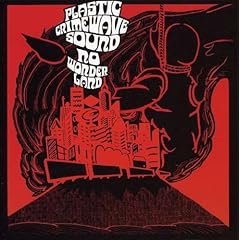
Plastic Crimewave Sound-No Wonderland (2006)


"The more I dig into this newest Plastic Crimewave Sound double LP, Steve Krakow’s second proper album in this guise, the more I hesitate to describe it using that popular appellation with the silent P. Oh yeah, it can be pretty loud, much of the music submerged in shockwaves of feedback and delay, but how organized and lucid it all is. Levels of timbral, even orchestral, detail emerge in ways only glimpsed in earlier releases. The brutally chilling “Into the Future” deposits layers of the most transparent guitar mud, twangy and fuzzed out, over some sort of punchy post-punk bass groove, soaked with the clear-and-present danger of distantly shrill synth jittering. Vocoded mantras, most contoured to end on the same droning pitch, add to the tune’s cliché but effective gestalt of mechanized fear. It works similarly to Gary Numan’s “Down in the Park” until the end, where a brilliantly obscure flash of vaguely Latin percussion infringes, ala Santana’s “Soul Sacrifice.” (Or was it really always there?)

It’s a strangely iconic historical vision; PCS doesn’t go for pure studio experimentation in a pop frame; you won’t find anything here like Tomorrow’s “My White Bicycle,” with its tape flips and ahead-of-their-time manufactured beats. The drums are usually wet but hot, almost early 1980s in presentation. There’s plenty of scree on tracks like “Far In/Out,” but the album is equally full of beautiful Eastern waftiness – acoustic guitars, miasmic stretches of tabla and sitar, even orchestral strings! It’s as if Krakow has constructed a loosely defined musical in honor of the ’60s and what followed, each side of the album prefaced by some spoken poetry courtesy of high-powered guests like Tara Burke and Devendra Banhart. The effect is enhanced by bits of musique concrete, like the hugely disproportionate and industrial door-slamming and footsteps, manipulated almost out of recognition, that usher in the first instrumental track. The whole thing is really fantastic, best absorbed in one sitting, as PCS fosters his uniquely inclusive take on rock’s recent history."

I'm not sure any band has made such an incredible and vicious first impression on me. I walked in from the frigid cold to the warmness of huge fucking tube amps melting my face off. Like MC5 jamming with Parson Sound and Acid Mother's Temple in some dingy bathroom with Klaus Dinger (Neu!) drumming. I don't know how else to describe it. Reverb drenched vocals etching itself into my very sub-conciouss. Plastic Crimewave/Steve Krakow (the man, the myth the legend) wailing away with that guitar. I know this is all personal experience and seeing this band live is definitely recommended over the album but if you're looking for bands carrying on the psychedelic spirits of yore, here comes your band. Fucking. Awesome.

Shake your dying cowboy mind

Tuesday, January 5, 2010

Boris & Michio Kurihara-Rainbow (2007)


"In general, there are two kinds of Boris records: 1) The fearless, focused, concept album that fully commits to a single idea (Absolutego, Feedbacker, Sun Baked Snow Cave, Altar) 2) The hybridized, genre-obliterating, “rock” record (Akuma No Uta, Pink). Rainbow is the latter; a record that crystallizes the band’s blissed-out moments into a glorious platter of epic guitar-anthems, psych-rockers, and hushed instrumentals.

2006’s Pink was a watershed moment for the band both commercially and musically. It introduced Boris to a new generation of western fans and distilled their Melvins-derived sludgecore into a concise, rock framework. Rainbow plays like a sequel to Pink in its further condensation of the Boris sound, but most of the swaggering cock-rock is gone and in its place are a mysterious batch of contemplative, moody, art songs.

“Shine” and “Rafflesia” are the epic focal points of the record and their histrionic swells recall the psych-tinged shoegaze of Slowdive and Ride—minus the latter band’s Brit-pop posturing. Wata and Kurihara’s guitars ascend wildly while Takeshi and Atsuo ground the rhythm section in a steady pulse of bass and drums. Boris’s interpretation of shoegaze is grander and more dissonant than most of the bands typically associated with the genre, reflecting their early drone-rock explorations and doom-metal tendencies.

The Japanese underground has a very distinct way of manufacturing western rock ‘n’ roll forms, often emphasizing the music’s mystical and spiritual elements instead of its sleek, outward accessibility. Bands like Ghost and Nagisa Ni Te have spent their careers exploring a more hallucinatory version of stoner rock and their influence is tangible throughout Rainbow. “Fuzzy Reactor” builds its groove upon a layered foundation of feedback and spliced, backwards guitar. Its pulse and drone are quintessential ’60s psychedelia and the buried vocal chants take from traditional Indian forms.

“You Laughed Like a Water Mark” is Rainbow’s definitive pop song. Its sleepy groove and listless vocal delivery evoke the late night subway rides and beer-soaked barrooms of downtown Tokyo. Kurihara plays the role of Neil Young, foiling Boris’s Crazy Horse simplicity and injecting the song with a heroin-shot of distortion and icy dissonance. “You Laughed” is the most effortless and instantly rewarding composition in the Boris canon and it is evidence of their rapid maturation as traditional songwriters.

Or is it simply the addition of Michio Kurihara? His influence on the overall sound and execution of Rainbow is enormous. His years of experience in the Japanese underground have made him a venerated elder statesman of the scene, and Boris seems to be soaking in all of his wisdom and worldly knowledge. The influence of Kurihara’s wonderful and frustratingly overlooked 2005 solo album Sunset Notes, manifests itself in Rainbow’s contemplative title track and chiming instrumentals (“My Rain” “…And. I Want”). There is a focus to this album that is clearly born of the collaboration between a disciplined veteran and a wildly experimental younger band."

Ah, this album holds a special place in my heart. By the time "Rafflesia" blasts into your face, you know it's one of THOSE albums. Great for sitting down and relaxing and stunning in its dynamic heaviness.

...And I Want

Saturday, January 2, 2010

Mayo Thompson-Corky's Debt to His Father (1969)


"Although this, to put it mildly, is not a record for mainstream tastes, it nevertheless may be more palatable to pop ears than any of Thompson's numerous Red Krayola records. With a folkier bent than his group projects, Thompson projects himself as a lovable oddball of sorts, stringing together free-associative, non-sequitur lyrics against chord progressions and time signatures that, as is his wont, refuse to adhere to accepted norms. Much of it's rather catchy (if not hummable), though, with a whimsical sense of fun that makes it impossible to dismiss as pretentious artsiness."

Whoa. Folksy, off-kilter, quirky psychedelic blues. Take Red Krayola's awkwardness, Beefheart's weirdness, a real love for John Fahey with some very Jack Bruce-like vocals and you get this incredible concoction. Not to be missed.

Venus in the morning

Monday, December 14, 2009

Brainticket-Cottonwoodhill (1971)


"Next time you feel like getting fried, listen to this! But never mind the first two songs on Cottonwoodhill; they are both a rather ho-hum affair. The real brillance on this disc is to be found throughout their 26 minute acid-fueled masterpiece, "Brainticket", the basis of which is a slightly varrying guitar/keyboard lock groove, kinda like Can at their most repetitive. Over this groove pulses all sorts of sound effects, such as machine guns, screams, gargeling, etc. Mostly, though, the overriding sound is their synthesizer, who, although not in the league of Klaus Sculze, nonetheless provides some very entertaining squawks, squeeks, beeps and drones, resulting is a very high-powered burst of aphetimene driven psychosis, dancable and meditative (but meditative in a disturbing, scary way)
But Brainticket the band doesn't stop there, and what really makes "brainticket" the song transcend ordinary greatness in pursuit of nutty brilliance is the voice of Dawn Muir. Sounding very Engish, she freaks out over the whole thing, recounting a very bad acid trip, doubting her exsistence, screaming her LSD-fueled insights, and just generally making a complete mess of herself.
...Suddenly you realize that the insanity is contageous, as the song stops, revealing a weird computer voice going "Brainticket Brainticket Brainticket" and you are left wondering just what the fuck is going on,just what is this I'm listening to? But then the song fades back in, and it's back to where we started...
Poor Dawn Muir, she sounds like a girl being dragged off towards a mental institution, and I wouldn't be surprised if she was still there. Because after this album, everyone in Brainticket freaked out, and only their keyboard player remained. While other Brainticket albums are interesting, none have the sheer grab you by the balls lunancy as witnessed all over Cottonwoodhill, the cover of which carries the helpful warning, "Don't listen to this record more than once a day or your brain will be destroyed!"

Here's a quickie before my computer dies and I'm stranded with no internet for another couple of days. If you like the mind-melting psych that is usually posted round these parts, there's no reason you won't enjoy this.

Pinky and the brain

Thursday, December 3, 2009

Mountainhood-The River/The Road (2009)


Great little Psych Folk ditty that I have been listening to a ton. Really beautiful, fragile melodies. It makes me even happier having looked for these two exact tunes for months. Dig in.

Here I go into the world

Thursday, November 12, 2009

Wooden Shjips-Vampire Blues/I Hear the Vibrations 7" (2008)


"
The sound of Wooden Shjips has changed very little from last year's full length, but then you know what they say, why fix what ain't broke, and there's nothing broke about WS's glorious druggy din. A washed out retro fuzz drenched blues jam, equal parts Doors and Spacemen 3, the bass a deep relentless pulse, the drums simple and motorik, the guitars unfurling thick clouds of blurred buzz and blissed out riffage, occasionally coalescing into psychedelic leads, but just as quickly dissipating back into the druggy murk, the vocals a lazy drawl, drifting through shimmering clouds of distortion and blurred effects, and of course, the organ, wheezing and whirring, adding a thick warm blanket of chordal buzz over everything. The sound on these two tracks is really much more Spacemen 3 or Loop than Doors, dark and deep and druggy, swirling and lo-fi and fuzz drenched and totally hypnotic. And just maybe enough to tide us over until the next full length..."

Sorry for the lack of posts lately. Goddamn school and all. But anyways, Vampire Blues is a downright awesome Neil Young cover, probably to the point that it's better than the original. If you already know Wooden Shjips, this is standard fare so jump all up in it. For the uninitiated, this is some straight retro droney garage rock done right in a swirling cacophonous haze . And who could argue with a thing like that?

I'm a vampire baby

Monday, October 26, 2009

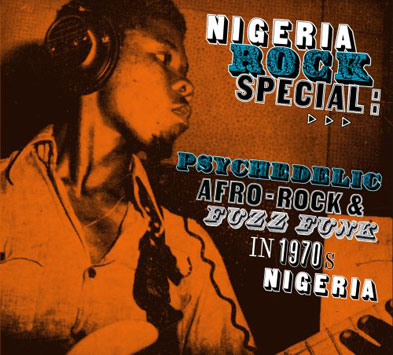
V/A-Nigeria Rock Special: Psychedelic Afro-Rock and Fuzz Funk (2008)


"To my, and certainly many others' delight, there are people out there compiling primers on genres that, to many in Western realms, have gone undiscovered for decades. Case in point, Sound Way Records' Nigeria Special series. Earlier this year, Sound Way released Nigeria Special Part 1 and 2, documenting highlife, Afrobeat and blues from Nigeria, while Nigeria Disco Funk Special followed, with, what else, Nigerian disco. The latest in the series is Nigeria Rock Special, a primer on rock `n' roll from Nigeria in the 1970s, a genre scene that was touched upon in Ginger Baker's Airforce touched upon this vibrant movement (and played some part in its expansion), though the depth of this incredible sound is much farther reaching.

Nigeria Rock Special features 15 tracks, hand picked from countless obscure gems released throughout the decade, which are collected in a stunning compilation. Ofege's "Adieu" starts off with an instrumental groove, oddly similar in tone to Stereolab, but distinctly Nigerian. The Action 13 follows, with blazing psychedelic organ, and group chants in the excellent "More Bread (To the People)". "In The Jungle," by The Hygrades, kicks up a hot and dirty funk; in fact, this must be what the `fuzz funk' refers to in the album's title. Ofo The Black Company's "Eniaro" mines an expansive territory, deep and fuzzy, psychedelic and vibrant. Apparently, this particular band became reasonably popular in Germany—who knew?

Mono Mono kicks out a solid funk-psych affair that's somewhere between James Brown and Tropicalia, which is a hell of a thing, really. Tabuka "X" offers the highlight "Finger Toe," which is a great title, whatever it means. Tabuka "X" actually was half-Nigerian, with the other half of the band being Ghanaian, and the band sang only in Engligh, though they released only one album. And might I add, it's extremely fun to discover little nuggets of info like this while letting the grooves wash over my eager ears. And The Funkees, who probably have the best name here, also offer a fantastic wah-wah laden trip out with "Acid Rock."

Considering this is the fourth volume of the Nigeria Special series, there's plenty of evidence to show just how fertile Nigeria's music scene was in the 1970s, spanning many genres, though much of it never made its way across the Atlantic in its day. Having a compilation such as this deliver these undiscovered gems to American and U.K. shores is an incredible gift. While there may be millions of songs out there that I'll never have the fortune of hearing, I feel just a little bit richer for having experienced the 15 highlights here."

You have to love compilations like this. An absolute joy to listen to no matter where or when, this is some soulful music that we should all feel lucky to have access to. Good times music for sure. Have at it.

Funkytown

Tuesday, October 20, 2009

Popol Vuh-In Den Gärten Pharaos (1971)


"Popol Vuh’s second release is notable for a number of reasons. Firstly, for its rather ingenious in its use of fledgling synthesizer technology. While following along the lines of other German pioneers like Tangerine Dream, Fricke essentially constructs a completely unique expressive vocabulary with the instruments. While Tangerine Dream albums like Zeit and Alpha Centauri were journeys to the furthest reaches of space, where human contact was not only impossible but unwanted, Fricke’s vision has to be considered far more "spiritual", for lack of a better word. The sounds of running water and consistently morphing bongo rhythms behind the title track create a three dimensional soundscape of serene bliss. Fricke’s Moog and synthesizer lines shimmer here, and while minimal and restrained in note selection, he manages to engage the listener in a direct dialogue that is simply tantalizing. Secondly, this is really the only place in the Popol Vuh catalog you’ll hear such an extraordinary work of this style. Sure, the later Popol Vuh albums are brilliant in their own right, but the lack of synthesizers and an intentional change of aesthetic leave Affenstunde and In den Garten Pharaos as the sole torchbearers for the kind of revolutionary stuff the group were doing early on. Incidentally, Pharaos is by far the better album of the two.

Divided into two rather distinctive side-long pieces, the album retains a consistent aesthetic that is powerful and effective throughout. While I’ve already sung the praises of the title track, the second piece "Vuh" might be even better. Here, Fricke employs what sounds like a church organ in the form of dramatic, sustained chords that make the piece far more intense and unrelenting. These lay the groundwork for the development of the piece. A percussive backdrop, accompanied by various other sound effects, builds around the organ theme, creating ebbs and flows in the intensity level. In all, it’s masterfully composed, and careful attention will result in the listener feeling those chord changes resonating throughout the depths of the soul.

In all, this has to be considered one of the Krautrock movement’s essential items. Fans of early Tangerine Dream will easily lap this one up, and others who may have found records like Alpha Centauri emotionally frigid may warm up to In den Garten Pharaos. An excellent album deserving of its legendary status."

Holy fuck. That's all I can say when I listen to this utter masterpiece. I feel pretty dumb putting one of the all-time best ambient albums by one of the all-time best ambient bands into words. All I can say is that you MUST experience this. MANDATORY. SPELLBINDING. INTENSE. EUPHORIC. INCREDIBLE. INSERT LOFTY ADJECTIVE. Go for the second track "Vuh" by the way.

Vuh

The Time & Space Machine-Children of the Sun 7" (2009)


Pretty self-explanatory. Really cool shiny happy new track from Richard Norris. If you dig this band already, you should be all over this. In honor of some warm Chicago temps for the first time in weeks. Happy listening.

We are children of the sun