Showing posts with label experimental. Show all posts

Monday, May 17, 2010

Harvey Milk-A Small Turn of Human Kindness (2010)


"Athens weirdcore trio Harvey Milk is a blessedly difficult band to “know.” They frustrate category, aesthetic response, and heavy music scene politics in estimable, admirable ways. On the heels of their feedback-saturated return to recording – first the somewhat tentative Special Wishes and then 2008’s Life . . . the Best Game in Town – they return with A Small Turn of Human Kindness, an album named after the very first track on their 1996 debut.

A seven-part dirge, this album continues to refine their mixture of heavy riffage, sheer noise, and unexpected detours into introspection and delicate, emotional instrumentalism. But there’s something about the long form here that brings these elements out really vividly, freshly, in ways that suggest new discoveries and new paths taken. They remain a very patient, un-showy group, happy to let the heaviest of heavy chords – you can hear the speaker cones straining, their detuned strings flapping – simply wash over the spare shapes that make up these compositions. But what gives this music greater power and urgency is vocalist Creston Spiers’ dark dreamings.

His rattling holler is like the croaky sound that Neurosis’ Scott Kelley has recently unearthed, crossed with the phrasing of Sonic Youth’s “Marilyn Moore.” The album’s themes of lovelorn despondency might seem about as innovative as dirt, but the music breathes inspiration into them. The slow moving notes of the opening “*” – big major motifs moving in vast space and amp resonance, flirting with the anthemic – form the basic materials that are layered and layered in patient pursuit of the line. As the music emerges to form a mid-tempo crawl in “I Just Want to Go Home,” the fuzz and decay left in the wake of each crashing punctuation, each howl, create their own context beyond “heavy” signification. Things don’t so much move forward as bloom darkly, as feedback floods the pulse or as a brief staccato pattern cups a descending line (“I Am Sick of All This Too”).

It’s compelling from the start, particularly insofar as they not only avoid genre clichés but also cheap drama. Instead, they play emotionally ambiguous stuff – shifting modes and dynamics, or rather simply smashing them together until the edges are indistinct – that makes room for tart harmony (“I Know This is No Place for You”), cheeseball ‘80s keyboards (“I Know This is All My Fault”), and even some pitch-bending Southern-fried riffs on the closing “I Did Not Call Out.” None of these elements stands out or calls attention to itself; they simply emerge organically as the basic materials (not just the motif of the opener but the “I” of the titles) are continually revisited and reworked.

Singular and absorbing, Spiers chronicles his – his character’s? – beaten but not broken hope for some buried treasure from the wreck of a relationship (“In the dead gray ashes there was grace” he sings in the end). And Harvey Milk once again shake the dust from labels and produce music that’s heavy by virtues of its convictions and emotional integrity. In their music it’s easy to hear the roots of feted bands like Baroness and Kylesa, but I’m increasingly likely to think of this music – with its dark stew of minimalism, repetition, and abjection – as the blues."- Dusted

I am in complete awe of this band, and for good reason. When reference points include the Melvins, ZZ Top, and Leonard Cohen, how can you not be intrigued? This album marks Harvey Milk's return to the off kilter lumbering heaviness of their first two albums (or three, depending on how you count 'em) and is stronger throughout than either "Special Wishes" and "Life..." both of which I enjoy thoroughly. This is a legitimate contender for album of the year. Get it.

The milk of human kindness

Thanks to Lucidmedia for the link

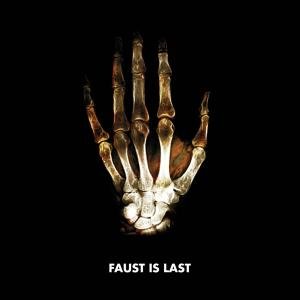
Faust-Faust is Last (2010)


"If Faust announce a last record after 40 years then it might be a good idea to open up the ears, especially when the cover art is one big reference to their first record. The x-rayed "fist" appears again, this time with the fingers slightly more opened. 40 years lie between the two records. 40 years of many different line ups, record companies, financial disasters, artistic failures and successes. Whatever can happen to a band has happened to Faust. In that sense they are not an unusual group of musicians. What is unusual is that each project, each record, each concert over the last 40 years has been different. On the very first record they made clear (on clear vinyl) that they were in it for destruction. "All you need is love" and "Satisfaction" symbolically were set fire to. That same fire you will hear on this new & last Faust record. The circle will be closed by more circular
music. A music that seems to come out of nowhere, sonic descriptions rather than songs. Timeless and not rooted in specific places and/or traditions. Maybe influenced by Cage's idea of chance, Dada, cut-ups, Sun Ra's free jazz organ playing and the second attempt after the German-American Monks to represent "a rock group as total artwork". faust in 1970 and in 2010 sound aggressive and 100 percent oriented towards the future. There is not a glimpse of nostalgia in "Faust is last". Turn up the volume and listen to this first, new and last Faust record very loud!" - Klangbad

Haven't had a chance to fully digest this yet but goddamn, what I've heard is on par with their entire career. It should be noted that is Hans Joachim Irmler's (founding guitarist) conception of Faust, and not Jean Herve Peron and Zappi Diermaier's (founding bassist & drummer) Faust that toured last year. This one seems to run the gamut stylistically, from grungy classic rock to the chilling noise passages we've all come to love over the years. Frankly, they still sound full of piss and vinegar and if that isn't reason enough to give this full attention, then I don't know what is. Highly recommended.

Faust

Saturday, May 8, 2010

Evan Kelley-Saund Arte Feinhal Projekt (2010)


Made using his own and another band's samples along with help on two songs, it encompasses melodic vocal drones, krautrock psychedelia, pounding rhythms and crushing experimental rock. I should also mention that it is open source audio and those looking for higher quality downloads should go HERE. The album begins with two relaxing drone pieces. "Calm Your Bones" in particular has a warm feeling with a gorgeous interplay that almost takes on the sound of an organ in some places. "Sirens Part II," my personal favorite, takes cues from the Neu/Harmonia/Cluster family in that it is swirling ambient music but always feels like it's constantly moving. Noises fly in and out over a hulking wall of sound. A beautiful, cosmic song to say the least. "Sirens (Urban Music For Guitar and Drums)" is a vicious, unrelenting beast that refuses to let it its hand off your throat. Each time I've heard it, I cannot shake the feeling of urban paranoia, but perhaps I shouldn't listen to it surrounded by filthy urban people. Throbbing rock gives way to chaotic noise freakout. Awesome. "Way of the World," the final track, starts heavy as hell. Noise creeps into the mix as the song progresses, keeping the cosmic quality found throughout the other songs. This gives way to a filthy, fuzz-laden industrial drum beat that pounds at your consciousness before coming full circle back into cosmic heaviness. It feels like an adventure that takes you farther out than the 24 minuets of total music. Highly highly highly recommended.

Calm your bones

Tuesday, April 13, 2010

Bill Holt-Dreamies (1973)


"Inspired by the aural collage of the Beatles' "Revolution Number 9," as well as the musique concrete of composers such as John Cage and Terry Riley and Bob Dylan's conscientious rock lyricism, Bill Holt quit his straight job in 1972 to follow his musical muse, hoarding various electronic gadgets and an acoustic guitar and holing up in his basement. He emerged a year later with Dreamies, one of the finest pieces of experimental pop from the era. Unlike the Beatles' White Album collage, though, the pair of sidelong, 26-minute epics -- "Program Ten" and "Program Eleven" (as if progressing directly from "Revolution Number 9") -- that Holt created were much more than symbolic representations of the chaotic times. At its heart, the album is a blend of folk and pop/rock, and in many respects, Dreamies fits in with the singer/songwriter scene that flowered in the early '70s. Instead of relying simply on the juxtapositions of his sound samples to impart subjective meanings, Holt composed lovely, downhearted melodies (very much recalling John Lennon) and trippy lyrics as a jumping-off point for each collage and then let acoustic guitar guide them through the gauntlet of sound. In fact, "Program Ten" is a combination of two identifiable songs, "Sunday Morning Song" and "The User," the two melodies weaving in and out of the cacophony of noise-crickets, atmospheric sounds, a John Kennedy speech, NASA chatter, news reports, glass breaking, a thunderstorm, sports broadcasts, and gunfire while a synthesizer spits out spacey alien sounds or cuts like a kettle whistle, and an ominous bassline oscillates beneath it all. "Program Eleven" exchanges that white noise for airport sounds, creepy Sgt. Pepper-style chants that bubble up from beneath the single melody fragment ("Going for a Ride"), game show catch phrases, and popping corn. Of the two pieces, "Program Ten" is the more socially charged commentary, setting the innocent recollections of youth -- the sounds of summer and nature -- against the misanthropic confusion of war and politics to powerful effect. "Program Eleven" is more psychedelically eerie and haunting, aurally dense, and thick with bad vibes, but wonderful nonetheless. The spoken samples are mostly more buried in the background and difficult to make out. It adds both intrigue and mystery to the piece, a foreboding end to what began optimistically. The music, in other words, ingeniously mirrored the sort of evolution of consciousness that was so much a part of the era. Dreamies went virtually unheard when it was released, perhaps because it was the antithesis of commercial rock at the time, but, despite its grounding in the ambiance and issues of the '60s, it still sounds outstanding decades after the fact." - Allmusic

A wonderful piece of music. Found a section of Program 10 on Beyond The Wizards' Sleeve "Ark 1" and had to track this down. One of the earliest examples of sampling in modern music as well. Another highly recommended album.

Dreamin'

Thursday, March 11, 2010

Flying Lotus-Los Angeles (2008)


"Okay, we might as well get this out of the way, because every review of Los Angeles mentions one key reference point: Flying Lotus––née Steven Ellison––is the grandnephew of Alice Coltrane. It's a convenient and eye-catching association that will follow Ellison's career each step of the way. In fact, it was the extraordinary jazz musician's gentle nudging that pushed Ellison's career ambitions from filmmaking into music. And for that matter, Ellison shares Coltrane’s use of pulsing, breathy textures. His materials may be those of the Nintendo generation rather than the acoustic-based instrumentation of the 60s, but the importance of atmosphere and resonance––so crucial to Coltrane's blend of spiritual free jazz and cerebral modal music––are certainly not lost on Ellison.

But just how does one recreate the sense of room and tonal development in a world of digital samplers and sequencers? In this aspect, Ellison learns from his contemporary peers. His Warp full-length debut contains sonic elements akin to many like-minded Los Angeles musicians––Madlib, Ammoncontact, Daedelus, Sa-Ra Creative Partners, Nobody, Dntel, Koushik and Exile––and it’s also clear that Ellison has been influenced by the cream of the left-field instrumental hip-hop crowd––Jay Dee, Prefuse 73, Dabrye and Jnerio Jarel. All of these musicians/producers have mastered the process of stringing samples together fluidly in a haze of noise byproduct (static, fuzz, pops, crackle, etc). Likewise, Ellison’s work features few discernable loop breaks, while acoustic drums and live synthesizers work to disguise rigidity with layers of lapping sound. Somewhere along the way, Pete Rock's stiff but soulful rap productions crossed paths with Aphex Twin's avant-garde electronica and Rob Mazurek's 21st century psychedelic fusion to birth Flying Lotus, a headphone producer who bridges the world of beat, blip and bop.

Thankfully, Ellison doesn't stray too far from the framework he established on 1983, his Plug Research debut. There is a coherent sound throughout the album––psychedelic electro-hop perhaps––while each song develops fruitfully without ever being dragged out. In fact, about sixty percent of the tracks on Los Angeles fall in the two-and-a-half to four-minute range––just enough time to establish a groove and expound upon it without a sense of redundancy setting in. It's less jerkingly sporadic than Donuts (however brilliant), but more varied than a Sa-Ra produced record. And in that sense, Ellison––much like his great-aunt––has the ability to entrance. Trippy synth chords progress subtly; sparse boom-bap backdrops pronounce the meat of each song; jazz, funk, psych and worldly samples weave colorful melodies; and 8-bit video game sound effects keep each track continuously textured.

In a recent interview with XLR8R TV, Ellison divulged his love for the Cartoon Network's Adult Swim, a series he helped to score early in his career. The episodes of schizophrenic late-night comedy are relatively short in comparison to television's typical half-hour fare––the humor may be beyond ridiculous, but it rarely takes a toll on your patience because it's finished in a third of the usual time. Ellison's productions may not have the severity of Adult Swim, but he certainly takes a few cues from their structural patterns. Los Angeles doesn't rely on elaborate set-ups or complicated narratives: A beat drops, the mood's established, a groove sets in, and Ellison tweaks it into a climax before quickly moving onto the next.

Thanks to the deeply saturated production, just minutes into Los Angeles you are already lost among the ebb and flow of the mercurial synths and adroit beats. A headphone listen is like sticking your head in a fish tank of blunted haze and aural psychedelics. The music may not be quite as spiritual as that of Ellison’s great-aunt, but it is no less ethereal, atmospheric and hypnotic––impressive for what is essentially an instrumental hip-hop record."

Wow. There are a few Hip-Hop luminaries that really blow my mind (Cannibal Ox, Dilla, Madlib, MF Doom, El-P, Dalek...etc) and Flying Lotus joined the club. I didn't really know what to make of it at first but multiple listens reveals a deep appreciation for Dub, House/Techno, Breakbeat, and all that other shit that I'm really not that familiar with. Point is, this album effortlessly blends it all together into a very spaced out enjoyable whole. High recommendation for this little ditty.

Melt!

Wednesday, March 10, 2010

Kemialliset Ystävät-Kemialliset Ystävät (2007)


"The English-speaking world can’t quite figure out whether Kemialliset Ystävät is a proper band or the brainchild of a single man. Dodgy video clips show a group of crouching figures obscured by lit candles on a Spanish floor, but written statements center around Jan Anderzén, a Fonal co-conspirator and definite sole member of Tomutonttu. The album boasts a longhouse full of players, but Wikipedia further muddies the picture, relegating them to the background. The frightening opacity of Finnish doesn’t help much either, battering us poor Indo-Europeans with blasts of Ugric doubled consonants, vowels, and endless diacritics.

The answer—true to the gleeful, pranksterish nature of KY—is neither. The whole enterprise is more of an art concept than a music group, and standard rules of membership are the least of the musical conventions flaunted by Kemialliset Ystävät. The question is more symbolic than real, as it points to a common confusion KY produces in listeners. Is this done on purpose, or is it an off-the-cuff product of an entirely-too-high crowd of strangers? The group’s music bristles with unhinged alien energy, breeding monstrous hybrids that would be born sterile in most settings. Gamelan and Nintendo soundtracks? Abstract sound poetry and acoustic folk? Tape loops and hand drums? Hell yeah, and on the same track to boot.

But there’s more to this than the latest Sunburned session run amok. There’s a strange order, a deliberation, a dawning sense that every element is placed as it is for an irrational reason. Therein lies the greatness of the band: its painstaking intricacy sums to dada spontaneity. This musical paradox creates a compelling game for the listener: try to deduce the illogic beneath the music, peel back the layers searching for a foundation (if there is one), discover the rule that is the exception to itself.

Luckily, this KY album is a bit more accessible to listeners than most, featuring even a few straight-up songs. “Nakymattoman Hipasiour” teams a fuzzy piano line with swallowed microphone mathematics and nervous electro-squeaks for a swaying, shanty-like bounce. “Superhimmel” pits loping guitar lines over a martial bass beat before bridging into a spastic neon breakdown that sounds like Dan Deacon minus the annoying shit. Both tracks show the exhilarating straight path that Kemialliset Ystävät can follow. And both tracks are exceptions, tips of the hat to structures they usually avoid.

More often, KY wobbles around its pet sounds, creating tracks from planned chaotic collisions. Melodies and rhythms flow and communicate, but the crowd of sound prevents any set from locking to song. A push from one is met by a push in the opposite direction by another. The effect is one of dynamic unity, of a bustling conversation within a bubble, about nothing and everything.

We speak often of an artists’ vision, as if musicians present the audience an image that one can mentally trace back through an aesthetic lens to an ideal representation in that artist’s head, an index of influences, inputs, and insights. The clearer and sharper this vision, the better. But in this case, Anderzén’s vision arrives at the end of a kaleidoscope, and its geometric precision only adds to the beautiful confusion."

This is some wacked out music. I dunno what's running through the water out there in Finland but those guys are crazy. I don't really have the words for it right now, but that's cause I'm knee deep in some shit which explains my lack of comments lately. Hopefully the quality has been speaking for itself. But I shall return to full normal formatting soon. But until then...

Superhimmili

Tuesday, March 2, 2010

Cindytalk-Camoflage Heart (1984)


"
Longtime regular aQ customer Joshua Maremont commented that Cindytalk's Camoflage Heart is a record which was only really meant for about 30 people. Not that only 30 copies of this record were released, or that it is so terminally obscure and willfully difficult that it by design has a marketing ceiling of an elite few. What he's on about is that Camoflage Heart is such a personal document of self-realized torment, pain, and sorrow that when Cindytalk embarked on the project, it's hard to imagine that they had any delusions about the intensity of this album and the potential for these songs to alienate beyond a limited few.
At the helm of Cindytalk is transgendered vocalist Gordon Sharp, who to this day is probably still best known as one of the multitude of vocalists who appeared in This Mortal Coil. In many ways, Sharp is the masculine equal to the Cocteau Twins' Liz Fraser in delivering expressionist falsettos, trills, and banshee wails in an eerie, yet heavenly fashion. He's one of those few vocalists who can make the lyrics embody their content by shaping the words into emotionally charged sound. In fact, Sharp and Fraser had come together for a duet back during the Cocteau Twins' Peel Sessions of 1983. In his 4AD lineage, Gordon Sharp's first band was the criminally overlooked punk-glam ensemble The Freeze, where his Marc Bolan strut matched the nightmarish lyrics on top of some truly fantastic Bowie / Buzzcocks sparkplug riffs. Sharp, alongside fellow Freeze band members John Byrne and David Clancey, found shortcomings in the glam punk agenda, and sought a wholly new direction that became Cindytalk.
While undeniably dark and theatrical, Cindytalk cannot be pigeonholed as an '80s goth band, even in comparison to such off-kilter groups like The Virgin Prunes, Princess Tinymeat, or Sex Gang Children. Camoflage Heart was Cindytalk's first album and originally came out in 1984; and it's an album like those This Heat albums which is quite unique in terms of production and aesthetic. The album opens with the militant drum machine of "It's Luxury" setting the stage for an explosion from a monotone guitar riff, coated in amplifier grit, distortion, and detuned heaviness that comes across as a mix between late-'80s Skullflower and The Cure's Pornography. At this moment, Sharp's voice also erupts into the mix crooning with a downtrod beauty to this industrial dirge, spitting and swooning at the same time. The next track "Instinct (Back To Sense)" is more of an ambient interlude with distant heartbeat rhythms, haunted with impressionist piano trickles and Sharp's siren song buried between an atmosphere of smoke and mirror. Two more explosive tracks -- "Under Glass" (featuring Mick Harvey from the Birthday Party for a disjointed stutter of abject rock) and "Memories of Skin and Snow" -- are examples of loud / quiet / loud dynamics, later embraced by the likes of Slint and Mogwai to equally profound effect. "Everybody Is Christ" is often viewed as the pinnacle of Camoflage Heart with its harsh arppegiation of electronics cast against Sharp's heavenly voice. Soon after, the album disintegrates in a cascade of delicate piano, voice, and grim drones.
As Cindytalk had suffered through the fate of several record companies going out of business (first Midnight Records then World Serpent), their work might have been forgotten had it not been for this reissue. Thankfully, that oversight can now be remedies with this long overdue reissue."-aQ

Music for those dog days of winter. Sorry for the lack of posts lately. Life moves fast, ya dig?

Memories of skin and snow

Wednesday, February 17, 2010

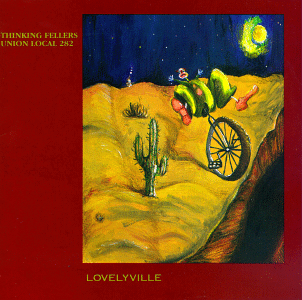
Thinking Fellers Union Local 282-Lovelyville (1991)


"
What if I told you there was a band out there that combined the screeching distortion of Sonic Youth and added it with the total absurdity of complete wackos Sun City Girls? Thinking Fellers Union Local #282 fit comfortably within this description. One thing I must make clear though, this band is not for those without patience.

Those who approach this with an open mind and are ready to take in all the sounds spinning around their head will find them to be an enticing, rewarding listen. A factor that contributes to this are the many interludes spread across each album (commonly known among fans as “feller filler”) which are at times amusing, melodic or downright annoying. Supposedly, the reason for this is that the band are such virtuosos at their respected instruments that they did not want to be taken in such a serious way, hence an attempt to include some bizarre breaks from the songs. The ‘feller filler’ is something that takes a while to get used to but eventually they will serve as mood pieces or good ways to flow from track to track.

Another reason is the previously mentioned skill of the players. Thinking Fellers Union Local #282 do not employ the techniques of just two guitar players but three, which makes for some fantastic interplay between the uniquely tuned angular guitars. Another is the brilliant lyrics which are not noticeable on the first listen but slowly unravel to the listener as more listens are required. Take for example a line semi-spoken in the opening track ‘Four O’Clocker 2’: ””She soiled my sheets and stepped on my feet, bled on my towels and opened her bowels beneath my pillow, where my head should rest to escape the rest”… just one of the many strange and mesmerizing lyrics strewn across the album.

“Lovelyville” is the third album in the band’s catalogue and shows when they really started to come in to their own. Away were the practice session jam tapes that clogged up the majority of “Wormed by Leonard” (which, in all due respect, is still an excellent recording) or the dislikeable sheen that shrouded “Tangle”; this was truly when TFUL282 created the idiosyncrasies which would stick with them throughout the rest of their career. Though “Mother of All Saints” would be where the sound presented here would be toned and refined, this still presents a case that startles the listener into locked attention.

‘Nail in the Head’ demonstrates just how well the band works together. The chemistry in their sense of timing and interlocking parts illustrates a unified bond between the members. One thing I forgot to mention is the drumming which is usually superb. There is no heavy primitive pounding of the drum kit nor is there any particular part where the drumming bursts out and takes the forefront, but what is displayed is a real understanding of the instrument. Everything is very set in the background and a closer inspection reveals some very tricky rhythms set in a merger of different styles.

Arguably the centrepiece of the record is ‘2x4s’ which is a melancholic romp through the minds of TFUL282. The parts coalesce so beautifully that I can not describe it as anything else other than a perfect song. The progression of the chords melting in with the pleasant addition of a saxophone creates a perfect consonance between all the textures. What is so pleasant about the addition of the saxophone is that it isn’t really a major piece of the composition but only accents what is already there which makes it’s appearance all the more welcome. My personal favourite is “Sinking Boats” which is cathartic in nature and doesn’t take many breaks from the full-on power environment the track produces. One of the few times I’ve seen a band take dissonance and make it completely catchy and memorable.

If there is a problem I have with this album, it is that it is not as concise as future releases will be but the band are just starting to develop their signature sound which is forgivable. This is still a sprawling soundscape of absurdity, creative melodic passages and dissonance. “Mother of all Saints” may be their magnum opus but “Lovelyville” sits comfortably in their discography as an accomplished piece of work."

I've been feeling weird lately. And this is a wonderful remedy. Weird stuff.

Nothing solid

Friday, February 12, 2010

Blind Idiot God-Undertow (1989)


"For its second album, Blind Idiot God enlisted the services of producer Bill Laswell, but the results show little difference from the attack evidenced on the band's initial release. Once again, the band alternates between surging instrumental barnburners like "Sawtooth" and "Drowning" and spare, evocative dub-oriented songs. Both are handled with the same imagination and confidence that the group had previously exhibited; this was one extremely tight and talented power trio. Andy Hawkins' compositions often take surprising turns during their short duration, themes bending and elongating in a manner providing delicious tension. Ted Epstein's drumming is a marvel to hear, combining an overwhelming strength with an unusual subtlety of rhythmic choices that one doesn't often hear in music as ostensibly rock-based as this. Two tracks stand out as departures from the group's first album: a cover of George Clinton's "Alice in My Fantasies" wherein Blind Idiot God shows that it can also handle power funk quite capably, and the final cut, "Purged Specimen." For this number, the trio is joined by saxophonist, composer (he wrote the piece), and lover of hardcore thrash John Zorn. The track sounds much more like a Naked City song than a typical Blind Idiot God rave-up though, again, it's an example of the band successfully navigating hitherto unexplored territory. Listeners who enjoyed the band's debut album will find more of the same here, even if they suspect that a bit of a rut is being established."

Quick upload. But recommended. Especially for you Dub fans. Trust me.

Watch yer step

Tuesday, February 2, 2010

Mandatory Repost/Working link: Parson Sound-Parson Sound (2001)


"Parson Sound was one of the earliest and most radical experimental rock bands of Sweden and the nucleus of a lineup that went on to become International Harvester, Harvester, and eventually, Trad Gras Och Stenar. With their expansive intake of styles as diverse as West Coast psychedelic music and the Velvet Underground's minimalism while still retaining a hint of their Swedish roots, Parson Sound created an unusual sound similar to early Krautrock, though predating its beginning by a year. The group began in Stockholm in the spring of 1967 shortly after a visit to Sweden by minimalist composer Terry Riley to perform his classic "In C," as well as a new work with Swedish school children called "Olson III." Guitarist Bo Anders Persson, a student at the Royal Academy of Music who had already experimented with tape music, participated in the "In C" and was deeply inspired by Riley's open-minded aesthetic in contrast to the stifling atmosphere of the university. Persson started Parson Sound as a free improvisational group with cello player Arne Ericsson, also from the Academy; bassist Torbjörn Abelli, a music student at the University of Stockholm; and radio journalist and poet Thomas Tidholm, who met Persson while working on an article. Thomas Mera Gartz, previously the drummer for the psychedelic beat group Mecki Mark Men, soon joined the group and in the next year, others came and went in the loose collective, including Urban Yman, Bengt Berger, Bjorn Fredholm, and Kjell Westling. By summer 1967, Parson Sound was performing before audiences in cafés, clubs, and festivals and they also gigged a couple times on Swedish radio in September and December of that year. Parson's repetitive and hypnotic riffs were quite similar in sound to the Velvet Underground in its more improvised phase, so it was only fitting that in February 1968 they were part of an Andy Warhol exhibit at Stockholm's Museum of Modern Art. Eventually, the group coalesced around Persson, Abelli, Tidholm, Ericsson, and Yman and by summer 1968, they had changed their name to International Harvester to further refine their sound. This group would eventually become Trad Gras Och Stenar, while several of Parson's alum went on to another progressive experimental group, Arbete Och Fritid."


"During my long holiday break, I not only found time to listen to a lot of music that I'd missed from the past year, but also dove back into the back catalogue of my collection with wild abandon and re-discovered a lot of music that I realized I wish I had more time to listen to on a regular basis. One of the albums that was played on multiple occasions (out of earshot of my wife, as she hates this stuff) was the double-disc self-titled release by Párson Sound, an underground Swedish psych rock band from the late 60s that created insane music that still destroys much of what is being recorded today.

The very early roots of the band were formed in 1966, when a musician named Bo Anders Persson started compositional studies at the Royal Academy, but felt a bit hemmed-in by the emphasis on technique and theories. Only a year later, Terry Riley visited Sweden, and Perrson was one of the musicians who took place in a performance of the classic In C, furthering his notions of creating more experimental and improvisational music that incorporated elements of folk and rock music. In a rapid burst, a batch of musicians came together, playing everything from traditional instruments to tape loops, amplified electric cello, saxophone, flute, and more.

Many members of the group (including Persson) would later morph into such groups as International Harvester, Harvester, Trád, and Grás Och Stenar, and while all of those incarnations had stellar moments, none of them capture the almost feverish intensity of these original sessions. Originally recorded for a wide variety of outlets (including rehearsals, outdoor park performances, and sessions for live radio), the recording quality isn't always the greatest, but the sheer hypnotic quality of the music more than makes up for any deficiencies.

It's music that's hard to classify today, and probably split even more heads open when it was originally recorded. "From Tunis To India In Fullmoon (On Testosterone)" is literally one of the most noisy, minimal psych tracks I've ever heard. Clocking in at over twenty minutes, it chugs forward relentlessly with a doom-riffic rhythm section as guitars, electric cello and soprano saxophone wail away and joust with one another while building up some delicious tension and release. "One Quiet Afternoon (In The King's Garden)" captures a recording from a restaurant performance (I can only imagine being there) where the group layers multiple tape loop, flute, and string drones over pounding drums and guitars before the entire thing gets swallowed up in a creepy haze that sounds like the group is trying to contact spirits from beyond the grave.

In places, they do sound a smidgen more of-their-time, but even the more traditional opening section of "Sov Gott Rose-Marie" morphs into a sort of primordial drone-rock that pretty much melts away any of the more lighthearted melodies that came before it. Showing a completely different side of their personality is "On How To Live," where an open-air recording adds delightful nature sounds to an open-air acoustic park jam that predates groups like The Blithe Sons by over three decades. The release even contains a tape-loop and voice meditation by Persson himself that sounds ages ahead of its time as well.

In their fairly short period under this name, Párson Sound exploded with ideas, and even managed to find some high-profile accolades, opening for The Doors and even playing at the opening of an Andy Warhol exhibition at the museum of Modern Art in Stockholm at his request. It's just over two hours worth of music that's incredibly expressive and intense, and unfortunately out of print again. If you must have the CD, good luck hunting it down, otherwise the excellent digital-only re-release label Anthology Recordings has just made it part of their high-quality catalogue."

Ooooh boy. This one is a monster. A big, scary Scandinavian, doomy, drone-happy monster. Insanely stunning for the time it was recorded (1966-68) and equally perplexing that virtually no one got to hear this until this very decade. I can't say enough good things about these sessions and this band. It's a shame they didn't stick together for the long run but I'm fucking elated with what we've got and I'm betting you will be too. EDIT: NEW LINK

ba ba ba ba-da ba ba

Monday, February 1, 2010

DNA-DNA on DNA (2004)


"DNA on DNA thoroughly collects the studio recordings and live performances of an abrasive and influential New York band. While not compiling every DNA recording, it is the most complete collection so far of the group’s music, including every studio recording (from their first 7”, the No New York compilation, and the Taste of DNA EP; 13 songs in total) and rare live performances, some of which have never been released before. The CD comes on the heels of a similar collection of the band Mars, another group who cracked open rock in the No Wave scene of the late 1970s and early 1980s.

No Wave flashed brightly and dissolved quickly. No band lasted longer than four years. Shows dragged on for a maximum of a half-hour, often evolving into taunting messes. Most songs lasted under two minutes, often under one. Almost no one played outside New York, and precious few recordings documented the time. Yet, in the grand tradition of Velvet Underground moments, it seems that everyone touched by no wave spread its seed far and wide.

Two generations of New York rockers seem indebted: the 1980s (Swans, Pussy Galore, and Sonic Youth); and Five Minutes Ago (Black Dice, Japanther, and the Yeah Yeah Yeahs). In between, Chicago took the reigns, with Atavistic Records championing reissues, now-wave bands surrounding the Skin Graft label, and Weasel Walters’ exhaustive online dedication to the scene. Today, the fever has spread through San Francisco, Michigan, and Providence, to name only a few locations.

Perhaps it is fitting that the history of No Wave has been rewritten in the past few years. Reissues abound, compilations trip over themselves, and every sliver of evidence is being dug up. Most notably, this new history looks past the social barriers that divided the tiny scene into No New York and not-No New York. In 1978, Brian Eno produced four bands for that defining compilation, and yet other deserving musicians were intentionally left off the record. Thanks to excellent work from Acute Records and Table of the Elements, Glenn Branca and Rhys Chatham’s huge contributions are now available to fill these gaps (although a fresh disc of Chatham’s groups Arsenal and Tone Death would brush out some cobwebbed corners). Collections of YPants and Malaria also help correct the misconception that No Wave grew from four bands alone.

DNA is the last of those four definitive bands to get the reissue treatment. Along with Mars, DNA emitted a less structured brand of abrasive rock than their No New York partners The Contortions and Teenage Jesus and the Jerks. Arto Lindsay led the group, growling, yelping, and wailing atop jagged guitar shards. Often abstract or unintelligible – and sometimes in Portuguese – his vocals grated and skipped as much as his barbed guitar (or how about the complete lyrics to “Horse:” get out of here / go fuck yourself). Ikue Mori’s drumming pummeled or pattered, driving the group forcefully or meandering around other sounds, never settling on one role. In their first nine months, DNA included the darkly repetitive keyboards of performance artist Robin Crutchfield. When Crutchfield left, bassist Tim Wright joined, fresh from Pere Ubu in Cleveland. His sputtering rolls and murky tones drove the group into even more dangerous territory.

DNA on DNA tracks these changes from the first 7” record to the final performance in June of 1982. Chaotic and explosively dynamic, DNA sounds no less exciting, challenging, and relevant than they did 25 years ago."

This band is whacked the fuck out. What were they thinking? Who knows. But of all the weird ass atonal music that swept New York from the late 70s into the early 80s, DNA is easily the weirdest. Rumbling bass lines, offbeat percussion, squeaking squawking guitar lines and moans and screams emitting from someone obviously suffering from DT. Fucking essential.

EDIT/NOTE: Different link, thanks to Llort over at A Special Plan For This Weekend

Dance with me...

BIGFACE!!!!!!!!

Wednesday, January 27, 2010

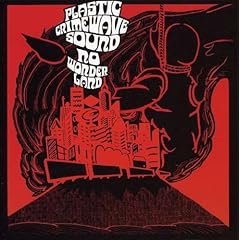
Plastic Crimewave Sound-No Wonderland (2006)


"The more I dig into this newest Plastic Crimewave Sound double LP, Steve Krakow’s second proper album in this guise, the more I hesitate to describe it using that popular appellation with the silent P. Oh yeah, it can be pretty loud, much of the music submerged in shockwaves of feedback and delay, but how organized and lucid it all is. Levels of timbral, even orchestral, detail emerge in ways only glimpsed in earlier releases. The brutally chilling “Into the Future” deposits layers of the most transparent guitar mud, twangy and fuzzed out, over some sort of punchy post-punk bass groove, soaked with the clear-and-present danger of distantly shrill synth jittering. Vocoded mantras, most contoured to end on the same droning pitch, add to the tune’s cliché but effective gestalt of mechanized fear. It works similarly to Gary Numan’s “Down in the Park” until the end, where a brilliantly obscure flash of vaguely Latin percussion infringes, ala Santana’s “Soul Sacrifice.” (Or was it really always there?)

It’s a strangely iconic historical vision; PCS doesn’t go for pure studio experimentation in a pop frame; you won’t find anything here like Tomorrow’s “My White Bicycle,” with its tape flips and ahead-of-their-time manufactured beats. The drums are usually wet but hot, almost early 1980s in presentation. There’s plenty of scree on tracks like “Far In/Out,” but the album is equally full of beautiful Eastern waftiness – acoustic guitars, miasmic stretches of tabla and sitar, even orchestral strings! It’s as if Krakow has constructed a loosely defined musical in honor of the ’60s and what followed, each side of the album prefaced by some spoken poetry courtesy of high-powered guests like Tara Burke and Devendra Banhart. The effect is enhanced by bits of musique concrete, like the hugely disproportionate and industrial door-slamming and footsteps, manipulated almost out of recognition, that usher in the first instrumental track. The whole thing is really fantastic, best absorbed in one sitting, as PCS fosters his uniquely inclusive take on rock’s recent history."

I'm not sure any band has made such an incredible and vicious first impression on me. I walked in from the frigid cold to the warmness of huge fucking tube amps melting my face off. Like MC5 jamming with Parson Sound and Acid Mother's Temple in some dingy bathroom with Klaus Dinger (Neu!) drumming. I don't know how else to describe it. Reverb drenched vocals etching itself into my very sub-conciouss. Plastic Crimewave/Steve Krakow (the man, the myth the legend) wailing away with that guitar. I know this is all personal experience and seeing this band live is definitely recommended over the album but if you're looking for bands carrying on the psychedelic spirits of yore, here comes your band. Fucking. Awesome.

Shake your dying cowboy mind

Sunday, January 24, 2010

Estradasphere-Palace of Mirrors (2007)


"This bizarre-o sextet from Santa Cruz, Calif., has the stones to make two claims: One, the instrumental outfit says it introduces new styles of music on Palace of Mirrors, Estradasphere's fourth album, including "Romanian Gypsy Death Metal," "Spaghetti Eastern" and "Bulgarian Surf." Two, the band also boasts that it appeals to fans of artists as diverse as The Beach Boys, Metallica and John Coltrane. Both claims are justified. Probably. Actually, it's hard to tell what the hell Estradasphere does besides suck you in with a cruel charm and enchanting song titles like "The Unfolding Pause on the Threshold," "Six Hands" and "Flower Garden of an Evil Man." But with such instruments as accordion, violin and the Japanese Shamisen (a lute instrument with three strings) commingling with more traditional rock 'n' roll instruments, those statements tend to make a little more sense. The chaos of "A Corporate Merger" reflects its title, "Colossal Risk" could be part of the soundtrack to a crazy James Bond spoof and "Smuggled Mutation" is a twisted hoedown likely spawned by a nightmare one of the band members experienced. It all sorta fits together to create a semi-cohesive listening experience unlike any other."

Bungle fans, please take note. This band shifts genres and ethnic stylings flawlessly and is a worthy listen if the words Romanian Gypsy Death Metal put a big shit eating grin on your face. Definitely not for everyone but I guess that speaks for everyone, doesn't it?

The terrible beauty power of meow

Tuesday, January 12, 2010

Swell Maps-Jane From Occupied Europe (1980)


"Death in the computer age has beget the Internet wake: teary, funeral parlor eulogies splayed across message boards, long-time chums and one-time companions expressing their perfectly formatted grief with a quick “submit.”

When Nikki Sudden passed away unexpectedly in March of 2006, I found myself perusing various fan sites, Sudden’s infinite number of collaborators and cohorts—most of whom had never met in person—comforting one another with disjointed, yet earnest, epistles honoring the singer-songwriter’s solo years, as well as his work with Swell Maps and the Jacobites. My favorite came from Phil Shoenfelt, member of the post-punk outfit Southern Cross. Shoenfelt wrote of an unusual recording session with Sudden (born Adrian Nicholas Godfrey) atop a Moravian mountain, the secluded studio located in the back room of a pub. Shoenfelt’s green Skoda conked out a kilometer short of the studio, forcing folks to lug gear the rest of the distance—merely adding to the sense of lunacy that typically harried any recording session involving Sudden.

Shoenfelt’s memory remains with me because it could have detailed the recording of Jane from Occupied Europe, an album by Sudden’s Swell Maps. Bandmates cloistered atop a mountain peak, battling one another and the itchy agitation that comes with cabin fever, dabbling in the practice of bricolage to both survive and work (gathering whatever one finds for fuel and food, taping whatever one hears to four-track), writing bustling pop-punk tracks by day, claustrophobic lunacy by night—it’s imagery that gambols through my mind whenever I give this work of sonic bedlam a listen.

Sudden and his brother, Epic Soundtracks (born Kevin Paul Godfrey), founded Swell Maps in 1972. Its primary function? To conquer West Midlands boredom with titillating noise. As Sudden sang in “Green Shield Stamps” years later, “Dave [Barrington], Epic, and I got together a band or two / Recorded in our bedrooms / What else were we gonna do?”

Swell Maps were DIY disciples from the onset, kicking at the chins of bravura by employing anything (books) and everything (boxes) as percussion. Little changed when the band became more purposeful. The first single, “Read About Seymour,” was self-produced and self-released in January of 1978 on the band’s Rather Records. Checking in at 86 seconds short, the crunchy punk track exhibited true amateur panache. Naturally, it caused Rough Trade shop owner Geoff Travis to come sniffing; the group’s ensuing three singles and two albums would be issued on the label.

Jane from Occupied Europe was the last of these releases (hitting racks in August of 1980), an exhausting, bipolar, and voluminous swan song for a blink-and-it’s-gone pop career. It’s chaos committed to tape, when quite honestly, it’s the band that should have been committed. One imagines Sudden, Soundtracks, and crew expelling an enormous, chest-sinking sigh when production was finished; the listener is compelled to do the same.

Years later, teenagers named Stephen Malkmus and Scott Kannberg were two such listeners, falling under the sway of Swell Maps’ half-caste sound, which slovenly combined the alien hypnotism of Can with the snarly, animalistic rock of T. Rex. Later, as members of Pavement, the pair released the EP Slay Tracks (1933-1969) and paid tribute to their fractured, lo-fi heroes by adopting their own pseudonyms: Malkmus as S.M., Kannberg as Spiral Stairs.

Sonic Youth’s Thurston Moore was also an ardent fan, once claiming, “Swell Maps had a lot to do with my upbringing.” The band’s incendiary pop-noise blend was later crafted into something more dynamic in his hands. Dinosaur Jr., R.E.M., and Evan Dando (who later struck up a working relationship and friendship with Epic Soundtracks) were on board, as well.

Honestly, it’s remarkable Jane from Occupied Europe inspired anyone. Anarchic records always implement some form of pop conscription, giving a band its own army of committed grunts. Swell Maps were anarchic, sure—they were also abrasive, invading, and panoptic, ever shifting and transforming. Listeners typically came away with a warm sense of accomplishment rather than prickly tingles of inspiration.

The album’s first side features a string of punk and post-punk numbers: the No-Wave inspired “Let’s Buy a Bridge,” where Sudden sounds simply Dylanesque; “Border Country” and its saloon piano; the three-chord rocker “Cake Shop” with its brilliant, out-of-place synth melody; and “The Helicopter Spies,” which shows Swell Maps could spit out great punk ditties when it wanted. Of course, doing so meant being toe-tagged with a genre, a very notion the band disliked. Thus, we have the music that follows.

“Big Maz in the Desert” flirts with industrial; Swell Maps were interested in the urban brutality (they did grow up outside Birmingham, after all) often depicted in this music, but were never willing to fully cross over to the world of tape loops and processing. Tracks such as “Big Empty Field” and the opener, “Robot Factory,” meanwhile, can be classified as mechanized ambient—music Brian Eno would have crafted had he been kidnapped and forced to toil in a Ward End automobile plant, grease staining his pastel feather boa.

The album wraps up with the minimalist “Raining in the Room,” a reverb-drenched number replete with nostalgia-inducing piano. It’s an ode to Sudden and Soundtrack’s pre-Swell Maps days: writing originals because they couldn’t play anything by anyone else, recording in their bedroom on reel-to-reel, thinking a pop career was impossible on account of their lack of quid for studio time and lack of general music acumen.

Swell Maps yearned to be different, but in neither a calculated nor pretentious way. Being grandiloquent meant you were full of shit. As a result, Swell Maps produced music both ahead and outside of its time."

Whooooaaaaaa. This band is insane. Just when you think they're about to go off on some poppy, Damned-esque punk tune then BLAM! Let's do something weird with it. This has been dominating my soul lately which is good cause it's cold and bleak outside and this keeps some pep in my step. Blah blah blah. Get yer kicks.

Boy, that's a swell map

Saturday, January 2, 2010

Shit and Shine-Jealous of Shit and Shine (2006)


"Return of the mighty Shit And Shine, a massive sprawling noise rock collective from the UK. Multiple drummers, LOTS of guitars, even some lawnmowers and other noisemakers. This new disc takes their caustic freaked out psych-noise in a whole new direction, channeling their energy into blissed out sort-of krautrocky grooves, albeit still drenched in thick grinding crumbling grit with the needle ALL the way in the red. In fact -most- of the tracks here are some sort of hypnotic stripped down rhythm, just completely damaged and dinged up and pelted with thick slabs of hissy fuzz. Vocals struggly desperately to be heard, even the drums keep getting sucked under the massive swells of acidic sound, swirls of buzzing glitch and super blown out melodies are all draped over the endlessly propulsive rhythms, as they struggle to keep moving forward with layer after layer after layer of dense prickly buzz and drone piled atop them. A gloriously cacophonous caterwaul of rhythmic chaos.
Imagine the Psychic Paramount filtered through a Merzbow production and mastered by Masonna, pressed onto a lathe cut, then played a thousand times until the grooves all began to run together, then play it on a turntable made from an old microwave using a rusty nail as a stylus, and broadcast it through the blown out speakers in that junked car that's been sitting in your neighbor's yard for the last ten years. The record THAT sound, and broadcast it through a HUGE tuba shaped loud speaker with your head stuck all the way into the horn. Kinda like that. Imagine some Aufgehoben No Process, some Laddio Bolocko, some Wolf Eyes, some Butthole Surfers, even some Whitehouse and eighties no wave, but mix in a serious dose of Can and Faust and then douse it in thick swaths of noise, freeze it and shatter it into a million pieces. It all comes together on the album's 30 minute centerpiece "Practicing To Be A Doctor", a simple rock and roll drum beat, a million pounds of grinding low end, some grungy sludgy garage rock riffing, some buried mumbled vocals, and set the whole thing to just sort of lazily unfurl over the course of a lurching, druggy, damaged half hour. Suddenly we're also hearing some Brainbombs, some Terminal Cheesecake, even a bit of the Melvins, all wrapped up into endlessly motorik spaced out tribal sludge rock nirvana."


This is some seriously caustic music. If you like a total assault on the senses, I would highly recommend letting this album skullfuck your consciousness. Great distorted grooves as well. Grab it.

When extreme dogs go wrong

Monday, December 28, 2009

This Heat-Deceit (1981)


" Judged by its cover alone, Deceit (1981) is the great prophetic record of the era – the front depicts a scream beneath a mask that is a collage of: Mushroom-Cloud between-the-eyes; JFK & Khruschev shaking hands; Stars & Stripes across the tongue; Ron & Nancy on the forehead. These are the images still familiar in 2008. The lyric-sheet is scattered with the same clippings, and some more helpful captions. Much of this is identical to the collage ingredients for OK Computer (1997) and its singles: what to do in the event of a bomb, or when the siren sounds; where tactical nukes are deployed, worldwide; those oddly dehumanizing line-drawings of how to prepare your fall-out shelter. Deceit came out in 1981, though – a couple of years before Star Wars (the Strategic Defense Initiative); before Donald Rumsfeld shaking hands with Saddam Hussein; before the first massacre of the Kurds. Ten years later, GW1; ten years further on, 9/11; then the War for Oil, then the Credit Crunch; and only this week can we see real hope of a decline in Republican war-mongering and financial mismanagement (the legacy of Milton Friedman, via Reagan & Thatcher). You know most of this; the point is, to get a sense of history… but also a sense of "prophecy" as a meaningful term in the context of avant-garde music.

Back in 1979, punk in the sense of scuzzed-up glam or sped-up blues had already exhausted its capacity for subversion. Nonetheless, a door had clearly been opened for the experimentalism of post-punk (in a loose sense), and within that (or overlapping), a kind of proto-industrial music that has little to do with Ministry, NIN, or Front 242. Alongside Lydon's definitive nail-in-the-coffin of the Pistols – Metal Box (1979) – This Heat's debut was the sound of re-invention and refutation, both musical and ideological. Heavier than Throbbing Gristle or Cabaret Voltaire, the industrial analogies (at the time) require some contextualizing: industrial as a simile (metal on metal), industrial as a reflection of process (customized machines), industrial as an allusion to critiques of the "military industrial complex". The best (or worst) was yet to come, however…

Deceit (1981) is prophetic, for a start, in that it's glossolalic – it's gibberish, it's speaking in tongues, it's too many ideas at once, and if you throw them at the wall, some of them are bound to stick, and look like a warning three decades later, if not like Revelations. Thing is, prophecy often attracts the wrong people, and gets ignored by the rest, when they assume it must refer to some specific event in the future (i.e. Kabbalism), rather than referring to the horror here and now, but visibly imminent to those who can see the historic patterns (…which is one aspect of Gnosticism). Track 5, 'Cenotaph' spells this out: "his-tory / his-tory / repeats itself / repeats itself / Poppy Day – remember poppies are red / and the fields are full of poppies" – it's literally a song about decoding symbols, and not letting the signal become noise; it's not a Fuck You to the jingoism and self-righteousness of the generation who "served" (as Sid, Siouxsie, and others claimed their Nazi regalia was meant to suggest), nor does this song disrespect the dead, but it does demand that we re-consider our values. The most recognizably "punk" track on the album, 'SPQR' (Track 4), identifies another repetition, and how we're taught by rote to repeat the values, and sometimes the mistakes, of our parents – right back to the imperialism and centralized government of 2,000 years ago: "we're all Romans / we know all about straight roads / every road leads home / home to Rome / amo, amas, amat, amamus, amatis, amant."

The devastating industrial freak-out, 'Makeshift Swahili' (Track 8), condenses most of these ideas into one song, although you wouldn't know it at first from the Dalek-voice: "…makeshift she sings / in her native German / you try to understand / what she's trying to say / she says 'You're only as good / as the words you understand / and you, you don't understand / the words.' / CHORUS: Tower of Babel!!! / Swaaaaaaahili!!! / It's all Greek to me!" The middle-eight introduces a pretty guitar figure, and a second voice relates a fragment of history that might have been dropped in as a sample, years later: " 'we give you firewater / you give us your land' / 'white-man speak with forked tongues / but it's too late now / to start complaining…'" The sinister drones resume almost immediately, and then the song explodes with an intensity surpassing punk at its most violent – Charles Hayward shrieking "Rhubarb! Rhubarb! Rhubarb!" Granted, this track may not be the most obvious demonstration of the genius of This Heat – Yes, Babel remains the best-known parable of the dangers of imperialism (if not globalization) collapsing under the weight of its ambition; there are also hints that language is power, and literacy was an instrument of subjugation, in the case of the Native Americans, rather than being the gift of enlightenment (see also, Gang of Four's contemporaneous Entertainment!). These allusions operate according to the collage-principles of juxtaposition and partial-tearing to create new meanings – collage being the best known Dadaist strategy – but This Heat also employ sound-poetry and a kind of automatic-speaking akin to channelling and possession (these being associated with Dadaism's loopier, more magic(k)al experiments, pre-WWI). Art-history lesson almost done, it remains to point out that when inter-war Surrealism re-visited Dadaism, it used the slogan "Surrealism in the service of the revolution", and was firmly Marxist in its orientation. If 1970s English Progressive Rock was a debased surrealism in the service of trippiness, This Heat brought the revolutionary spirit back.

What of the rest of the album? It's a complex beast, whose intra-textualities are as numerous as the inter-textualities. The use of loops, drones, found-sounds, and unusual percussion (girders, dummy-heads) was so elaborate that you have to look to The Beatles' 'Tomorrow Never Knows' for a precursor, and as far ahead as Aphex Twin when describing the more danceable and abrasive tracks. A guitarist as evil – but subtle – as Charles Bullen wouldn't be found until Dave Pajo (of Slint), and if you want a comparison for the first album, only Liars have come close, with Drum's not Dead (2006). Personally, I can hear the ghost of Nico channelled into This Heat's weird mix of fucked-up lullabies (Track 1: 'Sleep'), and drone-based proto-industrial nightmares. The drawing of parallels between the End of Rome & the Cold War Era is also very Nico, and the phrase "the sound of explosions" on 'A New Kind of Water' (Track 10) feels like a reference to Eno's "bomb-noises" for Nico's The End. (Eno also recorded Manzanera's pre-Roxy band, Quiet Sun, who included one Charles Hayward, later of This Heat. Rhubarb Rhubarb.)

Opening track 'Sleep' tells us we're all unconscious, lulled by commercials (hence "softness is a thing called Comfort"), and these operate on us like Pavlov's dogs (CHORUS: "stimulus and response"). 'Triumph' might be suggesting a parallel between Neighbourhood Watch (imported from the US in 1982 – a landmark in the history of surveillance), and the early years of Nazism, when Riefenstahl assembled her filmic montage Triumph of the Will. 'SPQR' is sung in the first person plural and refers to the supposedly democratic electorate as "unconscious collective" – Cold War propaganda and sci-fi alike often fantasized the enemy as an insectile hive-mind, but this song isn't about an external enemy: the enemy is now internal. 'Independence' (Track 9) is, quite literally, the Declaration of Independence. Ask yourself, as a UK-citizen, have you ever read it? Do you know what it says? Could you imagine trying to implement its ideals now? Doesn't its endorsement of revolution sound – well, "un-American" (as the Patriot Act defines "American")? The climax is post-punk masterpiece and personal favourite, 'A New Kind of Water', which layers un-synchronized drums, bass, and a chiming guitar line – a distant siren that hasn't yet been recognized as a warning signal. As the parts cycle, and change in volume, the notes interact differently. The initial chorus vocals are those of impotent, infantilized consumers ("we were told to expect more / and now that we've got more / we want more"). After that, the vocal delivery is soulless and hollow – Winston Smith at the end of 1984 – we have hope, it says: 'a cure for cancer / we've got men on the job.' Urgency increases… the drums begin to pound… you realize the apocalypse is here and you wish you were in Neverland ("fly away Peter / hideaway Paul…"). The title of the final track is written in Japanese characters, transliterated into Romaji ('Hi Baku Shyo'), and then translated into English ('Suffer Bomb Disease'). There are no words in this murky, marshy soundscape – maybe this is the world in which only cockroaches have survived. Maybe English-speakers are only tolerated as slaves of the victorious "Yellow Peril" (hence the Romaji-script). Then again, maybe the bomb has already dropped, and we became insects without realizing it."

So this is what forward thinking music is all about. The very spirit you can hear flowing in and out of these songs is equaled by only the most groundbreaking and thoughtful bands. What a clusterfuck of noise, chaos, atonal melody, pulsating tribal rythym, chords that cut across your face like freshly sharpened blades, sounds whizzing in and out, abrupt changes, a message as dark as that ominous record cover...this band was in total control of what they were doing and what they wanted this mass of angst to sound like. So unbelievably essential in an industry (and blog) that probably uses that word to much. Though made in a different time, it sounds as fresh and urgent as any band still trying to push the proverbial envelope. You need this.

"The whole speak, 'Little Boy', 'Big Boy' [sic], calling missiles cute little names. The whole period was mad! We had a firm belief that we were going to die and the record was made on those terms.… The whole thing was designed to express this sort of fear, angst, which the group was all about really."-Charles Hayward

Sunday, December 27, 2009

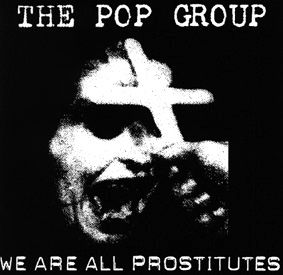
The Pop Group-We Are All Prostitutes (1980s/1998)


"It could have something to do with the fact that this is a compilation, but I still don’t buy it: judging from the tracklist of the other Pop Group LPs and comps, there’s not much of a difference here in terms of creating false cohesion, of bridging the lapses in a band’s output through the usual selective-memory procedures (Swell Maps, I’m looking in your direction)—everything seems to come from the same year or so, there’s a B-side here, but not much in the way of alternate mixes or singles-only tracks. In other words, there’s nothing that says the band couldn’t have put out this exact collection sometime before they imploded in 1980 or 1981. Therefore I have to conclude that this band just got a lot better: judging, after all, from the sporadically incoherent yet consistently bewildering Y, I was not sure if another Pop Group release was what I needed, at least right now. But here’s the incredible thing: whether it was because they spent more time hanging out with the Slits, or less listening to Crass and more listening to King Tubby, listening to this record is like watching the stoner in the back of your high school physics class suddenly start throwing out incisive questions about grand unified field theory. In short, it’s a tighter, far more accessible album that has the effect of retaining the righteous-activist’s indignation of Y while fusing the band’s unstable compound of disparate elements together into a listenable whole, intelligent enough not to fixate on the mirage of radical implications that often surround making inaccessible noise for its own sake.

The record certainly starts out letting one think the band’s succumbed to the seductions of fucking around: the indecipherable spoken sample and clattering rhythm track that begins “We Are All Prostitutes” in an appropriately extreme and caustic fashion is just deranged and alienating enough to make all who probably couldn’t make it through this album bail out immediately. But a minute into the track, a straightforward and well-conceived lyrical assault (“Aggression / Competition / Consumer fascism! / Capitalism is the most barbaric of our religions!”) rides atop what becomes a gutted-out disco bounce, replete with touches of scraping violin.

“Blind Faith” features an acute, head-spinning bass-and-drums groove that finally seems to realize the band’s promise of hybridizing JB’s, Gang of Four, and murky Kraut-inspired avant-ism: as Spartan yet instantly propulsive as anything recorded by ESG, the sinisterly muttered lyrics and threnodic horns take things in a grisly direction, yet the gradual acceleration of the track allows the ever-tight musicianship to expand itself in several directions at once without degenerating; an unexpectedly lovely percussive guitar coda that recalls Steve Reich is a welcome addition. “Justice,” another funk-driven track that’s heavy on the hi-hats, wah-pedal, and mind-bending noise effects in equal measure, features Mark Stewart’s most effectively, specifically exasperated vocal yet, railing against kangaroo courts, military aggression, imperialistic measures taken against Zimbabwe and Ireland. His saddened, I’ve-been-teargassed-too-many-times cries of “Who polices the police?” even echo Fela Kuti.

“Amnesty Report” sets just that—a report from Amnesty International of atrocities inflicted by the British on IRA members taken prisoner—atop an endlessly mutating, twitchy funk-and-percussion track that, while a tad Zappaesque and heavy on the found-sound spew, is one of the band’s most creative. Stewart here sounds colder, more sure of his convictions, than ever; if there was a campy and Jello-Biafra-like bemusement to be found in his previous vocals, there is, understandably, not a touch of it here. After that track grinds to a sudden halt, “Feed the Hungry” kicks in with an effective mixture of dancefloor groove and Remain in Light keyboard-drone psychedelia; Stewart again namechecks geographical locations of atrocity, all of which has is tersely broken down for the listener as follows: “The rape of the third world / World Bankers decide / Who lives and who dies.” (Even though the Illuminati is invoked, we can overlook it in this case.)

Breakneck, coming-apart-at-the-seams punk and bridge-burning funk are approximated on “Forces of Oppression,” which sounds a bit like “Give It Up and Turn It Loose” played by Ornette Coleman’s band circa his funky-catastrophe landmark Body Meta. It’s tracks like this one that require a cooldown like the sinister dub number “No Spectators,” a possibly Situationist-inspired indictment of all whose silent passivity implicates in atrocity. Of course, this is a heady charge to level against one’s audience, and it’s thankfully tempered throughout the course of the album to avoid simple dogmatism. The rousing, unexpectedly upbeat singalong of “Where There’s A Will” may be the highlight among all the offerings here; I can think of no more convincing offering of the post-punk era’s ability to assimilate what would appear to be incongruous idioms. Some delirious, downright Ohio-Players-esque guitar-and-bass runs and oddball Latin percussion keeps things appropriately joyous in the midst of struggle. Even if it’s a bleak one, it’s a party to which everyone’s invited."

Psycho crazy funked up political PUNK? You bet your ass.

EDIT: link fixed. my bad.

Where there's a will

Thursday, December 24, 2009

Camberwell Now-All's Well (1992)


"All's Well is an excellent compilation which gathers together nearly everything officially released by The Camberwell Now during their existence from 1983 to 1987 - two 12" singles, an album and stand alone tracks which appeared on compilations - in chronological order. Their music was informed by a strong sense of place (Camberwell is a largely working class area of South London) and time; their lyrics, especially on the Ghost Trade, were highly critical of Mrs Thatcher's Britain.

The first four tracks come from the debut 12" single, Meridian. One track, a brief instrumental called Trade Winds, is not included here, presumably so that everything could fit onto a single CD. The first three songs sound more like Hayward solo than a group effort; he has the sole writing credit, and there is a minimal feel to the arrangements. The common theme is water, a recurring motif in Hayward's lyrics. Cutty Sark opens the proceedings, a song about the famous sailing vessel now moored on the river Thames near Camberwell. The arrangement is simple; a melodica refrain, cymbal and vocal by Hayward with bass and tambourine by ex This Heat colleague Charles Bullen, and the lyrics are about the ship's past as a vessel for trade with outposts of the British empire. Pearl Divers maintains the theme and mood, with keyboards and minimal percussion backing another mournful vocal. Dunkirk Spirit sees the entry of the full drum kit, played with a featherlight jazzman's touch, and an extended scat vocal introduction. Throughout these three tracks there is a feel very similar to Robert Wyatt circa Rock Bottom, and the lyrics reflect the band's left wing political views in an intelligent, understated manner. Resplash is a lengthy instrumental that reworks Splash, the closing track on the original 12" single and which gives the first full flavour of the band; Trefor Goronwy plays some nimble bass and also adds some ukulele, Hayward gets busy behind the kit and adds some simple keyboard motifs and Steven Rickard's loops and manipulations add the same kind of wild card to the mix that Gareth Williams' keyboards and tapes added to This Heat.

Next up is a stand alone track, originally issued only on an obscure and long deleted cassette compilation. Daddy Needs A Throne is effectively a curtain raiser for their album; the backing of the song is played on bass and drums with Trefor Goronwy using the full range of his instrument to play both low end rhythm and high end riffs and solos. Steven Rickard's tape work adds extra textures in the breaks, but it's basically a manic vocal/bass/drums performance with some extremely tight changes of tempo and metre. The Robert Wyatt influence is a lot less noticeable here - the sound is closer to Krautrock, with echoes of Can, Neu! and Faust discernible although the the lyrics and vocals are unmistakably English.

The band's solitary full length album, The Ghost Trade, was a remarkable achievement that demonstrated just how powerful a unit The Camberwell Now had become. Hayward and Goronwy had coalesced into an unbelievably tight, focussed rhyhtm section and the songwriting had found a distinctive, unique voice of its own. There are just 6 comparatively lengthy tracks on the album, and the musicians give themselves plenty of space and scope without degenerating into pointless noodling. The first two tracks, Night Shift and Sitcom, are in the same style as Daddy Needs A Throne - voice, bass and drums carry the bulk of the arrangement, with keyboards or tapes providing simple washes of sound or background drones. Abrupt shifts of rhyhtm and tempo occur throughout, while the lyrics take critical sideswipes at Mrs Thatcher's Britain. The pace slows down with Wheat Futures, which features no drumming for its first half, followed by a lengthy and discordant coda with ritual percussion and dark keyboard figures that recall Univers Zero's more sombre moments. 80s production values are in evidence on Speculative Fiction, which has what sounds like a sequencer generated bass line and a hypnotic bass/snare drum beat, which Hayward and Goronwy play over, around, under, across and through. Portions of the lyrics are spliced together from different voices (friends and neighbours, according to the credits) and the whole thing has bizarre echoes of 80s Pink Floyd. The Green Lantern is the shortest piece on the album, and features some heavy electronic distortion - it wouldn't have sounded out of place on a Can album circa Ege Bamyesi. The album closes with the title track, which clocks in at over eleven minutes. The lyrics hark back to This Heat's mighty SPQR, while the music builds up at its own pace. The instrumental section which closes the piece is carried by a simple motif that sometimes sounds like a glockenspiel, other times like a musical box. The bass and drums weave ever stranger patterns, while a simple electronic drone holds the whole thing together. All in all, The Ghost Trade is a masterful album which repays repeated and careful listening - an essential piece of 80s RIO.

A couple of significant changes had taken place by the time of Green Fingers, their final recording. The line up was augmented by Maria Lamburn on reeds and viola, and for the first time they were not recording in Cold Storage, the studio established by This Heat ten years previously. The result was something of a mixed success; the title track, apparently an old This Heat song, is a superb piece with extremely powerful bass and drums and some excellent jazzy interjections from Lamburn on soprano sax. The mood is maintained on The Mystery of The Fence, which moves into slightly more discordant territory and which has an extremely busy arrangement. Know How features Goronwy's only lyrical contribution to the Camberwell Now, and is a mournful, oddly inconclusive piece followed by a brief, sombre instrumental. For the first time since the songs which opened Meridian there is a note of uncertainty in evidence, and like the debut 12" single Greenfingers is good but rather patchy.

The Camberwell Now experienced little commercial success in their lifetime, which is odd given the extremely high standard of their output. Their bass/drum/vocal excursions may well ahve been a formative influence on Ruins - Yoshida Tatsuya is a big fan of Hayward's, and Cutty Sark was to remain in Hayward's solo live set. Comparisons with This Heat are inevitable, but they were emphatically not This Heat part 2; this was a band with its own sound and agenda and which developed into an entity as disticnct from its parent band as Art Bears was from Henry Cow or Matching Mole from Soft Machine. On the Ghost Trade they equalled This Heat's considerable achievements with their own, and on their other releases they explored other ideas and styles with varying degrees of success, some of which would inform Charles Hayward's solo career. All's Well is an excellent collection even though not quite complete, and is best listened to in segments corresponding to the original releases. Strongly recommeneded."


I'm a really huge This Heat fan so I can't get enough of them or anything remotely related. This is much more accessible than most of This Heat's work but Charles Hayward is a true musical master as evidenced here. Often straddling the fence between electronic, prog and the like, Camberwell Now is super hard to put your finger on, but that's the beauty of such releases anyway. Wonderful listen, especially "Wheat Futures." Gets me every time.

There's a force field on the front lawn

Monday, December 21, 2009

Pere Ubu-Dub Housing (1978)


"Ehteen years ago, the Minutemen posed a certain unforgettable question to their listeners. “Do you want New Wave or do you want the truth?” they asked us, and even if the first signifier is no longer as potent in inspiring disgust as it once was – given that today’s music, chart-pop and indie, proliferates with New Wave nostalgia – and even if its signpost has yellowed a bit with age, if our vinyl copies of Double Nickels on the Dime (remember, only the double LP has the “Ain’t Talkin’ ‘Bout Love” cover, before you jump down my throat on this one, and no, I don’t own it either) have since harvested their share of crackle and skip, I think this question is as relevant today as ever. Fans of adventurous music make a difficult choice, the same one the early punks made when choosing, in terms of appearance and action, to separate themselves from society and risk ridicule – well, far more than ridicule. I’m sure if you’re reading this, someone’s probably yelled something vague about being a fag at you for the way you dress or because you sucked at gym, but as books like Our Band Could Be Your Life and the typo-ridden, fanatical, weirdly compelling American Hardcore make clear, punks – the one thing street gangs, cops, and fratboys all could agree they hated – got handed beatdowns more often than not in ‘81.


So we can choose what we listen to and what we look like, it’s our decision whether to try to make ourselves acceptable to the people who most likely hate us, to watch bad TV so we have something to discuss over the water cooler, or to go elsewhere. Elsewhere is a lonely place. But I like to think this choice is a rewarding one; I’m not here to pontificate about how all mass cultural product equals grotesquely sexualized, rage-glamorizing offal, and that its purported alternative is often little more than a highbrow or subculture-cachet version of same, but let’s just say that Pere Ubu are the truth and forge ahead.


Of course, the truth – the genuine article, not the instrument of power that Foucault railed against – can be difficult to understand. No more cryptic, disjointed, and unpleasant an album could rightly be called a classic, unless we speak of the perverse fascination we reserve for outsider music. And this could be outsider music in a sense, only created by a band entirely aware of what they’re doing yet seemingly driven to do so. Listen to “Navvy” and you get a bright, almost cheery guitar figure that quickly finds itself in knots beneath squawks of blocky keyboard, and a rhythm that keeps falling to shreds, usually while another vocalist besides the inimitable Dave Thomas (who seems lost amidst the chaos in the childlike idyll of discovering that he’s “got these arms and legs that flip-flop, flip flip-flop”) informs us, “Boy, that sounds swell.” It’s a perverse mess, and a great lead-in to what follows. The surrealistic call-and-response game that propels “On The Surface” – which features the signature Ubu elements of a pulsing bassline, watery, happy-or-on-some-other-plane melody, and found-sound marginalia – presents us with what we’ve come to expect, but seems to end suddenly, giving way to the somewhat troubled title track. Thomas seems to be huddled in the corner of the darkened room he wrecked on the last album’s “Sentimental Journey,” lyrically concerned this time with the humanist Babel of frustrated tenants in a breathing building not without its own torments, its instrumental section, ushered in by an eloquent saxophone and featuring a similar restraint in its guitar-and-piano jumble, is a true highlight.


“Caligari’s Mirror” offers drama and grime in some of Thomas’ most out-there, intoxicated wailing, as well as a thrilling, motley, full-band chorus that seems intent on waking the very neighbors mentioned in the last track. Some unaccompanied, seasick bass-and-guitar figures, which offer a premonition of the obsessive-compulsive album-closer “Codex” (a quick recap: Thomas thinks about a girl all the time, he hangs around his public library copying obituaries from the local papers and articles from the Wall Street Journal, surrounded by bags both paper and plastic, and he thinks about her all the time, all the time, all the time) lend more than a hint of unease to this beery sojourn, however, a grimness that continues in the (overlong) next track, which offers more of the same, plus some off-tempo percussion, sonic horror-film ephemera, fantastic, cartoonish, Ravenstine-supplied monster-chomping sounds, and, well, lord knows what else. It’s called, appropriately enough, “Thriller!” This could’ve easily been an alternate title for an album filled with such an excess of psychic turmoil, but then what would Michael Jackson have done? Besides go crazy, I mean.


“I Will Wait” clocks in at under two minutes, a hopeful slice of hopelessness that nevertheless manages to come across as the rather more affirmative cousin to The Modern Dance’s “Life Stinks,” with its full-band drumrolls replaced by an intense, unwieldy series of synthesizer-led buildups that allow the usually reined-in guitars to reach an approximation of previous Ubu efforts’ maximum volume before teleporting out in a cloud of twisted metal and asbestos. Suddenly, “Drinking Wine Spodyody” and “Ubu Dance Party” arrive in its stead, offering some of the album’s most indescribable moments; the former’s off-kilter near-funk (circling, maddeningly off-time keyboard figures manage to shift things nicely out of focus, as does a brief foray into bass-driven stomp that sounds like the Fall cross-bred with Uncle Meat-era Mothers of Invention) and the latter’s logic-defying and apocalyptic, well, dance-rock (listen to the atonal chorus that provides its finale and try not to think of a 1961 vocal group, only with woefully drug-corroded brains) manage to startle and confuse more often than not. If all punk sounded as anarchic as these two songs, all the media outrage might’ve been warranted.


Another meandering instrumental, “Blow Daddy-O,” with its methodical synth ululation, drum-machine provided click-track and too-painterly-to-be-written-off-as-simply-messy instrumental squall, recalls early Kraftwerk being harassed in an adjoining studio by Faust. Then it’s “Codex,” my pick for the most powerful, unromantic portrayal of mental instability that the band ever committed (no pun intended! Ha!) to tape: booming, slave-ship percussion and mordant chants give way to a minimal yet incredibly effective guitar line, joined again by the absent-just-long-enough-to-make-an-impact Thomas. “I think about you all the time,” he repeats over a haunting soundclash. “The day fades away and the night passes over / And I think about you all the time / I think about you all the time / Here come my shoes / Here comes me.” Does he sound disgusted with himself? Does he sound numb? Is there an ending to this story? Well, no, or at least, there is not one that we don’t have to supply on our own as the guitar lingers, caressing us.


Listening to this song, and of course this whole album, I often feel deliciously imcomplete. I want to play it again. I get obsessive. Maybe this is what “Codex” is about – Thomas could not be thinking about someone all the time but rather about his preoccupations with that someone (thinking about thinking about someone all the time!), or some form of meaning in his life of the sort that someone could or couldn’t provide, or rather about a nonexistent version of himself that possesses the meaning he seeks – and maybe, well, it isn’t. Pere Ubu excelled at sketching out the chasms within, the moments some of us find troubling and others relish in the same way they do the idea that their emotional shipwrecks, the idea that they’re far gone from ever living normal lives. In other words, if you like to lose yourself in art and its complexities, if you like your albums to verge on presenting you with meaning just before they diffuse into some waiting dark, this is the album for you; if you want the abstruse, puzzling truth, this is the album for you. I think it resonates with what Jorge Luis Borges refers to in his famously inconclusive essay “The Wall and the Books.” “Music,” he writes, “states of happiness, mythology, faces belabored by time, certain twilights and certain places try to tell us something, or have said something we should not have missed, or are about to say something; this imminence of a revelation that does not occur is, perhaps, the aesthetic phenomenon.”

This record has been blowing my mind lately. From those glorious uplifiting moments to those moments of sheer terror, this album has it all tied it up in a wonderfully weird and enjoyable package. It's all over the place so if that's your bag, reach on inside. Very highly recommended

Have you heard about this house?

Thursday, December 10, 2009

The Fall-Hex Enduction Hour (1982)


"or the uninitiated, entering the wonderful and frightening world of the Fall can be an overwhelming experience. Not only does the “band” (which has performed in various incarnations since the late 70’s, but always with the indestructible crux of the perennially trashed Mark E. Smith) have more albums than years of existence under their collective belt, but mucked-up distribution of their records has generated barrelfuls of compilations and odd re-re-re-releases. That said, if you are to delve into three records by the Fall in your mortal life, the recently reissued (cleaned up and expanded) Hex Enduction Hour ought to be one of them. To dispense with the formalities, it’s a good remaster for an album that deserved it, and while none of the second disc’s added goodies are particularly stellar, they nevertheless serve as a little gravy to an already superb record.

Originally released in 1982 as their fourth studio album, Hex demonstrates the culmination of “early” Fall: a monolithic beast of ragged grooves piloted through the embittering miasma of English society by the verbose acidity/Joycean all-inclusiveness of Mark E. Smith. By then, the band’s sound had expanded outwards, having graduated to two drummers and allowing the abrasive patchwork of Marc Riley and Craig Scanlon’s guitars to drift further into clattering abstraction, each player pulling their creativity taut from an invisible center. Along with Wire, the Fall serves as one of the earliest and most successful attempts to elevate punk formalism (i.e. the consciously simple, spirited, and non-virtuosic) to the level of more exploratory, experimental music, an approach that we now call “post-punk,” but whereas Wire turned to icy, synth-laden paranoia, the Fall (at this point in their career) folded in the Neanderthalic kitchen sinkism of early Faust and the lovingly crass fusion of Can, peppering them with some of the thudding, demeaned pop-redux that would come to mark their mid-80’s work.

Immediately, “The Classical” sets a tone that characterizes the entirety of the record: dreary, cluttered, and seemingly decaying, but lurching forward with an unflinching certainty—the only flickering torch song in a cavity of deadened automatons. “There is no culture is my brag, your taste for bullshit reveals a lust for a home of office.” Of course, it’s ultimately Smith that gives a name to the beauteous shitstorm, delivering his dense, volatile rants in a trademark nasal snarl with a sing-speak pace that truly lets them cook, unmasking their dissent and pure poetry, erratically crying out “THIS IS THE HOME OF THE VAIN!,” only to consent that “I’ve never felt better in my life” in a bleary deadpan, ad infinitum, a comment whose inscrutability verges on chilling.

What’s tremendous, singular, and affecting about Smith is that it’s hard to tell where he actually stands: the heartbreaking scope and sensitivity of his lyrics shows a mind not of suffocating nihilism, but keen detachment, cynicism, and understanding, setting him as much at odds with the spitting reactionaries of punk as with the tidy Thatcherite society that fueled their hatred. If “The Classical” partially mimicked the illusory freedom and faux-revolutionary discontent of youth, “Fortress/Deer Park” takes aim at it, exposing the squatter squalor of a Nazi fortress where, after talking in circles “with four left wing kids,” Smith tiptoes by the toilets to the sound of a urine-stained fanfare: “and Good King Harry was there fucking [BBC’s original ‘Top of the Pops’ DJ] Jimmy Saville.” It’s upon his exit that the sky begins to open up for the gloriously apocalyptic scene of the deer park: when Smith says “I took a walk down West 11, I had to wade through 500 European punks” his voice coursing through a droning organ, a single flame on the verge of being blown out, it exudes chaos on the brink of pure bliss, the sound of Smith entering hell itself. The band reaches its boiling point, a relentless Stooges-like stomp tied together by an endless ribbon of gnashing teeth, Smith drowning in the deluge of noise, twisting amidst the inescapable artists, kids, and subculture hawks swarming like locusts all around, cheating out “the young blackies… in the English system they implicitly trust, see the A&R civil servants, they get a sex thrill out of a sixteenth of Moroccan,” a suffocatingly pathetic tableau of disappointments masquerading as hedonistic idealism, an interminably mounting pile of human trash.

And is there a way out? “Just Step S’Ways” is the closest the Fall gets to a motivational moment, and it’s hardly anything to smile about, as Smith leads the Fall Soul-Wrangler Revue trumpeting the empty rah-rah sentiment to “just step outside this grubby place today,” employing the falsely empowering sentiment of advertisements, the illusion of a life-changing consumerism. We’re left with our fists flaccid in the goddamn air with absolutely nowhere to look, before being piled like waste into the subtle, lopsided discord of “Who Makes the Nazis?,” to which the answer is, basically, everyone, from intellectual half-wits to George Orwell to the BBC. If there’s any moral, it’s a difficult one to swallow: everything we see wrong with the world is a conspiracy of our hates and our loves, every antagonist has its circumstances, its foils, its antecedents—more than anything, it’s a plea for thorough consideration of one’s surroundings, a deep-seated skepticism that perpetually disrupts the spirit yet elevates understanding. Smith laments on the loping infinity of “And This Day” that there’s “just no fucking respite for us here… you even mistrust your own feelings.” Like the cover of the record itself, Hex is a concrete chunk of clanging urban graffiti, a haze of cryptically scrawled half-thoughts preached like glossolalia to form a cross section rife with painful contradictions and holes too deep to fill, a picture whose dizzying intersections of raw, loose ends only serve to elevate its bleak beauty."

An old favorite of mine for certain. It's hard for me to get over those jagged guitars, tight rhythm section and snarled, alienated vocals as the years go by. Many of you probably have this or have heard it but it is an absolute classic and is deserving of a listen at the very least. Highly recommended.

This is the home of the vain