Showing posts with label rock. Show all posts

Monday, November 15, 2010

Miles Davis-On the Corner (1972)


There's no introduction necessary, is there? I mean, he's MILES. But I wanted to draw some attention to this one, which kind of seems like one of those "lost" albums that a minority discover in a classic musician's massive discography. I'm probably wrong but that doesn't change how fucking incredible this is. Possibly more psyched out than "Bitches' Brew." Essential.

Vote for Miles

Saturday, March 6, 2010

Om-Conference of the Birds (2006)


"Hinduism, “om” is the single most important syllable of existence, representing the confluence of deep sleep, dreams, and consciousness, and their mystic separation from the idea of the absolute which is beyond everyday human comprehension. There are also connections with the life cycle - the sound “om” being made of “a” which represents creation and Brahma, “u” which is Vishnu or the middle period of life, and “m” represents Shiva, whose meditation frees us from the concrete world. Om is a trinity, the exact components of which depend on which interpretation you’re using. I won’t pretend to be an expert in Hindu myth or meaning, but these basic tidbits are enough on their own to at least partially explain the sounds contained on Conference of the Birds. And while it may be mere coincidence that Om formed out of two thirds of Sleep (you could probably debate which two parts of the “om” Al Cisneros and Chris Hakius represent, but it would only make any sense if you were either a huge metalhead, a giant stoner, a Hindu scholar, or some combination of the three), the symbolic connection between the two in this context is too much to ignore. To get perhaps a bit too literal here, om is the step beyond sleep towards some kind of transcendence. Which isn’t to say that music of Om is any “deeper” or “more advanced” than that of Sleep, just that it operates on a different level with a different set of tools.

Conference of the Birds is structurally and sonically similar to its predecessor, Variations on a Theme – repeated bass licks and drum patterns that gradually evolve over the course of about 15 minutes. The second song (each song spans about 20 tracks, presumably to thwart piracy), “Flight of the Eagle,” could very easily be the fourth track on Variations both in character and in sound. Cisneros’ bass sound is dense and fuzzy and his vocals are an imposing chant musing on some mythic journey or battle occurring in ancient Egypt, while Hakius keeps a solid beat centered around his bell-like cymbal.

“At Giza,” on the other hand, represents a very different side of the group, one much closer to the concept of om than anything else they’ve done. Simply put, the music is much tauter than before, with less overall weight. The bass tone is clean, devoid of any distracting distortion, the drums are slower, more hypnotic, the vocals more an incantation than a chant, returning to words like “sentient,” “aperture,” and other archaic multisyllabics. And while the imagery is more an opium-den vision than a meditative dream, the words are there more as sounds and rhythm and quickly lose their meaning.

Whether you view it as stoner wisdom, opium hallucination, or mystic journey, this album is about transcendence. The Conference of the Birds is, amongst other things, a 12th century Sufi metaphysical parable on discovering the true nature of God, mimicking the journey of the avatar protagonist of both of Om’s songs. Farid ud-Din Attar’s poem comes to the conclusion that God is not to be found in a single place but all around, in every aspect of life and the world. So despite the fact that Om comes from the Hindu, references the Sufi, and uses the language of the Egyptian, they draw from each the same idea: that the world beyond the tactile is not that far away."-Dusted

Highly recommended. On the run. More posts soon.


At Giza

Tuesday, March 2, 2010

Cindytalk-Camoflage Heart (1984)


"
Longtime regular aQ customer Joshua Maremont commented that Cindytalk's Camoflage Heart is a record which was only really meant for about 30 people. Not that only 30 copies of this record were released, or that it is so terminally obscure and willfully difficult that it by design has a marketing ceiling of an elite few. What he's on about is that Camoflage Heart is such a personal document of self-realized torment, pain, and sorrow that when Cindytalk embarked on the project, it's hard to imagine that they had any delusions about the intensity of this album and the potential for these songs to alienate beyond a limited few.
At the helm of Cindytalk is transgendered vocalist Gordon Sharp, who to this day is probably still best known as one of the multitude of vocalists who appeared in This Mortal Coil. In many ways, Sharp is the masculine equal to the Cocteau Twins' Liz Fraser in delivering expressionist falsettos, trills, and banshee wails in an eerie, yet heavenly fashion. He's one of those few vocalists who can make the lyrics embody their content by shaping the words into emotionally charged sound. In fact, Sharp and Fraser had come together for a duet back during the Cocteau Twins' Peel Sessions of 1983. In his 4AD lineage, Gordon Sharp's first band was the criminally overlooked punk-glam ensemble The Freeze, where his Marc Bolan strut matched the nightmarish lyrics on top of some truly fantastic Bowie / Buzzcocks sparkplug riffs. Sharp, alongside fellow Freeze band members John Byrne and David Clancey, found shortcomings in the glam punk agenda, and sought a wholly new direction that became Cindytalk.
While undeniably dark and theatrical, Cindytalk cannot be pigeonholed as an '80s goth band, even in comparison to such off-kilter groups like The Virgin Prunes, Princess Tinymeat, or Sex Gang Children. Camoflage Heart was Cindytalk's first album and originally came out in 1984; and it's an album like those This Heat albums which is quite unique in terms of production and aesthetic. The album opens with the militant drum machine of "It's Luxury" setting the stage for an explosion from a monotone guitar riff, coated in amplifier grit, distortion, and detuned heaviness that comes across as a mix between late-'80s Skullflower and The Cure's Pornography. At this moment, Sharp's voice also erupts into the mix crooning with a downtrod beauty to this industrial dirge, spitting and swooning at the same time. The next track "Instinct (Back To Sense)" is more of an ambient interlude with distant heartbeat rhythms, haunted with impressionist piano trickles and Sharp's siren song buried between an atmosphere of smoke and mirror. Two more explosive tracks -- "Under Glass" (featuring Mick Harvey from the Birthday Party for a disjointed stutter of abject rock) and "Memories of Skin and Snow" -- are examples of loud / quiet / loud dynamics, later embraced by the likes of Slint and Mogwai to equally profound effect. "Everybody Is Christ" is often viewed as the pinnacle of Camoflage Heart with its harsh arppegiation of electronics cast against Sharp's heavenly voice. Soon after, the album disintegrates in a cascade of delicate piano, voice, and grim drones.
As Cindytalk had suffered through the fate of several record companies going out of business (first Midnight Records then World Serpent), their work might have been forgotten had it not been for this reissue. Thankfully, that oversight can now be remedies with this long overdue reissue."-aQ

Music for those dog days of winter. Sorry for the lack of posts lately. Life moves fast, ya dig?

Memories of skin and snow

Wednesday, February 17, 2010

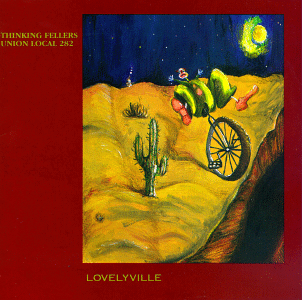
Thinking Fellers Union Local 282-Lovelyville (1991)


"
What if I told you there was a band out there that combined the screeching distortion of Sonic Youth and added it with the total absurdity of complete wackos Sun City Girls? Thinking Fellers Union Local #282 fit comfortably within this description. One thing I must make clear though, this band is not for those without patience.

Those who approach this with an open mind and are ready to take in all the sounds spinning around their head will find them to be an enticing, rewarding listen. A factor that contributes to this are the many interludes spread across each album (commonly known among fans as “feller filler”) which are at times amusing, melodic or downright annoying. Supposedly, the reason for this is that the band are such virtuosos at their respected instruments that they did not want to be taken in such a serious way, hence an attempt to include some bizarre breaks from the songs. The ‘feller filler’ is something that takes a while to get used to but eventually they will serve as mood pieces or good ways to flow from track to track.

Another reason is the previously mentioned skill of the players. Thinking Fellers Union Local #282 do not employ the techniques of just two guitar players but three, which makes for some fantastic interplay between the uniquely tuned angular guitars. Another is the brilliant lyrics which are not noticeable on the first listen but slowly unravel to the listener as more listens are required. Take for example a line semi-spoken in the opening track ‘Four O’Clocker 2’: ””She soiled my sheets and stepped on my feet, bled on my towels and opened her bowels beneath my pillow, where my head should rest to escape the rest”… just one of the many strange and mesmerizing lyrics strewn across the album.

“Lovelyville” is the third album in the band’s catalogue and shows when they really started to come in to their own. Away were the practice session jam tapes that clogged up the majority of “Wormed by Leonard” (which, in all due respect, is still an excellent recording) or the dislikeable sheen that shrouded “Tangle”; this was truly when TFUL282 created the idiosyncrasies which would stick with them throughout the rest of their career. Though “Mother of All Saints” would be where the sound presented here would be toned and refined, this still presents a case that startles the listener into locked attention.

‘Nail in the Head’ demonstrates just how well the band works together. The chemistry in their sense of timing and interlocking parts illustrates a unified bond between the members. One thing I forgot to mention is the drumming which is usually superb. There is no heavy primitive pounding of the drum kit nor is there any particular part where the drumming bursts out and takes the forefront, but what is displayed is a real understanding of the instrument. Everything is very set in the background and a closer inspection reveals some very tricky rhythms set in a merger of different styles.

Arguably the centrepiece of the record is ‘2x4s’ which is a melancholic romp through the minds of TFUL282. The parts coalesce so beautifully that I can not describe it as anything else other than a perfect song. The progression of the chords melting in with the pleasant addition of a saxophone creates a perfect consonance between all the textures. What is so pleasant about the addition of the saxophone is that it isn’t really a major piece of the composition but only accents what is already there which makes it’s appearance all the more welcome. My personal favourite is “Sinking Boats” which is cathartic in nature and doesn’t take many breaks from the full-on power environment the track produces. One of the few times I’ve seen a band take dissonance and make it completely catchy and memorable.

If there is a problem I have with this album, it is that it is not as concise as future releases will be but the band are just starting to develop their signature sound which is forgivable. This is still a sprawling soundscape of absurdity, creative melodic passages and dissonance. “Mother of all Saints” may be their magnum opus but “Lovelyville” sits comfortably in their discography as an accomplished piece of work."

I've been feeling weird lately. And this is a wonderful remedy. Weird stuff.

Nothing solid

Friday, February 12, 2010

Blind Idiot God-Undertow (1989)


"For its second album, Blind Idiot God enlisted the services of producer Bill Laswell, but the results show little difference from the attack evidenced on the band's initial release. Once again, the band alternates between surging instrumental barnburners like "Sawtooth" and "Drowning" and spare, evocative dub-oriented songs. Both are handled with the same imagination and confidence that the group had previously exhibited; this was one extremely tight and talented power trio. Andy Hawkins' compositions often take surprising turns during their short duration, themes bending and elongating in a manner providing delicious tension. Ted Epstein's drumming is a marvel to hear, combining an overwhelming strength with an unusual subtlety of rhythmic choices that one doesn't often hear in music as ostensibly rock-based as this. Two tracks stand out as departures from the group's first album: a cover of George Clinton's "Alice in My Fantasies" wherein Blind Idiot God shows that it can also handle power funk quite capably, and the final cut, "Purged Specimen." For this number, the trio is joined by saxophonist, composer (he wrote the piece), and lover of hardcore thrash John Zorn. The track sounds much more like a Naked City song than a typical Blind Idiot God rave-up though, again, it's an example of the band successfully navigating hitherto unexplored territory. Listeners who enjoyed the band's debut album will find more of the same here, even if they suspect that a bit of a rut is being established."

Quick upload. But recommended. Especially for you Dub fans. Trust me.

Watch yer step

Wednesday, January 27, 2010

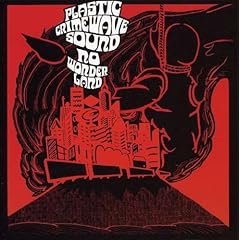
Plastic Crimewave Sound-No Wonderland (2006)


"The more I dig into this newest Plastic Crimewave Sound double LP, Steve Krakow’s second proper album in this guise, the more I hesitate to describe it using that popular appellation with the silent P. Oh yeah, it can be pretty loud, much of the music submerged in shockwaves of feedback and delay, but how organized and lucid it all is. Levels of timbral, even orchestral, detail emerge in ways only glimpsed in earlier releases. The brutally chilling “Into the Future” deposits layers of the most transparent guitar mud, twangy and fuzzed out, over some sort of punchy post-punk bass groove, soaked with the clear-and-present danger of distantly shrill synth jittering. Vocoded mantras, most contoured to end on the same droning pitch, add to the tune’s cliché but effective gestalt of mechanized fear. It works similarly to Gary Numan’s “Down in the Park” until the end, where a brilliantly obscure flash of vaguely Latin percussion infringes, ala Santana’s “Soul Sacrifice.” (Or was it really always there?)

It’s a strangely iconic historical vision; PCS doesn’t go for pure studio experimentation in a pop frame; you won’t find anything here like Tomorrow’s “My White Bicycle,” with its tape flips and ahead-of-their-time manufactured beats. The drums are usually wet but hot, almost early 1980s in presentation. There’s plenty of scree on tracks like “Far In/Out,” but the album is equally full of beautiful Eastern waftiness – acoustic guitars, miasmic stretches of tabla and sitar, even orchestral strings! It’s as if Krakow has constructed a loosely defined musical in honor of the ’60s and what followed, each side of the album prefaced by some spoken poetry courtesy of high-powered guests like Tara Burke and Devendra Banhart. The effect is enhanced by bits of musique concrete, like the hugely disproportionate and industrial door-slamming and footsteps, manipulated almost out of recognition, that usher in the first instrumental track. The whole thing is really fantastic, best absorbed in one sitting, as PCS fosters his uniquely inclusive take on rock’s recent history."

I'm not sure any band has made such an incredible and vicious first impression on me. I walked in from the frigid cold to the warmness of huge fucking tube amps melting my face off. Like MC5 jamming with Parson Sound and Acid Mother's Temple in some dingy bathroom with Klaus Dinger (Neu!) drumming. I don't know how else to describe it. Reverb drenched vocals etching itself into my very sub-conciouss. Plastic Crimewave/Steve Krakow (the man, the myth the legend) wailing away with that guitar. I know this is all personal experience and seeing this band live is definitely recommended over the album but if you're looking for bands carrying on the psychedelic spirits of yore, here comes your band. Fucking. Awesome.

Shake your dying cowboy mind

Thursday, December 24, 2009

Camberwell Now-All's Well (1992)


"All's Well is an excellent compilation which gathers together nearly everything officially released by The Camberwell Now during their existence from 1983 to 1987 - two 12" singles, an album and stand alone tracks which appeared on compilations - in chronological order. Their music was informed by a strong sense of place (Camberwell is a largely working class area of South London) and time; their lyrics, especially on the Ghost Trade, were highly critical of Mrs Thatcher's Britain.

The first four tracks come from the debut 12" single, Meridian. One track, a brief instrumental called Trade Winds, is not included here, presumably so that everything could fit onto a single CD. The first three songs sound more like Hayward solo than a group effort; he has the sole writing credit, and there is a minimal feel to the arrangements. The common theme is water, a recurring motif in Hayward's lyrics. Cutty Sark opens the proceedings, a song about the famous sailing vessel now moored on the river Thames near Camberwell. The arrangement is simple; a melodica refrain, cymbal and vocal by Hayward with bass and tambourine by ex This Heat colleague Charles Bullen, and the lyrics are about the ship's past as a vessel for trade with outposts of the British empire. Pearl Divers maintains the theme and mood, with keyboards and minimal percussion backing another mournful vocal. Dunkirk Spirit sees the entry of the full drum kit, played with a featherlight jazzman's touch, and an extended scat vocal introduction. Throughout these three tracks there is a feel very similar to Robert Wyatt circa Rock Bottom, and the lyrics reflect the band's left wing political views in an intelligent, understated manner. Resplash is a lengthy instrumental that reworks Splash, the closing track on the original 12" single and which gives the first full flavour of the band; Trefor Goronwy plays some nimble bass and also adds some ukulele, Hayward gets busy behind the kit and adds some simple keyboard motifs and Steven Rickard's loops and manipulations add the same kind of wild card to the mix that Gareth Williams' keyboards and tapes added to This Heat.

Next up is a stand alone track, originally issued only on an obscure and long deleted cassette compilation. Daddy Needs A Throne is effectively a curtain raiser for their album; the backing of the song is played on bass and drums with Trefor Goronwy using the full range of his instrument to play both low end rhythm and high end riffs and solos. Steven Rickard's tape work adds extra textures in the breaks, but it's basically a manic vocal/bass/drums performance with some extremely tight changes of tempo and metre. The Robert Wyatt influence is a lot less noticeable here - the sound is closer to Krautrock, with echoes of Can, Neu! and Faust discernible although the the lyrics and vocals are unmistakably English.

The band's solitary full length album, The Ghost Trade, was a remarkable achievement that demonstrated just how powerful a unit The Camberwell Now had become. Hayward and Goronwy had coalesced into an unbelievably tight, focussed rhyhtm section and the songwriting had found a distinctive, unique voice of its own. There are just 6 comparatively lengthy tracks on the album, and the musicians give themselves plenty of space and scope without degenerating into pointless noodling. The first two tracks, Night Shift and Sitcom, are in the same style as Daddy Needs A Throne - voice, bass and drums carry the bulk of the arrangement, with keyboards or tapes providing simple washes of sound or background drones. Abrupt shifts of rhyhtm and tempo occur throughout, while the lyrics take critical sideswipes at Mrs Thatcher's Britain. The pace slows down with Wheat Futures, which features no drumming for its first half, followed by a lengthy and discordant coda with ritual percussion and dark keyboard figures that recall Univers Zero's more sombre moments. 80s production values are in evidence on Speculative Fiction, which has what sounds like a sequencer generated bass line and a hypnotic bass/snare drum beat, which Hayward and Goronwy play over, around, under, across and through. Portions of the lyrics are spliced together from different voices (friends and neighbours, according to the credits) and the whole thing has bizarre echoes of 80s Pink Floyd. The Green Lantern is the shortest piece on the album, and features some heavy electronic distortion - it wouldn't have sounded out of place on a Can album circa Ege Bamyesi. The album closes with the title track, which clocks in at over eleven minutes. The lyrics hark back to This Heat's mighty SPQR, while the music builds up at its own pace. The instrumental section which closes the piece is carried by a simple motif that sometimes sounds like a glockenspiel, other times like a musical box. The bass and drums weave ever stranger patterns, while a simple electronic drone holds the whole thing together. All in all, The Ghost Trade is a masterful album which repays repeated and careful listening - an essential piece of 80s RIO.

A couple of significant changes had taken place by the time of Green Fingers, their final recording. The line up was augmented by Maria Lamburn on reeds and viola, and for the first time they were not recording in Cold Storage, the studio established by This Heat ten years previously. The result was something of a mixed success; the title track, apparently an old This Heat song, is a superb piece with extremely powerful bass and drums and some excellent jazzy interjections from Lamburn on soprano sax. The mood is maintained on The Mystery of The Fence, which moves into slightly more discordant territory and which has an extremely busy arrangement. Know How features Goronwy's only lyrical contribution to the Camberwell Now, and is a mournful, oddly inconclusive piece followed by a brief, sombre instrumental. For the first time since the songs which opened Meridian there is a note of uncertainty in evidence, and like the debut 12" single Greenfingers is good but rather patchy.

The Camberwell Now experienced little commercial success in their lifetime, which is odd given the extremely high standard of their output. Their bass/drum/vocal excursions may well ahve been a formative influence on Ruins - Yoshida Tatsuya is a big fan of Hayward's, and Cutty Sark was to remain in Hayward's solo live set. Comparisons with This Heat are inevitable, but they were emphatically not This Heat part 2; this was a band with its own sound and agenda and which developed into an entity as disticnct from its parent band as Art Bears was from Henry Cow or Matching Mole from Soft Machine. On the Ghost Trade they equalled This Heat's considerable achievements with their own, and on their other releases they explored other ideas and styles with varying degrees of success, some of which would inform Charles Hayward's solo career. All's Well is an excellent collection even though not quite complete, and is best listened to in segments corresponding to the original releases. Strongly recommeneded."


I'm a really huge This Heat fan so I can't get enough of them or anything remotely related. This is much more accessible than most of This Heat's work but Charles Hayward is a true musical master as evidenced here. Often straddling the fence between electronic, prog and the like, Camberwell Now is super hard to put your finger on, but that's the beauty of such releases anyway. Wonderful listen, especially "Wheat Futures." Gets me every time.

There's a force field on the front lawn

Monday, December 21, 2009

Pere Ubu-Dub Housing (1978)


"Ehteen years ago, the Minutemen posed a certain unforgettable question to their listeners. “Do you want New Wave or do you want the truth?” they asked us, and even if the first signifier is no longer as potent in inspiring disgust as it once was – given that today’s music, chart-pop and indie, proliferates with New Wave nostalgia – and even if its signpost has yellowed a bit with age, if our vinyl copies of Double Nickels on the Dime (remember, only the double LP has the “Ain’t Talkin’ ‘Bout Love” cover, before you jump down my throat on this one, and no, I don’t own it either) have since harvested their share of crackle and skip, I think this question is as relevant today as ever. Fans of adventurous music make a difficult choice, the same one the early punks made when choosing, in terms of appearance and action, to separate themselves from society and risk ridicule – well, far more than ridicule. I’m sure if you’re reading this, someone’s probably yelled something vague about being a fag at you for the way you dress or because you sucked at gym, but as books like Our Band Could Be Your Life and the typo-ridden, fanatical, weirdly compelling American Hardcore make clear, punks – the one thing street gangs, cops, and fratboys all could agree they hated – got handed beatdowns more often than not in ‘81.


So we can choose what we listen to and what we look like, it’s our decision whether to try to make ourselves acceptable to the people who most likely hate us, to watch bad TV so we have something to discuss over the water cooler, or to go elsewhere. Elsewhere is a lonely place. But I like to think this choice is a rewarding one; I’m not here to pontificate about how all mass cultural product equals grotesquely sexualized, rage-glamorizing offal, and that its purported alternative is often little more than a highbrow or subculture-cachet version of same, but let’s just say that Pere Ubu are the truth and forge ahead.


Of course, the truth – the genuine article, not the instrument of power that Foucault railed against – can be difficult to understand. No more cryptic, disjointed, and unpleasant an album could rightly be called a classic, unless we speak of the perverse fascination we reserve for outsider music. And this could be outsider music in a sense, only created by a band entirely aware of what they’re doing yet seemingly driven to do so. Listen to “Navvy” and you get a bright, almost cheery guitar figure that quickly finds itself in knots beneath squawks of blocky keyboard, and a rhythm that keeps falling to shreds, usually while another vocalist besides the inimitable Dave Thomas (who seems lost amidst the chaos in the childlike idyll of discovering that he’s “got these arms and legs that flip-flop, flip flip-flop”) informs us, “Boy, that sounds swell.” It’s a perverse mess, and a great lead-in to what follows. The surrealistic call-and-response game that propels “On The Surface” – which features the signature Ubu elements of a pulsing bassline, watery, happy-or-on-some-other-plane melody, and found-sound marginalia – presents us with what we’ve come to expect, but seems to end suddenly, giving way to the somewhat troubled title track. Thomas seems to be huddled in the corner of the darkened room he wrecked on the last album’s “Sentimental Journey,” lyrically concerned this time with the humanist Babel of frustrated tenants in a breathing building not without its own torments, its instrumental section, ushered in by an eloquent saxophone and featuring a similar restraint in its guitar-and-piano jumble, is a true highlight.


“Caligari’s Mirror” offers drama and grime in some of Thomas’ most out-there, intoxicated wailing, as well as a thrilling, motley, full-band chorus that seems intent on waking the very neighbors mentioned in the last track. Some unaccompanied, seasick bass-and-guitar figures, which offer a premonition of the obsessive-compulsive album-closer “Codex” (a quick recap: Thomas thinks about a girl all the time, he hangs around his public library copying obituaries from the local papers and articles from the Wall Street Journal, surrounded by bags both paper and plastic, and he thinks about her all the time, all the time, all the time) lend more than a hint of unease to this beery sojourn, however, a grimness that continues in the (overlong) next track, which offers more of the same, plus some off-tempo percussion, sonic horror-film ephemera, fantastic, cartoonish, Ravenstine-supplied monster-chomping sounds, and, well, lord knows what else. It’s called, appropriately enough, “Thriller!” This could’ve easily been an alternate title for an album filled with such an excess of psychic turmoil, but then what would Michael Jackson have done? Besides go crazy, I mean.


“I Will Wait” clocks in at under two minutes, a hopeful slice of hopelessness that nevertheless manages to come across as the rather more affirmative cousin to The Modern Dance’s “Life Stinks,” with its full-band drumrolls replaced by an intense, unwieldy series of synthesizer-led buildups that allow the usually reined-in guitars to reach an approximation of previous Ubu efforts’ maximum volume before teleporting out in a cloud of twisted metal and asbestos. Suddenly, “Drinking Wine Spodyody” and “Ubu Dance Party” arrive in its stead, offering some of the album’s most indescribable moments; the former’s off-kilter near-funk (circling, maddeningly off-time keyboard figures manage to shift things nicely out of focus, as does a brief foray into bass-driven stomp that sounds like the Fall cross-bred with Uncle Meat-era Mothers of Invention) and the latter’s logic-defying and apocalyptic, well, dance-rock (listen to the atonal chorus that provides its finale and try not to think of a 1961 vocal group, only with woefully drug-corroded brains) manage to startle and confuse more often than not. If all punk sounded as anarchic as these two songs, all the media outrage might’ve been warranted.


Another meandering instrumental, “Blow Daddy-O,” with its methodical synth ululation, drum-machine provided click-track and too-painterly-to-be-written-off-as-simply-messy instrumental squall, recalls early Kraftwerk being harassed in an adjoining studio by Faust. Then it’s “Codex,” my pick for the most powerful, unromantic portrayal of mental instability that the band ever committed (no pun intended! Ha!) to tape: booming, slave-ship percussion and mordant chants give way to a minimal yet incredibly effective guitar line, joined again by the absent-just-long-enough-to-make-an-impact Thomas. “I think about you all the time,” he repeats over a haunting soundclash. “The day fades away and the night passes over / And I think about you all the time / I think about you all the time / Here come my shoes / Here comes me.” Does he sound disgusted with himself? Does he sound numb? Is there an ending to this story? Well, no, or at least, there is not one that we don’t have to supply on our own as the guitar lingers, caressing us.


Listening to this song, and of course this whole album, I often feel deliciously imcomplete. I want to play it again. I get obsessive. Maybe this is what “Codex” is about – Thomas could not be thinking about someone all the time but rather about his preoccupations with that someone (thinking about thinking about someone all the time!), or some form of meaning in his life of the sort that someone could or couldn’t provide, or rather about a nonexistent version of himself that possesses the meaning he seeks – and maybe, well, it isn’t. Pere Ubu excelled at sketching out the chasms within, the moments some of us find troubling and others relish in the same way they do the idea that their emotional shipwrecks, the idea that they’re far gone from ever living normal lives. In other words, if you like to lose yourself in art and its complexities, if you like your albums to verge on presenting you with meaning just before they diffuse into some waiting dark, this is the album for you; if you want the abstruse, puzzling truth, this is the album for you. I think it resonates with what Jorge Luis Borges refers to in his famously inconclusive essay “The Wall and the Books.” “Music,” he writes, “states of happiness, mythology, faces belabored by time, certain twilights and certain places try to tell us something, or have said something we should not have missed, or are about to say something; this imminence of a revelation that does not occur is, perhaps, the aesthetic phenomenon.”

This record has been blowing my mind lately. From those glorious uplifiting moments to those moments of sheer terror, this album has it all tied it up in a wonderfully weird and enjoyable package. It's all over the place so if that's your bag, reach on inside. Very highly recommended

Have you heard about this house?

Wednesday, November 18, 2009

King Crimson-Lizard (1970)


"
When I first heard this album I really didn't know what to make of it. It's like nothing else in the Crimson body of work, and it's not much like anything else by anyone else either. Most immediately noticeable is the way Fripp hangs around in the background, picking on his acoustic guitar and adding some mellotron lines here and there; there are no screaming electric leads at all. The whole album is very warm and acoustic, and in fact the best performances (aside from some excellent acoustic guitar from Fripp in the opening track) come from sax-and-flute player Collins and pianist Tippett. Even Sinfield's lyrics are very different from other King Crimson words; the whole album reads like some kind of nightmarish fairy tale.

Of all the tracks here, only "Lady of the Dancing Water" has a clear comparison - it's another quietly pretty acoustic ballad in the style of, say, "Cadence and Cascade". The first three tracks are all short, psychotic freakouts that go in decreasing order of effectiveness. "Cirkus" is the coolest thanks to its weird juxtaposition of evil mellotron and clear acoustic guitar; "Happy Family" is the weakest thanks to Haskell's terribly distorted vocals (I don't have a problem with his singing in general, but that distortion is just too much for me). The title track is the only side-long epic King Crimson ever wrote, and it's a little rusty. The opening two sections are great - Jon Anderson's vocals in "Prince Rupert Awakes" are a fresh surprise and work very well within the framework of the music, and the improvisatory middle and beautiful closing part of "Bolero" are equally effective. However, the band seems to get a bit lost in indulgence in the ten-minute "Battle of Glass Tears" - this section has never gotten through to me. "Big Top", on the other hand, is a fittingly weird closing track to a uniquely insane album.

Lizard is perhaps the most underrated of King Crimson's albums, and contains some of the band's most unique, demented, and enjoyable work. While it'd be a poor place to begin exploring the world of KC, it's a strong effort overall, whatever Mr. Fripp thinks about it."

This album is love or hate as far as Crimson fans go but I think it's utterly fantastic. It's weird for sure but you probably knew that already. Some songs are lush and beautiful, others are just straight bizarre. It's true that this probably isn't the best Crimson album to start with unless you like way weirder music to begin with. Which may be the case. Either way, this is a great album. Dig it.

Playing indoor games

Tuesday, November 17, 2009

Shellac-At Action Park (1994)


"Shellac's first three singles (especially Uranus) suggested that Steve Albini was moving into more subtle and dynamic territory after the musical and lyrical brutality of Big Black and Rapeman, but the group's first full-length album, At Action Park, proved that the misanthropic noisemaker responsible for Atomizer and Songs About Fucking was still very much present. "My Black Ass," "Dog and Pony Show," and "Il Porno Star" revealed Albini was still obsessed with sex, violence, and anti-social behavior, and the hard, metallic guitar figures of "Pull the Cup" and "Song of the Minerals" were as uncompromisingly abrasive as ever, with Albini's trademark engineering (dry, stark, and crystal clear) making the rough edges all the more punishing. But At Action Park does reveal a band more musically intelligent and imaginative than Big Black, and while it hits a good bit harder than the 7"ers that preceded it, Shellac is still significantly more concerned with the space between the notes than any of Albini's earlier projects. Just as importantly, in drummer Todd Trainer and bassist Bob Weston, Albini had found a human rhythm section that lived up to his exacting specifications, with Weston adding both melody and force with his thick, meaty tone and Trainer displaying both precision and an expressive abstraction behind the kit. And while Shellac's idea of a good time would still make most folks uncomfortable, there's a dark but genuine humor to a few of the cuts (especially "Il Porno Star"), and "Song of the Minerals" suggests Albini may actually feel compassion for one of his protagonists. At Action Park made it clear that Steve Albini was slowly but surely maturing, while stubbornly refusing to compromise in the process."

It's Albini. It's noisy. It's intense. It's mandatory.

Pull the cup

Tuesday, November 3, 2009

Brian Eno-Here Come the Warm Jets (1973)


"
One of popular music's most endearing oddballs, Brian Eno's divergent output can nevertheless be tied together by his fascination with creating and manipulating sound textures. A self-described "non-musician" and renowned producer for some of the biggest and most respected names in the business (Talking Heads, David Bowie, U2), Eno has had a massively influential career. His own work has perhaps become most identified with his minimalistic ambient experiments, but Eno did release four albums of quirky pop music in the middle of the 1970s. He rarely returned to the format after 1977's Before and After Science, but these four fascinating albums reveal a major talent for the style are quite a legacy in their own right. Over the years, I have gone back and forth with each of these albums in terms of which I think is the best. I've settled on Another Green World as the pick of the bunch, but I think that the other three aren't far behind and have few qualitative differences between them. Eno's songs are often incredibly simple, yet his talent for arrangment and great gift for melodic deployment ensures that they're never simplistic. His flair for the unorthodox keeps the songs from being predictable. These are albums that I have played over and over for many years and still enjoy hearing.

Fresh from his split with Roxy Music, Eno recorded Here Come The Warm Jets in the fall of 1973. It is the first of Eno's many solo albums and it is the only one of his records that has much in common with the music by his former band — due in no small part, I'm sure, to participation by Eno's former bandmates (minus Bryan Ferry) on several of the album's cuts. Among the other musicians are King Crimson's Robert Fripp and John Wetton, who appear on two of the album's weirder tracks. Eno isn't credited with playing much on this album; apparently, he functioned mostly as a writer, producer and singer. A word on Eno's voice — it's one of the most distinct in popular music and I think it is a shame that he didn't make more albums that featured his vocals. Flat and somewhat robotic, yet capable of projecting warmth; dry and distanced but nevertheless expressive, Eno's voice is the perfect complement to music that itself is a negotiation between the artificial and the organic. As for the actual songwriting, Eno's lyrics tend toward the bizarre and daft, although the straightforward, socially relevant "Cindy Tells Me" indicates that this is more of a creative decision than an artistic limitation.

Warm Jets is eclectic and unlike much else that existed in popular music at the time, but you can hear its roots in some of the early Roxy Music songs. "Needles In The Camera's Eye" and "The Paw-Paw Negro Blowtorch" have a propulsive, glam-like veneer that I would surmise germinated in Roxy's "Remake/Remodel" and "Virginia Plain." More sinister and strange, "Baby's On Fire" (which features one of Robert Fripp's best guitar solos), "Driving Me Backwards" and "Blank Frank" contain elements that Eno first exhibited on his creepfest "The Bogus Man," from the 1972 Roxy album For Your Pleasure, though these are all much more visceral.

The other songs can be seen as genre experiments, but nothing is that simple when you're dealing with Eno. "Cindy Tells Me" is kind of a doo-wop pastiche but it's also an irreverant swipe at feminism and has what I think is the album's most memorable melody — which is saying something, because this record is full of them. "On Some Faraway Beach" starts with a simple piano melody and then gradually swells up to a glorious wall-of-sound climax — complete with amplified, echoey drums — worthy of the most dramatic Phil Spector productions. "Dead Finks Don't Talk" and "Some Of Them Are Old" come close to being too self-consciously arch for my tastes and they probably would be if they were by any other artist (though I honestly can't think of any other artist who would have written them) but "Finks" is redeemed by the crazy chorus and warped second verse, and "Some of Then Are Old" has a totally unexpected slide guitar solo inserted into the middle which almost sounds like a ukelele. It's impossible for me to dislike something so effectively audacious on the basis of principle.

I guess this album had a tough time finding an audience back in 1974. A flummoxed Rolling Stone reviewer declared Warm Jets to be "annoying, because it doesn't do anything," and hoped Eno would "attempt to structure his work rather than throw together the first ten things that come to mind" the next time he made an album. It must be that the many years of exposure to whimsy, irony and postmodernity in popular music have conditioned those of us who grew up in the '80s, because all I hear when I play Warm Jets is a creative batch of really good songs."

This is a pop record ( a weird one) and though it's before Eno got super weird, it's still hinting at what was to come. "Blank Frank" is fucking scary for a poppy song. Just insane. "Needle in the Camel's Eye" is straight fun. Try to not bop your head to it. I think his vocals are so out there and so damn good across the board. I love this record. Indulge.

Enolution


Monday, October 19, 2009

The Blue Angel Lounge-S/T (2009)


"In 1965, Nico played her first shows at The Blue Angel Lounge, a NYC club. So, The Blue Angel Lounge, formed in Hagen in 2004, is named after and pays tribute to its famous fellow countrywoman. A psychedelic band, this German quintet stands out from its peers in terms of form as their lunar and nebulous atmosphere evokes the dark romanticism of Cursed Poets. The blue angels' dreamlike dimension stems from its mysterious, disenchanted and penetrating singing, a ghostlike voice whose lament haunts you and gives you goosebumps.
But what do these lost souls talk about? About loneliness, pain, addiction, death and about love, of course.
Slowly but surely, "Looming Solid Massive Steamer" darkens the horizon and brings up precious rough edges, which are like little levitating stars, before the tambourine in "Ashes Round The Skull" electrifies and keeps boosting us.
If Nico was The Black Angels' 'godmother', who are second cousins of the Hagen combo, the German icon is for sure the mentor of the quintet who dedicates her the track "Desertshore", a vibrant tribute whose beauty is icy and poisonous.
Besides the recurring ghost of Nico, one can catch a glimpse of the shadows of The Velvet Underground, Spacemen 3 and also Joy Division in the Blue Angel Lounge firmament, hence one finds himself torn between narcotic dream (Orange in Green, A Hundred Years In Love) and biting disillusion (In Cold Water, The God), the whole thing being endowed with an elegant lyricism.
"I fear the devil in me" seems to be those tormented troubadours' motto. A exhilirating and spellbinding fragrance rises from these ten tunes, a scent that each listen makes even more delectable and hypnotic.
I bet that these German princes' "black sun" will keep blinding us over and over again..."

Attention Velvet Underground fans: You will eat this up. Great vintage sounding droning rock and roll. When people compare the Black Angels (another pretty good comparison for BAL) to VU, this band makes that whole deal sound silly. This is where it's at. Also of note: These guys are unsigned which is a goddamn shame. Support zees Germans and buy from 'em.

Ashes round the skull

Thursday, September 17, 2009

Harvey Milk-The Singles (2006)


"Who would've though this would ever come to pass?! Those of you who love things slow and sludgy and heavy, should be on your knees, thanking whatever god you pray to, for allowing this divine musical covenant to be placed in your dirty, filthy unworthy hands!
Harvey Milk were Atlanta's answer to the Melvins, but slowed waaaaaaaay down and spaced waaaaaay out. Songs so spare but somehow so impossibly heavy, riffs so thick that they threaten to clog your speakers and rhythms so stretched out that they can barely be called rhythms. Add in a serious free jazz + ZZ Top obsession and you've got the recipe for one of the greatest, heaviest bands EVER. They recorded two brilliant full lengths (with their original lineup), one of which was re-issued on Andee's tUMULt label a couple years ago. And we thought then, sadly that we had heard the end of HM forever. But along comes Relapse to save the day, collecting all of Harvey Milk's impossibly rare 7"s and compilation tracks onto one black-hole-heavy chunk of aluminum. Most singles collections allow you to trace the development of a band, watching them slowly turn into the band you already know and love, but this collection proves that HM spontaneously combusted, emerging from their tarpit womb a fully formed, lumbering, molten, sludge rock colossus. From plodding, 3 mph sludgy, dirgey Melvins's worship, to chaotic noisy caveman thud, to Codeine-ish slow motion mood rock, to spare, rhythmic bass and drums space-scapes with demonic, anguished howls and Hendrix like riffs dipped in tar and sprinkled with wild peals of head-shearing feedback, to semi-acoustic tear jerkers, with warbly barely-in-key vocals, I mean, they even do a fucking Peter Criss solo song! How brilliant is that! Harvey Milk confounds as much as they just flat out destroy. How the fuck does a three piece rock band actually sound like they're playing on the wrong speed?! It's as if the entire band had a pitch control knob, and they keep turning it down and down and dooooown. And playing drums for this band must be utter hell. Massive expanses of space, demarcated by pounding beats, spread so far apart they just barely make up a rhythm, with enough space between beats for the drummer to get up, go to the bar, have a cigarette, and make it back in plenty of time for the next beat. So minimal and hypnotic and difficult and heavy, it just blows all other sludge rock hopefuls back to the stone age. And even in the context of a 'singles collection', songs that were never meant to be together on a record, this stuff falls so perfectly into place, you would never know this wasn't conceived as a proper record. Yet another testimony to the under-appreciated genius of the mighty Harvey Milk. Liner notes from AQ pal and Chunklet head honcho Henry Owings. Essential for those of you who love Boris, Corrupted, Earth, SUNNO))) and the like, as well as their massively head crushing opus Courtesy And Goodwill Towards Men!"


God what a fucking nasty band. I could go on forever. Everything from the bone crushing riffs to the earthquake bass rumble to the drum abuse that could split boulders to that fucking HOWL. Creston Spiers is easily one the most intense, heartfelt, honest vocalists in all of music. This band strikes one hell of a cord. You'd do well to get it.

Harry Owens from Chunklet deserves lifelong respect for being such an incessant Harvey Milk fanboy and getting all of these old unavailable 7" tracks together for mass consumption. Music fans are better off for it. A sincere thank you.

I do not know how to live my life

Sunday, July 26, 2009

Scratch Acid-The Greatest Gift (1991)


"Scratch Acid played a huge part in the noisy underground movement of the 1980s; they took punk to the dirtiest, dingiest mudhole they could find and sullied it from top to bottom until it looked and sounded like some hell-bound bogeyman. It's not too far-fetched to think of Scratch Acid as the American equivalent of the Birthday Party, the Texans donning the mantle that was dropped when the BP disbanded. The Greatest Gift contains everything the band ever recorded, including a few lo-fidelity instrumentals. Scratch Acid never received the notice it deserved, but the musicians could pound out brilliantly frenzied and highly original post-punk/noise rock that sometimes rivals the material released by singer David Yow and bassist David Sims' future (and much more well known) project, the Jesus Lizard. The first eight songs were originally released in 1984 as an eponymous EP; from the opening crashing bars of "Cannibal" to the terrifying lyrics heard on "Lay Screaming" (a song which reads like something culled from a medieval book about torture), this band obviously never had any desire to control itself. Only one slight reprieve can be found in the relatively tender "Owner's Lament," a song replete with weeping strings. Songs nine through 20 first saw the light of a sickly day as Just Keep Eating, Scratch Acid's one and only full-length that found the band expanding its musical palette: insane noise rock numbers ("Eyeball," "Holes"), jaunty, faux lounge grooves ("Amicus"), goofy Zeppelin-esque riffs ("Cheese Plug"), and a spot-on cover of the Webber-Rice rocker "Damned for All Time," complete with exclamatory horns. The remainder of the disc comprises the songs from their definitive statement, the 1987 Berserker EP. A little more money went into this recording; as the sound quality is better than on Just Keep Eating, it was definitely worth it. "Mary Had a Little Drug Problem" and "Flying Houses" are whirlwinds of pounding drums, foreboding basslines, and scathing, blinding guitar phrases. The band never played so well or wrote better songs. Highly recommended to any Jesus Lizard fan and noise rock/hardcore punk aficionado. "

So fucking awesome. David Yow manages to be even crazier in this band. I chalk that one up to youth but either way, this should seem rather essential to everyone already.

Yow-zas

Saturday, July 25, 2009

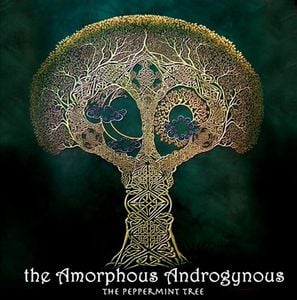
The Amorphous Androgynous-The Peppermint Tree (2008)


"Imagine the sounds you get if your cross-bred Syd-era Floyd with Faust. Imagine that warlock mongrel
was then produced by Can. The resulting record would like The Amorphous Androgynous. Who? Well, to be honest, that First line pitch should be enough to have you scurrying to wherever you scurry when someone gives you a tip-off... I mean, this band sound like that noisy bit in Sister Ray. They're ace. Whatever. Okay, okay, these cats are an offshoot of psychedelic analogue munchers the Future Sound of London who just so happened to be the soundtrack to many a failed sexual exploit on my part as some girl thought she'd stick on the ambient music for summa that lovin' spoons and I ended up foaming at the mouth over 'The Far Out Son Of Lung'... "Check this bit out... y'know it sounds just as good if you play it at the wrong speed on the single?" Anyway, Amorphous Androgynous have a new cut for you to buy, and listening to the razor blade tape edit of the whole album (which you can see with a head frying animation overleaf), it sounds like... well... read that first line again. It's called 'Peppermint Tree and Seeds' and you can buy it by clicking here. If you like the funky synth bits of an Amon Dull II track or funky sitar, then this album is definitely gotta make it into your rack"

Very cool psychedelic tunes. I hear some Flaming Lips in their too. Go I say!

Tree climbing anyone?

Thursday, July 16, 2009

Polvo-Today's Active Lifestyles (1994)


"Polvo: it means dust in Spanish. Appropriate for a band that a decade after their heyday would be deemed “destined for indie-rock obscurity” by the biggest hipster rag in America. But whether or not Today’s Active Lifestyles exhibits a band that is just that, or something far more impressive and endearing is up to the listener.

And it seems like they’ve spoken. I mean, when was the last time you heard anyone talk about Polvo? And I don’t mean your immigrant maid.

Regardless, Today’s Active Lifestyles is a great release from a band whose sound is exciting, even after so many years. The mathy dissonance, twisting melodies and ear-piercing harmonics that get coupled with such sweet vocals might remind of Yo La Tengo covering Slint, but ‘Sure Shot’ has much more clear contemporaries. For this song imagine early Flaming Lips (it’s the chorusing effect and the idle drumbeat that do it) but far more proficient at their instruments, and with a different goal in mind. On ‘Stinger (Five Wigs)’ the music is more hectic and confusing, but the clarity of each instrument is something truly impressive. It’s also the longest song on a CD with a fairly manageable duration, which makes it stick out all the more.

Another thing about Active Lifestyles that impresses, however subtle it may be, is the bass. Bass guitarist Steve Popson has a fairly lame tone, it’s flaccid, far too low and lacks the punch of the band’s guitar-sound, but that’s exactly why it succeeds. It’s so different-sounding from the guitar, an ever more present feature in the record’s mix, that it stands out and becomes audible. But that’s not to say Polvo isn’t a guitar band through and through, because they certainly were. And who wasn’t in ’93? Tuned oddly, angular, indistinct and played with persistence and vigor, guitars are really what define Polvo. And at the risk of making this into a track-by-track by describing three songs chronologically, ‘Tilebreaker’ is the personification of all these traits. Bassy bass, noisy guitar, and one of the record’s most complete and enjoyable choruses to boot: it’s hard to say that ‘Tilebreaker’ really isn’t everything this record stands for in one track. I’m not going to sit here and say this band hasn’t faded into anonymity, nor that they were entirely pivotal in the evolution of the genres of Math Rock, Post Rock and Indie, but they sure did write some good stuff."

Awesome band, essential for you fans of awkward, dissonant guitar melodies. This is another band who will never get their due so check it.

Today junior

Monday, July 13, 2009

The Dead C-Harsh 70s Reality


"While just about all of their albums are winners, for many fans "Harsh 70s Reality" is the unquestioned best Dead C release, a fact it's hard to argue with. Art and sheer rock power collide beautifully on this album, which transforms murky noise and open-ended jams into serenely chaotic wonder. That may sound like a strange assessment, but "Harsh 70s Reality" is as ambient as it is feedback-riddled, and the creative threesome behind it all know just how to balance everything out. "Driver UFO," the 22-minute-long opener, demonstrates this knack quite well, with a gentle keyboard part emerging halfway through against the rumbling hum and scrape of the guitars. It's arguably also the most song-oriented album from the group in a traditional sense, though the usual combination of recording approach and performance isn't exactly going to win over the VH1 audience. When the three add in vocals to the mayhem, everything sounds even more distanced and unsettling. Thus, on "Sky" the lead vocal sounds like the singer is on the verge of collapse and the backing shouts hollow and creepy, even as the main riff makes for one of the band's most accessible efforts. "Constellation," one of the most violent numbers (though as ever the quality of the recording makes it feel more gauzy and interesting), benefits even further from the gently deadpan vocal, like Sonic Youth but not so concerned about making things clear. One of the funnier moments comes with the start of the audibly from-the-other-side-of-the-venue live recording "Suffer Bomb Damage," especially since Robbie Yeats sounds like he's about to break into War's "Lowrider." Though "Harsh 70s Reality" is available on CD, the original vinyl is worth seeking out for the extra two tracks that couldn't fit on the digital format, especially the astonishing "Shark."

Awesome. Anyone into anything remotely noisy should get this IMMEDIATELY.

Harshness is my middle name

Saturday, July 4, 2009

Mandatory Repost: Reeks & the Wrecks-Knife Hits (2005)


"An old drum kit. Homemade amps. A dented old trombone. A bucket and a handful of firecrackers. The Reeks make a sound that is otherworldly. Dark and stumbling, folk-flecked basement blues. A mix of woozy slide guitar, swampy trombone, sparse and erratic percussion, tape hiss, amp buzz, shortwave interference and dark doomy brilliance. Like a ghostly, indie rock New Orleans funeral jazz band or Roland S. Howard fronting the Dead C. Haunting, mesmerizing, gorgeously raucous, dreamily creepy and absolutely unlike anything you have ever heard. For years the Reeks played all up and down the West Coast, basements, back porches, living rooms, pizza parlours, with only a 12" and a battered old suitcase full of hand dubbed cassettes to their name, spreading their warm cloak of pulsing, droning creepy crawly throb over anyone lucky enough to be packed into the same sweaty space. At once jubilant and danceable, but at the same time, dark and lugubrious, ominous and somnabulent. Lovers of weird music couldn't get enough, but eventually, even dyed in the wool indie rockers began to embrace the Reeks, having perhaps found something that still smacked of their beloved indie rock, but was a little darker and a whole lot weirder than they were used to. But by then it was too late. The release of Knife Hits is truly bittersweet. After years of recording and re-recording, mixing and remixing, when Knife Hits was finally ready to be released, and the rest of the world would finally get to hear the Reeks' amazing off kilter avant indie funeral folk, Orion Satushek, Reeks mainman, guitar player, instrument builder and one of the nicest guys ever, was tragically hit and killed by a drunk driver. The personal loss, is indescribable, a deep sting everytime we think about him, his band, his music, his friendship. But the loss to music, to the music community, is immeasurable. Years of playing, and practicing and rocking and sweating in tiny cramped basements and doing with a crappy old drum kit and a couple of homemade amps what most bands can't do with all the equipment in the world is somehow all crammed onto this single disc. These ten songs. The passion, the playfulness, the dark moodiness, the spaced out droniness, the wild sweaty chaos, the sheer joy of making an unholy racket. This record is not only a totally unique chunk of damaged outsider rock brilliance, but it's also a fitting tribute to a friend we will never get over losing. We miss you, Orion." (Taken from Andee's discription on his tUMULt website)

Not much I can say then, huh? Great description, sums it up perfectly. Not quite sure how to feel when I listen to it but I love it and if you dig intriguing sounding stuff, well, what are you waiting for? Needless to say, very highly recommended.

*New link*

Hit me like you mean it!

Sunday, June 28, 2009

Les Claypool & the Holy Mackerel (1996)


I can't find a decent review for the life of me, especially since this seems to be one of his less popular side projects/Primus deviations. Either way, you probably have some conception of Les Claypool. No matter what album you buy, there will be some awesome funky bass playing, awkward Residents vocals, creepy backwoods storytelling, and any number of weirdo surprises. Ya know, Les' MO. This album has always been in constnt rotation along with his stuff with Primus. The only side work that holds a candle to it is Sausage. All I can really say is that you should get it. Clayppol has an assortment of skilled session players (Jason Lane from Ratdog, Charlie Hunter, Merv Haggard) and the music is awesome as always. I honestly can't figure out why more people don't like it. Anyway, I just kinda felt like posting this. 'Tis enjoyable.

Holy Mackerel!

Thursday, June 25, 2009

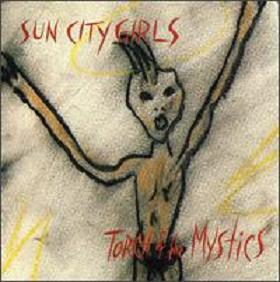
Sun City Girls-Torch of the Mystics (1990)


"Torch of the Mystics represents the pinnacle of the first phase of the Sun City Girls. A concise, pinwheeling album that captures the band's pure commitment to emotional transcendence through music, the 11 songs here fly off into the netherworld of ethnic avant-garage rock with startling clarity. The band had never fully explored the Middle Eastern tones accumulating in their brains as they did on this 1990 masterpiece, nor had they been as clearly and smartly recorded as they are here: guitarist Rick Bishop's tone slices, drummer Charlie Gocher is wider than he has ever been, and bassist Alan Bishop rumbles with an ominous ferocity. Songs like the pile-driving "Esoterica of Abyssynia" sound like your radio has leapt into a dreamy foreign astral plane of its own volition. "Space Prophet Dogon" is a dance of the seven veils as played by the freaked-out Mothers of Invention, while "Radar 1941" crash-lands in the middle of Egyptian Top 40 as imagined by "Count Five." Every track contains a shimmering melodic phrase or haunting undertone that the Girls mine like pure manna, and the occasional bursts of delirious chanting still summon goosebumps on the listener's skin. Every argument made for the greatness of the Sun City Girls has its roots in this platter, and if you have never understood what the fuss is all about or if you ever needed something to convince you of their (deservedly) sterling underground reputation, this is the original testament."

Wacky, weird, essential album right here. Listen to that riff in "Space Prophet Dogoban" and tell me its not spellbinding. Seriously. Mandatory as usual.

Torch it babeh