Sunday, May 22, 2011

Kubikie-The Sandwich Meets The Sun


Kubikie

Psychedelic/Experimental/Pop

Chicago, IL

Hard to describe this one but goddamn is it good. It drones, it rocks out, it lulls, it awakens. Do not miss this if you know what's good for you. It will rip your fucking face off. Unlike anything out there right now.
Link
Meet the sandwich meeting the sun

Thursday, March 3, 2011

LZY JKR


LZY JKR

Electronic/Experimental/Hip Hop

Los Angeles

This is some groove music right here. For anyone that enjoys people who do something different with hip-hop, this is for you. Highly highly recommended and free to boot! So...what are you waiting for again?

http://lzyjkr.bandcamp.com/

Tuesday, November 16, 2010

Orchestre Regional de Mopti-The Best of the First Biennale of Arts & Culture for the Young (1970)


From the label...

"Recorded in 1970 as part of the First Biennale of Arts and Culture for the Young in Mali. The Regional Orchestra of Mopti was a state funded orchestra that participated in country wide music festivals and competitions. A hypnotic band featuring electric guitars & a large horn section. This is the first in a series of six Mali music LPs we will be reissuing this summer from Sterns. A serene and droning record that is both sorrowful & celebratory." - Mississippi Records

Recently reissued on vinyl. Mississippi Records are always incredible while also affordable so buy it HERE

Try 'er out


Monday, November 15, 2010

Miles Davis-On the Corner (1972)


There's no introduction necessary, is there? I mean, he's MILES. But I wanted to draw some attention to this one, which kind of seems like one of those "lost" albums that a minority discover in a classic musician's massive discography. I'm probably wrong but that doesn't change how fucking incredible this is. Possibly more psyched out than "Bitches' Brew." Essential.

Vote for Miles

Wednesday, November 10, 2010

Purling Hiss-S/T (2009)


From the label...

"Purling Hiss has recently released records on Richie and Woodsist and garnered rave reviews from just about everybody who's heard 'em. This eponymous album is where it all began! Here's the story: Purling Hiss is the side-project of Holy Mountain recording artists Birds of Maya guitarist Mike Polizze. Birds of Maya are a full-on psychedelic rock band from Philly. Apparently, Birds just aren't full-on enough to satisfy Polizze's far-out tendencies. On his debut solo record Polizze plays bass drums and guitar relentlessly as if he's playing to save his life. For Fans Of- Birds of Maya Earthless, Loop, High Rise, Les Rallizes Denudes, and lo-fi, blown-out psych. Obviously, this one comes highly recommended." - Permanent Records

If you are fiending for some over the top guitar driven psych, this shall surely do the trick. Intense

Buy it HERE

White noise machine

Monday, May 17, 2010

Harvey Milk-A Small Turn of Human Kindness (2010)


"Athens weirdcore trio Harvey Milk is a blessedly difficult band to “know.” They frustrate category, aesthetic response, and heavy music scene politics in estimable, admirable ways. On the heels of their feedback-saturated return to recording – first the somewhat tentative Special Wishes and then 2008’s Life . . . the Best Game in Town – they return with A Small Turn of Human Kindness, an album named after the very first track on their 1996 debut.

A seven-part dirge, this album continues to refine their mixture of heavy riffage, sheer noise, and unexpected detours into introspection and delicate, emotional instrumentalism. But there’s something about the long form here that brings these elements out really vividly, freshly, in ways that suggest new discoveries and new paths taken. They remain a very patient, un-showy group, happy to let the heaviest of heavy chords – you can hear the speaker cones straining, their detuned strings flapping – simply wash over the spare shapes that make up these compositions. But what gives this music greater power and urgency is vocalist Creston Spiers’ dark dreamings.

His rattling holler is like the croaky sound that Neurosis’ Scott Kelley has recently unearthed, crossed with the phrasing of Sonic Youth’s “Marilyn Moore.” The album’s themes of lovelorn despondency might seem about as innovative as dirt, but the music breathes inspiration into them. The slow moving notes of the opening “*” – big major motifs moving in vast space and amp resonance, flirting with the anthemic – form the basic materials that are layered and layered in patient pursuit of the line. As the music emerges to form a mid-tempo crawl in “I Just Want to Go Home,” the fuzz and decay left in the wake of each crashing punctuation, each howl, create their own context beyond “heavy” signification. Things don’t so much move forward as bloom darkly, as feedback floods the pulse or as a brief staccato pattern cups a descending line (“I Am Sick of All This Too”).

It’s compelling from the start, particularly insofar as they not only avoid genre clichés but also cheap drama. Instead, they play emotionally ambiguous stuff – shifting modes and dynamics, or rather simply smashing them together until the edges are indistinct – that makes room for tart harmony (“I Know This is No Place for You”), cheeseball ‘80s keyboards (“I Know This is All My Fault”), and even some pitch-bending Southern-fried riffs on the closing “I Did Not Call Out.” None of these elements stands out or calls attention to itself; they simply emerge organically as the basic materials (not just the motif of the opener but the “I” of the titles) are continually revisited and reworked.

Singular and absorbing, Spiers chronicles his – his character’s? – beaten but not broken hope for some buried treasure from the wreck of a relationship (“In the dead gray ashes there was grace” he sings in the end). And Harvey Milk once again shake the dust from labels and produce music that’s heavy by virtues of its convictions and emotional integrity. In their music it’s easy to hear the roots of feted bands like Baroness and Kylesa, but I’m increasingly likely to think of this music – with its dark stew of minimalism, repetition, and abjection – as the blues."- Dusted

I am in complete awe of this band, and for good reason. When reference points include the Melvins, ZZ Top, and Leonard Cohen, how can you not be intrigued? This album marks Harvey Milk's return to the off kilter lumbering heaviness of their first two albums (or three, depending on how you count 'em) and is stronger throughout than either "Special Wishes" and "Life..." both of which I enjoy thoroughly. This is a legitimate contender for album of the year. Get it.

The milk of human kindness

Thanks to Lucidmedia for the link

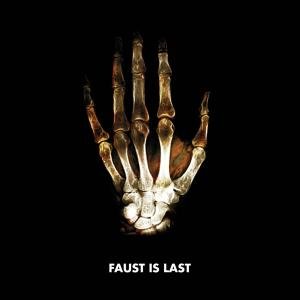
Faust-Faust is Last (2010)


"If Faust announce a last record after 40 years then it might be a good idea to open up the ears, especially when the cover art is one big reference to their first record. The x-rayed "fist" appears again, this time with the fingers slightly more opened. 40 years lie between the two records. 40 years of many different line ups, record companies, financial disasters, artistic failures and successes. Whatever can happen to a band has happened to Faust. In that sense they are not an unusual group of musicians. What is unusual is that each project, each record, each concert over the last 40 years has been different. On the very first record they made clear (on clear vinyl) that they were in it for destruction. "All you need is love" and "Satisfaction" symbolically were set fire to. That same fire you will hear on this new & last Faust record. The circle will be closed by more circular
music. A music that seems to come out of nowhere, sonic descriptions rather than songs. Timeless and not rooted in specific places and/or traditions. Maybe influenced by Cage's idea of chance, Dada, cut-ups, Sun Ra's free jazz organ playing and the second attempt after the German-American Monks to represent "a rock group as total artwork". faust in 1970 and in 2010 sound aggressive and 100 percent oriented towards the future. There is not a glimpse of nostalgia in "Faust is last". Turn up the volume and listen to this first, new and last Faust record very loud!" - Klangbad

Haven't had a chance to fully digest this yet but goddamn, what I've heard is on par with their entire career. It should be noted that is Hans Joachim Irmler's (founding guitarist) conception of Faust, and not Jean Herve Peron and Zappi Diermaier's (founding bassist & drummer) Faust that toured last year. This one seems to run the gamut stylistically, from grungy classic rock to the chilling noise passages we've all come to love over the years. Frankly, they still sound full of piss and vinegar and if that isn't reason enough to give this full attention, then I don't know what is. Highly recommended.

Faust

Saturday, May 8, 2010

Evan Kelley-Saund Arte Feinhal Projekt (2010)


Made using his own and another band's samples along with help on two songs, it encompasses melodic vocal drones, krautrock psychedelia, pounding rhythms and crushing experimental rock. I should also mention that it is open source audio and those looking for higher quality downloads should go HERE. The album begins with two relaxing drone pieces. "Calm Your Bones" in particular has a warm feeling with a gorgeous interplay that almost takes on the sound of an organ in some places. "Sirens Part II," my personal favorite, takes cues from the Neu/Harmonia/Cluster family in that it is swirling ambient music but always feels like it's constantly moving. Noises fly in and out over a hulking wall of sound. A beautiful, cosmic song to say the least. "Sirens (Urban Music For Guitar and Drums)" is a vicious, unrelenting beast that refuses to let it its hand off your throat. Each time I've heard it, I cannot shake the feeling of urban paranoia, but perhaps I shouldn't listen to it surrounded by filthy urban people. Throbbing rock gives way to chaotic noise freakout. Awesome. "Way of the World," the final track, starts heavy as hell. Noise creeps into the mix as the song progresses, keeping the cosmic quality found throughout the other songs. This gives way to a filthy, fuzz-laden industrial drum beat that pounds at your consciousness before coming full circle back into cosmic heaviness. It feels like an adventure that takes you farther out than the 24 minuets of total music. Highly highly highly recommended.

Calm your bones

Tuesday, April 20, 2010

Sleep-Dopesmoker (2003)


"When my all-smiling, all-visionary, all-grimming partner in sonic grime Stephen O’Malley (Khanate, Sunn0))), Burning Witch) sent me this Sleep album as a gift late last year, I immediately thought it was the most ground-breaking record in years because it took an essentially unmeditational musical form (i.e. early Black Sabbath) and sacralised it into the highest form of barbarian sonic code you could ever wish to trip out to. It monged my senses within the first five minutes, then set about my inner structures with sheer weight of adamant repetition and monotony. The CD featured one 60-minute long Sabbath Re-hash plus a nine minutes live-in-concert extra to wake you at the end in case you’d fallen asleep under the sonic assault of the main track and your home was burning down. What pragmatic motherfuckers, I thunk to myself. You could chew up some of the good hash and neck a few beers and lie in bed and sleep to it, leave your body to it, probably even shag to it though I was too busy to set up such an experiment. But it was such a forever trip that the whole room, nay the whole of my life, soon became secondary to this one seemingly eternal track. It was neither fast nor slow, operating somewhere between Black Sabbath’s own self-titled track from their first LP and the Flower Travellin’ Band’s own more ambient sludge-trudge version of the same song from their 1970 LP ANYWHERE, then gradually building into a rhythm something akin to MASTER OF REALITY’s ‘Lord of this World’ and ‘Into the Void’. However, there was herein an added bonus in the drumming of Chris Hakius, whose utter relentlessness allowed the sound to transcend Sabbath considerably and obtain a total hold on this listener’s mind. After hearing so many recent so-called Sabbath imitators whose muse really appealed to me intellectually but always ultimately failed to make me instant replay the suckers (Boris, Electric Wizard, Gonga), this Sleep album seemed to be the realest of real shit and then some… And as a Krautrocker who’d always professed to have preferred UFO-period Guru Guru’s extended Sabbalongs more than the real thing, I realised that these San Jose lunatics had taken their own proto-metal into much the same ‘LSD-March’ type territory, then continued out of that track’s city limits across the railways tracks and out into nether lands that even Mani Neumaier woulda never thunk to venture. Furthermore, the lyrics (all ten repeated lines or so) were the kind of accessible pseudo-religious genius that started genuine religions:
‘Drop out of life with bong in hand
Follow the smoke to the riff-filled land
Drop out of life with bong in hand
Follow the smoke to the riff-filled land…

Proceeds the Weedian – Nazareth
Proceeds the Weedian – Nazareth…’

New lows in redundant amphibian shamanism or watt, Motherfucker! Gimme gimme gimme, and then gimme some more. When I was a kid making 1/72 scale model plane kits by Airfix and Revell, I used to paint flies with Humbrol gloss and watch them drag themselves around slower and slower until they… finally… dried up underneath the sheer weight of the glossy overalls I’d painted them into. Now, listening to DOPESMOKER, I was a fly dying of paint inhalation and loving every exoskeletally en-crisping moment. Lying comatose and aware of nothing but the thousands of glow-in-the-dark stars on my bedroom ceiling, I wondered what could have been behind such a fundamentalist statement as DOPESMOKER. Of its three creators, I visualised them (in my hash-mashed mind’s eye) inhabiting a world in which the first four Black Sabbath LPs - BLACK SABBATH, PARANOID, MASTER OF REALITY and VOLUME 4 – had become sacred testaments on which to base their entire belief system (this wasn’t really too hard to envisage – Mormonism and Rastafarianism were based on far less). But then, as I sunk deeper into Sleep’s San Jose psyche, I began to think… imagine that you first came to these four Sabs LPs not in their British Vertigo swirl guises, but in their U.S. Warner Brothers versions, with the first LP losing its gatefold and (therefore) controversial inverted cross, but (more positively) side two opening not with the original slightly incongruous Fontana 45 ‘Evil Woman, Don’t You Play Your Games with Me’ but with the far more typically doomaholic stop-start Iommi-heavy multi-parted B-side ‘Wicked World’ – an altogether more auspiciously damned beginning to side two of such an iconic rock’n’roll debut. Imagine, if you will allow me to continue this metaphor, that being a teenage American stoner and already of the opinion that, being in possession of the aforementioned 4 LPs, you have your hands on some sort of holy sonic reliquary umpteen times greater than Islam’s piece of sacred meteorite at the centre of Mecca’s Haram enclosure, you begin as time goes by to read more and more into the titles of those ‘extras’ that Warner Brothers had insisted Black Sabbath added to their tracklisting to stop the general public from thinking they wuz buying some too-short LPs. And imagine that the addition of those extra U.S.-only titles on BLACK SABBATH (‘Wasp’, ‘Bassically’), PARANOID (‘Luke’s Wall’, ‘Jack the Stripper’), MASTER OF REALITY (‘The Haunting’, ‘Step Up’, ‘Deathmask’) and VOLUME 4 (‘The Straightener’, ‘Everyday Comes and Goes’) to the already murky official Sabbath tracklisting contributed further confusion to the thorny question of exactly when songs ended and others began, so much so in fact that each already oft-changing riff-o-thon now appeared to meld seamlessly and tidally, each into the next until your teenaddled stoner cranium saw, heard and inhaled it all as a single ever-undulating ever-spiralling ever-squirming Midgardian Worm of sonic oil spill building and building layer upon relentless layer on a seashore until the whole beachscape, complete with sunbathers, coastguards and concession stands, had been lacquered under a one-metre-thick obsidian black layer of petrified chemo-gunk… I visualised Sleep in their pre-Sleep configuration, their teenage stoner minds fixating collectively on these first four Sabbath LPs to such an extent that certain repeated words in the song titles became iconic mantras to be treated (Brigit Riley-stylee) as repeatable motifs almost in the psychedelic manner of 6,000-year-old Western Atlantic passage grave art. In this mood, titles such as ‘Sweetleaf’, ‘Behind the Wall of Sleep’, ‘Planet Caravan’, ‘Under the Sun’, ‘Warning’, ‘Snowblind’,1 ‘Luke’s Wall’, Supernaut’, ‘A Bit of Finger’, ‘Tomorrow’s Dream’, ‘The Wizard’; each becomes a useful jugglable commodity on which to hang your own variant of Geezer’s lyric, of Iommi’s heavy up-the-neck wound-string S.G. riffs and of Bill’s Bible-throwing drum fills. I heard evidence within these Sleepian grooves that a genuine cult had grown up in San Jose, a cult dedicated to the results of Black Sabbath’s controversial decision to rip off2 a song title (‘Sweetleaf’) from Clear Blue Sky, their eighteen-year-old Vertigo label-mates, and write it not as a soft homage to grass but as a riff-heavy ‘Pot as THEE Sacrament’ John Sinclair/MC5ian-type Odin-receiving-the-wisdom-of-Urd’s Well thank you thank you you-saved-my-life Shaman’s gift to the Goddess eulogy. I imagined that on hearing Ozzie’s echoplex’d coughs at the beginning of the song, and the desperation in his voice when he sung to Sweetleaf ‘I love you… you know it… my life was empty… my life was down… my life is free now’, the Cult-that-would-become-Sleep had heard it as such a rallying cry from within that it finally motivated their otherwise Total Pot Refusenik Butts enough to get up from the couch long enough to lay down some extreme sonic monotony on behalf of the Vegetation Goddess who had spoken so eloquently to them, their few close stoner mates, and Messrs. Osbourn, Butler, Iommi and Ward. But after I’d imagined all of the above, I had to stop imagining such things because this thing had actually happened and the results were amazing.

Then came the cruncher… this DOPESMOKER album was an old recording from 1995CE, and was the culmination of years of Sleep’s collective (and terminal) Sabbophilia. Yup, there was loads more great Sleep stuff AND they’d stuffed their record company (London Records) with this sucker by scoring unbelievable amounts of the green, inhaling it all then buying even vaster amounts of the Orange (amplification, that is) and recording one 52-minute track entitled ‘Jerusalem’ which they then delivered to London Records on a DAT tape contained in a porcelain skull bong wearing a U.S. military police helmet. Legal wrangling took over and miserable London Records suits wearing extremely brown trousers eventually dropped the band, who had on their hands the greatest bootleg since High Rise’s aberrant live double NOT WEARING A HARD HAT IN A HARD HAT AREA (THAT HARD). I needed to do some sonic investigation and I knew it would be one of the great joys of recent history. Indeed, it was…" - The one and only Julian Cope, Head Heritage

What can you say about a classic that hasn't already been said? So sludgy, so droney, so amazing. Mandatory for those looking to be pummeled with epic stoner riffs and guitar tones that could start an earthquake. And that bass rig, holy shit. Tasteful tribal drumming to top it all off, what more do you need? Wow.

Sleep

Tuesday, April 13, 2010

Bill Holt-Dreamies (1973)


"Inspired by the aural collage of the Beatles' "Revolution Number 9," as well as the musique concrete of composers such as John Cage and Terry Riley and Bob Dylan's conscientious rock lyricism, Bill Holt quit his straight job in 1972 to follow his musical muse, hoarding various electronic gadgets and an acoustic guitar and holing up in his basement. He emerged a year later with Dreamies, one of the finest pieces of experimental pop from the era. Unlike the Beatles' White Album collage, though, the pair of sidelong, 26-minute epics -- "Program Ten" and "Program Eleven" (as if progressing directly from "Revolution Number 9") -- that Holt created were much more than symbolic representations of the chaotic times. At its heart, the album is a blend of folk and pop/rock, and in many respects, Dreamies fits in with the singer/songwriter scene that flowered in the early '70s. Instead of relying simply on the juxtapositions of his sound samples to impart subjective meanings, Holt composed lovely, downhearted melodies (very much recalling John Lennon) and trippy lyrics as a jumping-off point for each collage and then let acoustic guitar guide them through the gauntlet of sound. In fact, "Program Ten" is a combination of two identifiable songs, "Sunday Morning Song" and "The User," the two melodies weaving in and out of the cacophony of noise-crickets, atmospheric sounds, a John Kennedy speech, NASA chatter, news reports, glass breaking, a thunderstorm, sports broadcasts, and gunfire while a synthesizer spits out spacey alien sounds or cuts like a kettle whistle, and an ominous bassline oscillates beneath it all. "Program Eleven" exchanges that white noise for airport sounds, creepy Sgt. Pepper-style chants that bubble up from beneath the single melody fragment ("Going for a Ride"), game show catch phrases, and popping corn. Of the two pieces, "Program Ten" is the more socially charged commentary, setting the innocent recollections of youth -- the sounds of summer and nature -- against the misanthropic confusion of war and politics to powerful effect. "Program Eleven" is more psychedelically eerie and haunting, aurally dense, and thick with bad vibes, but wonderful nonetheless. The spoken samples are mostly more buried in the background and difficult to make out. It adds both intrigue and mystery to the piece, a foreboding end to what began optimistically. The music, in other words, ingeniously mirrored the sort of evolution of consciousness that was so much a part of the era. Dreamies went virtually unheard when it was released, perhaps because it was the antithesis of commercial rock at the time, but, despite its grounding in the ambiance and issues of the '60s, it still sounds outstanding decades after the fact." - Allmusic

A wonderful piece of music. Found a section of Program 10 on Beyond The Wizards' Sleeve "Ark 1" and had to track this down. One of the earliest examples of sampling in modern music as well. Another highly recommended album.

Dreamin'

Sunday, April 4, 2010

Julian Cope's Krautrocksampler (1995)


"Krautrocksampler: One Head's Guide to the Great Kosmische Musik - 1968 Onwards, written by former The Teardrop Explodes singer, Julian Cope, is a book describing the underground music scene in Germany from 1968 through the 1970s. The book was first published in the United Kingdom in 1995 by Head Heritage, and was later translated into German and French. It has now been long out of print, with original copies exchanging hands for surprisingly large amounts. Despite this continued demand for 'Krautrocksampler', Cope has stated that the book will not be updated or reprinted.

Krautrocksampler gives a subjective and very animated account of the phenomenon of krautrock from the perspective of the author:

"I wrote this short history because of the way I feel about the music, that its supreme Magic & Power has lain Unrecognised for too long."[1]

The book comprises a narrative of the rock and roll culture in post-WWII West Germany, along with chapters focusing on individual major artists, including Faust, Tangerine Dream, Neu!, Amon Düül I and II, Ash Ra Tempel, Rolf-Ulrich Kaiser and the Cosmic Jokers and advocate of psychedelic drugs Timothy Leary. It also has an annotated appendix of "50 Kosmische Classics." Some chapters appeared previously in the UK music magazine The Wire and in the German music magazine Spex.

The cover is an edited version of the cover of Amon Düül II's album Yeti."-Wikipedia

Very out of print. I know that there are pdf's of this floating around elsewhere on the internet but I figured another one couldn't hurt. This is incredibly essential for anyone even remotely into Krautrock. Cope writes like the total fanboy he is (a good thing) and the passion for these bands flies off the pages. He has got amazing stories to tell and does an excellent job of filling details on what the hell was up with those weirdo kriegskinder Germans. Essential read.

Sehr kosmisch

Monday, March 29, 2010

Harvester-Hemat (1970)


"Perhaps you read about or bought the Terry Riley-influenced Parson Sound double cd we've raved so much about? Well, Harvester (after releasing another LP under the full name of International Harvester -- reviewed elsewhere on our site) was a future development of the Parson Sound band. And after Harvester, they became the semi-legendary Trad Gras Och Stenar (Trees, Grass and Stones). Though we think the absolute best stuff we've heard from these guys dates from their Parson Sound incarnation, this disc is pretty darn cool too. Hemat ("Homeward") has been described by someone in the know as "mastodon waltz-drone / acid soaked free jam psychedelia." Which is not only a pretty accurate description, but also a cool phrase to quote. The disc starts with a lovely mellow hippy-folk tune that matches the dreamy landscape painting on the album's cover. Then with track two things get heavier and more Parson Sound-like. The mastodon waltz has begun, as flutes trill and Swedish freaks chant. The disc progresses into ethnic-tinged free rock/jazz ("Nepal Boogie") and even an unrecognizably drugged-out downer version of "Everybody (Needs Somebody to Love)". Loose and stoned this disc most certainly is, forty-one minutes of almost-lost music drifting through the haze of time to trip you out today. Recommended -- and get International Harvester and all the other related albums too!"-aQ

I don't know about you, but I cannot get enough of this early Swedish psych, especially from the Parson Sound family tree. This one drones and saunters all over the damn place and there's something about the way they do it that gives it an absolutely mystical quality. Highly recommended.

Nepal Boogie

Tuesday, March 23, 2010

Afflicted Man-The Complete Recordings (2007)


"Set out for obscurity and, without much need for luck, you’ll get there. Afflicted (later Afflicted Man) was the recorded moniker for one Steve Hall, who bashed his way through the ‘70s and early ‘80s with a series of self-released records that would touch on barmy punk, excessive high-power guitar psychedelia, and hometaper lunacy, never settling in one area for too long. Having discarded punk rock’s brevity and entry-level skill barrier by his second release, there wasn’t anywhere for him to go but in, and then right back out.

Even if they weren’t, Afflicted’s records come across as very personal affairs that erect a barrier of historical understanding between the listener and the performer. At one point or another, they’ve got plenty in common with late ‘70s ingénues like Vic Godard or Mark Perry, though the heart of these records lean back to an earlier brand of British rock musician, one caught between the coal mine and the pubs. Of course I’m talking about harsh, proto-punk outfits like the Hammersmith Gorilla and Third World War; the meandering liner notes to this fairly slapped together double-disc reissue mention them, the Deviants, Stack Waddy and Coloured Balls guitarist Lobby Loyde by name, and do so in every instance where it’s attempted to describe the music therein. Which is all fine and good, as there is a progression here from their works, but to figure him out, you have to unpack about a decade or two’s worth of outsider music that led up to Afflicted’s recorded output. The troll is at the foot of the bridge, no doubt, and it’s daunting to a casual observer, but by doing this work, you start to see connections where there couldn’t possibly be any. To say that his I’m Off Me ‘Ead LP has a lot in common with a visionary freak like Michael Yonkers is not so ridiculous, especially when you try to draw sonic comparisons between the two instead of geographical ones. But think of the rigors of obtaining obscure music in the early ‘70s, as opposed to the miracle of blogs full of whole albums ready for download, P2P networks, and the like. Today, influence often means a Frankenstein-style layering of ideas; musicians cherry-picking parts they like and throwing away the rest – more skill than soul. Back then, the effort and the smaller pool of stimulus to wade in asserts that influence was most likely absorbed rather than copped. Listening to Afflicted Man bears this notion out. There are ideas here that had to marinate for a while, and there are others that probably shouldn’t have gotten out at all, but despite the mod cons of an indexed double CD, you can’t understand the entire story if you choose to be selective about the music or its roots.

His songs’ reliance on repetition have as much to do with the limits of one man’s taste and abilities, along with the studio capabilities of the times, as any sort of applied aesthetics. A bare light bulb, a stack of mind-melting vinyl, a guitar and amp, a mattress, and a paint-splattered wooden floor are all the imagery his music affords. From a nearby window, nobody seemed to be looking out for our Steve, and he replies in kind, tape looped bass and unsteady drum tracks starkly bearing down on his effects-heavy, tin-shack blues. The resulting music is left with a miniaturized presence, like there’s no way to listen to it without feeling somewhat isolated from and towering over the product itself. Even when things start to sound a bit familiar, they carry a particular trail of individualism, usually involving a lengthy, substantial guitar solo loaded down with reverb and fuzz.

The Complete Recordings collects three singles and three albums, chronologically sequenced to showcase an exponential distancing from the rigors of ’77 punk rock. General malaise anthem “I’m Afflicted” and skinhead watch track “Be Aware” don’t have much in common with what’s to follow, but they kick up a moderate cloud of street-pounding intensity that will factor in as a crucial component of later works. By the second Bonk single, the lean production values of punk rock are all that connect Afflicted to their era. By the time of the first album, 1979’s The Afflicted Man’s Musical Bag, the songs had mutated into Edge City ruminations on single chords, sonorous vocalisms, a marked dub influence and restless effects abuse remove even the shorter songs’ temporal space, distending each into its own monolith. Most cuts share qualities with the then-current output of the Fall or Alternative TV. But at its strangest – the eight-minute “Musically Insane” – structure is an afterthought, as plunking bass, droning piano, acoustic guitar and a mad tambourine presence place things closer to the crazed horror-folk of Comus than any punker contemporaries. Album closer “Love One” has more to do with Pink Floyd’s heady pop of the day than what you might have found in the Rough Trade shop in that calendar year. However, “142” doublebacks to fit perfectly on those hallowed racks, hoisting the Sex Pistols up on their own petard. The track and its flip, “Senseless Whale Slaughter,” come across as more of a mockery than anything else, snotty and callous, treating pointless lyrics and social politicking for punk’s wasted vigor like some sort of mantra.

By the second album, 1981’s I’m Off Me ‘Ead, Hall had changed the outfit’s name to Afflicted Man; he’d also fashioned his most difficult and engaging record. Released on the Human label, this one had grabbed hold of the vinegar and swigged brazenly, blasting holes in the wide palette of ideas previously documented. Possibly realizing he’d hit a wall with his sound, the record consists of seven raucous blues-punk dirges, restless with anger and dirtier than ever before, a righteous and indignant irritant in the same way that Billy Childish or Dan Melchior would later conjure. Even the master volume fader gets a workout. The final Afflicted release, 1982’s Get Stoned Ezy, makes off like a product of mid-day substance abuse and its attendant mental shredding. Credited to High Speed and the Afflicted Man, its three extended tracks blot up a bucket of severe lysergic noise damage, bringing Hall’s career and inspiration full circle (back to the elevated excess of Hawkwind, or forward to the Butthole Surfers, particularly on “Sun Sun.”) Sheets of thick, wah-infected guitar crush and confound the listener. Maximalist in every way, the tracks play out like some sort of last ditch, fluorescent effort to be noticed.

And then, after all this effort, it was over. Up until now, it remains that way, and even this release raises more questions than it can respond to. Hall’s collected history makes up a few lines of text; little if any mention of his deeds before or since appear in any catalogued Web or zine content. Following Get Stoned Ezy, Hall joined punk outfit The Accursed, an embattled British band with alleged National Front ties. A shady past behind him, he’s been playing music in prisons and hospitals under the name Called, but there’s no further information on that project, either. So let’s focus on what we have here: music too difficult to digest in a single sitting, but a strong and rewarding experience for those of us who insist on reading between the lines."

Quite mandatory indeed. Psyched out punk blues. Wacked out. Link in comments.

Wednesday, March 17, 2010

King Tubby-The Roots of Dub (1974)


"If you want to know where hip-hop came from, you can't ignore dub. If you want to check out early rap, you better be aware of toasting. All of those genres are products of the ghetto, inseparably tagged to the African diaspora. (Like most inventions of American popular music, as this blues/jazz/funk/hip-hop lover can readily attest.)

If you want to properly dig this music, go for the roots. A large number of those tentacles lie in the largest English-speaking island in the Caribbean, the celebrated home of the fruit called ackee, the world's epicenter of ganja (no excuses, Morocco), the source of Appleton Estate Rum (established 1655). Funny enough, King Tubby (né Osbourne Ruddock) was wearing some downright silly crowns back in 1974 (a Burger King indeed, if you look closely). I guess he hadn't yet established his reputation, which at this point is fundamental, monumental, and utterly essential. Those are the straight-up facts, and I dare you to disagree.

So dig back into the roots, before the Aggrovators collection Foundation of Dub, another '70s Bunny Lee production. Dub was created by subtracting vocals from popular reggae mixes and tweaking all the other instruments in the studio with little black boxes. Dubs started out as the "B" sides of singles.

King Tubby was the Dub Master, the Dub Organizer, the Dub Teacher, and the King. Personally tweaked tools, canny intuition, and divine inspiration all seem to come into play with his music, which is distinct from all the rest because of the utterly forward position of the bass and drums in the mix. You play dub, you play it loud, you want your chest to resonate with the music... it's a no-duh. Who knows how he hooked it all together in the studio, but maybe that's a secret better left untold.

When you take off on The Roots of Dub, you float gently along on reverberant waves of guitar, organ, and bass; reverb, delay, and echo always. All that sonic manipulation sounds restless and detailed, despite its utterly relaxed facade. The three-minute tunes ("compositions") might not be the most interesting at times—it's pop music, you have to remember—but there's no denying that King Tubby took each part of his starting material and melded them all into a dark, distorted shell of a song. Every time, always relying on texture, turning the purpose of the music into re-inventing the music.

That's King Tubby's story. If you already know him, you'll drown in ecstasy at this reissue of his first two records. (Please excuse the well-deserved hyperbole. Again, I beg you to disagree.) If you don't already know him, well, check The Roots out.

This music is deep to the core. Its kind of heavy meditation comes from deep Africa, like all the music of the diaspora, including flavors from closer to home. Fancy the two coming together to give birth to a new American music. Hip-hoppers everywhere, bow deeply and exhale."

Need I say more? Some of the finest Dub I've ever heard, perfect for this beautiful spring weather we've been receiving. Cheers.

A first class dub

Thursday, March 11, 2010

Flying Lotus-Los Angeles (2008)


"Okay, we might as well get this out of the way, because every review of Los Angeles mentions one key reference point: Flying Lotus––née Steven Ellison––is the grandnephew of Alice Coltrane. It's a convenient and eye-catching association that will follow Ellison's career each step of the way. In fact, it was the extraordinary jazz musician's gentle nudging that pushed Ellison's career ambitions from filmmaking into music. And for that matter, Ellison shares Coltrane’s use of pulsing, breathy textures. His materials may be those of the Nintendo generation rather than the acoustic-based instrumentation of the 60s, but the importance of atmosphere and resonance––so crucial to Coltrane's blend of spiritual free jazz and cerebral modal music––are certainly not lost on Ellison.

But just how does one recreate the sense of room and tonal development in a world of digital samplers and sequencers? In this aspect, Ellison learns from his contemporary peers. His Warp full-length debut contains sonic elements akin to many like-minded Los Angeles musicians––Madlib, Ammoncontact, Daedelus, Sa-Ra Creative Partners, Nobody, Dntel, Koushik and Exile––and it’s also clear that Ellison has been influenced by the cream of the left-field instrumental hip-hop crowd––Jay Dee, Prefuse 73, Dabrye and Jnerio Jarel. All of these musicians/producers have mastered the process of stringing samples together fluidly in a haze of noise byproduct (static, fuzz, pops, crackle, etc). Likewise, Ellison’s work features few discernable loop breaks, while acoustic drums and live synthesizers work to disguise rigidity with layers of lapping sound. Somewhere along the way, Pete Rock's stiff but soulful rap productions crossed paths with Aphex Twin's avant-garde electronica and Rob Mazurek's 21st century psychedelic fusion to birth Flying Lotus, a headphone producer who bridges the world of beat, blip and bop.

Thankfully, Ellison doesn't stray too far from the framework he established on 1983, his Plug Research debut. There is a coherent sound throughout the album––psychedelic electro-hop perhaps––while each song develops fruitfully without ever being dragged out. In fact, about sixty percent of the tracks on Los Angeles fall in the two-and-a-half to four-minute range––just enough time to establish a groove and expound upon it without a sense of redundancy setting in. It's less jerkingly sporadic than Donuts (however brilliant), but more varied than a Sa-Ra produced record. And in that sense, Ellison––much like his great-aunt––has the ability to entrance. Trippy synth chords progress subtly; sparse boom-bap backdrops pronounce the meat of each song; jazz, funk, psych and worldly samples weave colorful melodies; and 8-bit video game sound effects keep each track continuously textured.

In a recent interview with XLR8R TV, Ellison divulged his love for the Cartoon Network's Adult Swim, a series he helped to score early in his career. The episodes of schizophrenic late-night comedy are relatively short in comparison to television's typical half-hour fare––the humor may be beyond ridiculous, but it rarely takes a toll on your patience because it's finished in a third of the usual time. Ellison's productions may not have the severity of Adult Swim, but he certainly takes a few cues from their structural patterns. Los Angeles doesn't rely on elaborate set-ups or complicated narratives: A beat drops, the mood's established, a groove sets in, and Ellison tweaks it into a climax before quickly moving onto the next.

Thanks to the deeply saturated production, just minutes into Los Angeles you are already lost among the ebb and flow of the mercurial synths and adroit beats. A headphone listen is like sticking your head in a fish tank of blunted haze and aural psychedelics. The music may not be quite as spiritual as that of Ellison’s great-aunt, but it is no less ethereal, atmospheric and hypnotic––impressive for what is essentially an instrumental hip-hop record."

Wow. There are a few Hip-Hop luminaries that really blow my mind (Cannibal Ox, Dilla, Madlib, MF Doom, El-P, Dalek...etc) and Flying Lotus joined the club. I didn't really know what to make of it at first but multiple listens reveals a deep appreciation for Dub, House/Techno, Breakbeat, and all that other shit that I'm really not that familiar with. Point is, this album effortlessly blends it all together into a very spaced out enjoyable whole. High recommendation for this little ditty.

Melt!

Wednesday, March 10, 2010

Kemialliset Ystävät-Kemialliset Ystävät (2007)


"The English-speaking world can’t quite figure out whether Kemialliset Ystävät is a proper band or the brainchild of a single man. Dodgy video clips show a group of crouching figures obscured by lit candles on a Spanish floor, but written statements center around Jan Anderzén, a Fonal co-conspirator and definite sole member of Tomutonttu. The album boasts a longhouse full of players, but Wikipedia further muddies the picture, relegating them to the background. The frightening opacity of Finnish doesn’t help much either, battering us poor Indo-Europeans with blasts of Ugric doubled consonants, vowels, and endless diacritics.

The answer—true to the gleeful, pranksterish nature of KY—is neither. The whole enterprise is more of an art concept than a music group, and standard rules of membership are the least of the musical conventions flaunted by Kemialliset Ystävät. The question is more symbolic than real, as it points to a common confusion KY produces in listeners. Is this done on purpose, or is it an off-the-cuff product of an entirely-too-high crowd of strangers? The group’s music bristles with unhinged alien energy, breeding monstrous hybrids that would be born sterile in most settings. Gamelan and Nintendo soundtracks? Abstract sound poetry and acoustic folk? Tape loops and hand drums? Hell yeah, and on the same track to boot.

But there’s more to this than the latest Sunburned session run amok. There’s a strange order, a deliberation, a dawning sense that every element is placed as it is for an irrational reason. Therein lies the greatness of the band: its painstaking intricacy sums to dada spontaneity. This musical paradox creates a compelling game for the listener: try to deduce the illogic beneath the music, peel back the layers searching for a foundation (if there is one), discover the rule that is the exception to itself.

Luckily, this KY album is a bit more accessible to listeners than most, featuring even a few straight-up songs. “Nakymattoman Hipasiour” teams a fuzzy piano line with swallowed microphone mathematics and nervous electro-squeaks for a swaying, shanty-like bounce. “Superhimmel” pits loping guitar lines over a martial bass beat before bridging into a spastic neon breakdown that sounds like Dan Deacon minus the annoying shit. Both tracks show the exhilarating straight path that Kemialliset Ystävät can follow. And both tracks are exceptions, tips of the hat to structures they usually avoid.

More often, KY wobbles around its pet sounds, creating tracks from planned chaotic collisions. Melodies and rhythms flow and communicate, but the crowd of sound prevents any set from locking to song. A push from one is met by a push in the opposite direction by another. The effect is one of dynamic unity, of a bustling conversation within a bubble, about nothing and everything.

We speak often of an artists’ vision, as if musicians present the audience an image that one can mentally trace back through an aesthetic lens to an ideal representation in that artist’s head, an index of influences, inputs, and insights. The clearer and sharper this vision, the better. But in this case, Anderzén’s vision arrives at the end of a kaleidoscope, and its geometric precision only adds to the beautiful confusion."

This is some wacked out music. I dunno what's running through the water out there in Finland but those guys are crazy. I don't really have the words for it right now, but that's cause I'm knee deep in some shit which explains my lack of comments lately. Hopefully the quality has been speaking for itself. But I shall return to full normal formatting soon. But until then...

Superhimmili

Saturday, March 6, 2010

Om-Conference of the Birds (2006)


"Hinduism, “om” is the single most important syllable of existence, representing the confluence of deep sleep, dreams, and consciousness, and their mystic separation from the idea of the absolute which is beyond everyday human comprehension. There are also connections with the life cycle - the sound “om” being made of “a” which represents creation and Brahma, “u” which is Vishnu or the middle period of life, and “m” represents Shiva, whose meditation frees us from the concrete world. Om is a trinity, the exact components of which depend on which interpretation you’re using. I won’t pretend to be an expert in Hindu myth or meaning, but these basic tidbits are enough on their own to at least partially explain the sounds contained on Conference of the Birds. And while it may be mere coincidence that Om formed out of two thirds of Sleep (you could probably debate which two parts of the “om” Al Cisneros and Chris Hakius represent, but it would only make any sense if you were either a huge metalhead, a giant stoner, a Hindu scholar, or some combination of the three), the symbolic connection between the two in this context is too much to ignore. To get perhaps a bit too literal here, om is the step beyond sleep towards some kind of transcendence. Which isn’t to say that music of Om is any “deeper” or “more advanced” than that of Sleep, just that it operates on a different level with a different set of tools.

Conference of the Birds is structurally and sonically similar to its predecessor, Variations on a Theme – repeated bass licks and drum patterns that gradually evolve over the course of about 15 minutes. The second song (each song spans about 20 tracks, presumably to thwart piracy), “Flight of the Eagle,” could very easily be the fourth track on Variations both in character and in sound. Cisneros’ bass sound is dense and fuzzy and his vocals are an imposing chant musing on some mythic journey or battle occurring in ancient Egypt, while Hakius keeps a solid beat centered around his bell-like cymbal.

“At Giza,” on the other hand, represents a very different side of the group, one much closer to the concept of om than anything else they’ve done. Simply put, the music is much tauter than before, with less overall weight. The bass tone is clean, devoid of any distracting distortion, the drums are slower, more hypnotic, the vocals more an incantation than a chant, returning to words like “sentient,” “aperture,” and other archaic multisyllabics. And while the imagery is more an opium-den vision than a meditative dream, the words are there more as sounds and rhythm and quickly lose their meaning.

Whether you view it as stoner wisdom, opium hallucination, or mystic journey, this album is about transcendence. The Conference of the Birds is, amongst other things, a 12th century Sufi metaphysical parable on discovering the true nature of God, mimicking the journey of the avatar protagonist of both of Om’s songs. Farid ud-Din Attar’s poem comes to the conclusion that God is not to be found in a single place but all around, in every aspect of life and the world. So despite the fact that Om comes from the Hindu, references the Sufi, and uses the language of the Egyptian, they draw from each the same idea: that the world beyond the tactile is not that far away."-Dusted

Highly recommended. On the run. More posts soon.


At Giza

Tuesday, March 2, 2010

Cindytalk-Camoflage Heart (1984)


"
Longtime regular aQ customer Joshua Maremont commented that Cindytalk's Camoflage Heart is a record which was only really meant for about 30 people. Not that only 30 copies of this record were released, or that it is so terminally obscure and willfully difficult that it by design has a marketing ceiling of an elite few. What he's on about is that Camoflage Heart is such a personal document of self-realized torment, pain, and sorrow that when Cindytalk embarked on the project, it's hard to imagine that they had any delusions about the intensity of this album and the potential for these songs to alienate beyond a limited few.
At the helm of Cindytalk is transgendered vocalist Gordon Sharp, who to this day is probably still best known as one of the multitude of vocalists who appeared in This Mortal Coil. In many ways, Sharp is the masculine equal to the Cocteau Twins' Liz Fraser in delivering expressionist falsettos, trills, and banshee wails in an eerie, yet heavenly fashion. He's one of those few vocalists who can make the lyrics embody their content by shaping the words into emotionally charged sound. In fact, Sharp and Fraser had come together for a duet back during the Cocteau Twins' Peel Sessions of 1983. In his 4AD lineage, Gordon Sharp's first band was the criminally overlooked punk-glam ensemble The Freeze, where his Marc Bolan strut matched the nightmarish lyrics on top of some truly fantastic Bowie / Buzzcocks sparkplug riffs. Sharp, alongside fellow Freeze band members John Byrne and David Clancey, found shortcomings in the glam punk agenda, and sought a wholly new direction that became Cindytalk.
While undeniably dark and theatrical, Cindytalk cannot be pigeonholed as an '80s goth band, even in comparison to such off-kilter groups like The Virgin Prunes, Princess Tinymeat, or Sex Gang Children. Camoflage Heart was Cindytalk's first album and originally came out in 1984; and it's an album like those This Heat albums which is quite unique in terms of production and aesthetic. The album opens with the militant drum machine of "It's Luxury" setting the stage for an explosion from a monotone guitar riff, coated in amplifier grit, distortion, and detuned heaviness that comes across as a mix between late-'80s Skullflower and The Cure's Pornography. At this moment, Sharp's voice also erupts into the mix crooning with a downtrod beauty to this industrial dirge, spitting and swooning at the same time. The next track "Instinct (Back To Sense)" is more of an ambient interlude with distant heartbeat rhythms, haunted with impressionist piano trickles and Sharp's siren song buried between an atmosphere of smoke and mirror. Two more explosive tracks -- "Under Glass" (featuring Mick Harvey from the Birthday Party for a disjointed stutter of abject rock) and "Memories of Skin and Snow" -- are examples of loud / quiet / loud dynamics, later embraced by the likes of Slint and Mogwai to equally profound effect. "Everybody Is Christ" is often viewed as the pinnacle of Camoflage Heart with its harsh arppegiation of electronics cast against Sharp's heavenly voice. Soon after, the album disintegrates in a cascade of delicate piano, voice, and grim drones.
As Cindytalk had suffered through the fate of several record companies going out of business (first Midnight Records then World Serpent), their work might have been forgotten had it not been for this reissue. Thankfully, that oversight can now be remedies with this long overdue reissue."-aQ

Music for those dog days of winter. Sorry for the lack of posts lately. Life moves fast, ya dig?

Memories of skin and snow

Thursday, February 18, 2010

Bullion presents The Beach Boys vs. J Dilla-Pet Sounds: in the Key of Dee


"Bullion is a UK producer who has taken J. Dilla's vaults a step further by working samples from The Beach Boys’ Pet Sounds into the music. It is not a mash up or a remix album, but a conceptual extension to his illustrious catalogue. Bullion does not attempt to place his green thumb on Dilla’s work, but extends his aesthetic into a posthumous tribute.

He’s clearly a student of the J. Dilla technique because his style does not get in the way of the previous works. He employs similar chopping techniques, toying with the harmonies and using the vocal snippets as instruments in the body of work.

It would be easy to get pissed about this record and the excessive fiddling and pillaging the Jay Dee catalogue has suddenly received. It would be easy to write this off as another Jay Dee band-wagoner, capitalizing on everyone suddenly wanting to appreciate a producer who flew under all our radars until his illness became public. But this is a fitting tribute to an influential figure. Even if Bullion only recently discovered Jay Dee, (I doubt that), there is no doubt that his inspiration has changed his life. He has paid attention to Dilla for the right reasons and it shows in his ability to take the genius a step further without stepping on a legend’s toes.

He does not forget what is informing this piece. He maintains a cohesion in style that is not even his own, but an influence, and makes it sound so effortless, as though our hero Dilla actually had the idea.

Crowning achievements are the marrying of “I Just Wasn’t Made For These Times” with Jay Dee in a mix I'd like to think both Brian Wilson and Jay Dee would approve of. It maintains its psychedelic lament, but earns a soulful bounce. Compared to trendsetting Grey Album from Dangermouse, this will probably not inspire copycats as it lacks that project's conceptual bombast.

It’s a bizarre ride on the Sloop Jay D."

Before anyone dismisses this as some bullshit pop artist A vs. pop artist B "mash-up," let me please assuage your fears and tell you that this fucking rules. Bullion has done a wonderful and, most importantly, respectful job combining these two heavyweights into a great album. "You Still Believe in Dee" is a particular high point. I will try to get a vinyl rip of this up here in the near future.

IMPORTANT NOTE: Do not be surprised if this gets yanked. It has been a common occurrence lately.

You still believe in Dee

Wednesday, February 17, 2010

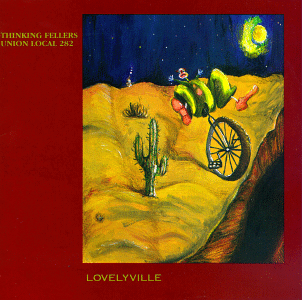
Thinking Fellers Union Local 282-Lovelyville (1991)


"
What if I told you there was a band out there that combined the screeching distortion of Sonic Youth and added it with the total absurdity of complete wackos Sun City Girls? Thinking Fellers Union Local #282 fit comfortably within this description. One thing I must make clear though, this band is not for those without patience.

Those who approach this with an open mind and are ready to take in all the sounds spinning around their head will find them to be an enticing, rewarding listen. A factor that contributes to this are the many interludes spread across each album (commonly known among fans as “feller filler”) which are at times amusing, melodic or downright annoying. Supposedly, the reason for this is that the band are such virtuosos at their respected instruments that they did not want to be taken in such a serious way, hence an attempt to include some bizarre breaks from the songs. The ‘feller filler’ is something that takes a while to get used to but eventually they will serve as mood pieces or good ways to flow from track to track.

Another reason is the previously mentioned skill of the players. Thinking Fellers Union Local #282 do not employ the techniques of just two guitar players but three, which makes for some fantastic interplay between the uniquely tuned angular guitars. Another is the brilliant lyrics which are not noticeable on the first listen but slowly unravel to the listener as more listens are required. Take for example a line semi-spoken in the opening track ‘Four O’Clocker 2’: ””She soiled my sheets and stepped on my feet, bled on my towels and opened her bowels beneath my pillow, where my head should rest to escape the rest”… just one of the many strange and mesmerizing lyrics strewn across the album.

“Lovelyville” is the third album in the band’s catalogue and shows when they really started to come in to their own. Away were the practice session jam tapes that clogged up the majority of “Wormed by Leonard” (which, in all due respect, is still an excellent recording) or the dislikeable sheen that shrouded “Tangle”; this was truly when TFUL282 created the idiosyncrasies which would stick with them throughout the rest of their career. Though “Mother of All Saints” would be where the sound presented here would be toned and refined, this still presents a case that startles the listener into locked attention.

‘Nail in the Head’ demonstrates just how well the band works together. The chemistry in their sense of timing and interlocking parts illustrates a unified bond between the members. One thing I forgot to mention is the drumming which is usually superb. There is no heavy primitive pounding of the drum kit nor is there any particular part where the drumming bursts out and takes the forefront, but what is displayed is a real understanding of the instrument. Everything is very set in the background and a closer inspection reveals some very tricky rhythms set in a merger of different styles.

Arguably the centrepiece of the record is ‘2x4s’ which is a melancholic romp through the minds of TFUL282. The parts coalesce so beautifully that I can not describe it as anything else other than a perfect song. The progression of the chords melting in with the pleasant addition of a saxophone creates a perfect consonance between all the textures. What is so pleasant about the addition of the saxophone is that it isn’t really a major piece of the composition but only accents what is already there which makes it’s appearance all the more welcome. My personal favourite is “Sinking Boats” which is cathartic in nature and doesn’t take many breaks from the full-on power environment the track produces. One of the few times I’ve seen a band take dissonance and make it completely catchy and memorable.

If there is a problem I have with this album, it is that it is not as concise as future releases will be but the band are just starting to develop their signature sound which is forgivable. This is still a sprawling soundscape of absurdity, creative melodic passages and dissonance. “Mother of all Saints” may be their magnum opus but “Lovelyville” sits comfortably in their discography as an accomplished piece of work."

I've been feeling weird lately. And this is a wonderful remedy. Weird stuff.

Nothing solid