Showing posts with label Blues. Show all posts

Tuesday, March 23, 2010

Afflicted Man-The Complete Recordings (2007)


"Set out for obscurity and, without much need for luck, you’ll get there. Afflicted (later Afflicted Man) was the recorded moniker for one Steve Hall, who bashed his way through the ‘70s and early ‘80s with a series of self-released records that would touch on barmy punk, excessive high-power guitar psychedelia, and hometaper lunacy, never settling in one area for too long. Having discarded punk rock’s brevity and entry-level skill barrier by his second release, there wasn’t anywhere for him to go but in, and then right back out.

Even if they weren’t, Afflicted’s records come across as very personal affairs that erect a barrier of historical understanding between the listener and the performer. At one point or another, they’ve got plenty in common with late ‘70s ingénues like Vic Godard or Mark Perry, though the heart of these records lean back to an earlier brand of British rock musician, one caught between the coal mine and the pubs. Of course I’m talking about harsh, proto-punk outfits like the Hammersmith Gorilla and Third World War; the meandering liner notes to this fairly slapped together double-disc reissue mention them, the Deviants, Stack Waddy and Coloured Balls guitarist Lobby Loyde by name, and do so in every instance where it’s attempted to describe the music therein. Which is all fine and good, as there is a progression here from their works, but to figure him out, you have to unpack about a decade or two’s worth of outsider music that led up to Afflicted’s recorded output. The troll is at the foot of the bridge, no doubt, and it’s daunting to a casual observer, but by doing this work, you start to see connections where there couldn’t possibly be any. To say that his I’m Off Me ‘Ead LP has a lot in common with a visionary freak like Michael Yonkers is not so ridiculous, especially when you try to draw sonic comparisons between the two instead of geographical ones. But think of the rigors of obtaining obscure music in the early ‘70s, as opposed to the miracle of blogs full of whole albums ready for download, P2P networks, and the like. Today, influence often means a Frankenstein-style layering of ideas; musicians cherry-picking parts they like and throwing away the rest – more skill than soul. Back then, the effort and the smaller pool of stimulus to wade in asserts that influence was most likely absorbed rather than copped. Listening to Afflicted Man bears this notion out. There are ideas here that had to marinate for a while, and there are others that probably shouldn’t have gotten out at all, but despite the mod cons of an indexed double CD, you can’t understand the entire story if you choose to be selective about the music or its roots.

His songs’ reliance on repetition have as much to do with the limits of one man’s taste and abilities, along with the studio capabilities of the times, as any sort of applied aesthetics. A bare light bulb, a stack of mind-melting vinyl, a guitar and amp, a mattress, and a paint-splattered wooden floor are all the imagery his music affords. From a nearby window, nobody seemed to be looking out for our Steve, and he replies in kind, tape looped bass and unsteady drum tracks starkly bearing down on his effects-heavy, tin-shack blues. The resulting music is left with a miniaturized presence, like there’s no way to listen to it without feeling somewhat isolated from and towering over the product itself. Even when things start to sound a bit familiar, they carry a particular trail of individualism, usually involving a lengthy, substantial guitar solo loaded down with reverb and fuzz.

The Complete Recordings collects three singles and three albums, chronologically sequenced to showcase an exponential distancing from the rigors of ’77 punk rock. General malaise anthem “I’m Afflicted” and skinhead watch track “Be Aware” don’t have much in common with what’s to follow, but they kick up a moderate cloud of street-pounding intensity that will factor in as a crucial component of later works. By the second Bonk single, the lean production values of punk rock are all that connect Afflicted to their era. By the time of the first album, 1979’s The Afflicted Man’s Musical Bag, the songs had mutated into Edge City ruminations on single chords, sonorous vocalisms, a marked dub influence and restless effects abuse remove even the shorter songs’ temporal space, distending each into its own monolith. Most cuts share qualities with the then-current output of the Fall or Alternative TV. But at its strangest – the eight-minute “Musically Insane” – structure is an afterthought, as plunking bass, droning piano, acoustic guitar and a mad tambourine presence place things closer to the crazed horror-folk of Comus than any punker contemporaries. Album closer “Love One” has more to do with Pink Floyd’s heady pop of the day than what you might have found in the Rough Trade shop in that calendar year. However, “142” doublebacks to fit perfectly on those hallowed racks, hoisting the Sex Pistols up on their own petard. The track and its flip, “Senseless Whale Slaughter,” come across as more of a mockery than anything else, snotty and callous, treating pointless lyrics and social politicking for punk’s wasted vigor like some sort of mantra.

By the second album, 1981’s I’m Off Me ‘Ead, Hall had changed the outfit’s name to Afflicted Man; he’d also fashioned his most difficult and engaging record. Released on the Human label, this one had grabbed hold of the vinegar and swigged brazenly, blasting holes in the wide palette of ideas previously documented. Possibly realizing he’d hit a wall with his sound, the record consists of seven raucous blues-punk dirges, restless with anger and dirtier than ever before, a righteous and indignant irritant in the same way that Billy Childish or Dan Melchior would later conjure. Even the master volume fader gets a workout. The final Afflicted release, 1982’s Get Stoned Ezy, makes off like a product of mid-day substance abuse and its attendant mental shredding. Credited to High Speed and the Afflicted Man, its three extended tracks blot up a bucket of severe lysergic noise damage, bringing Hall’s career and inspiration full circle (back to the elevated excess of Hawkwind, or forward to the Butthole Surfers, particularly on “Sun Sun.”) Sheets of thick, wah-infected guitar crush and confound the listener. Maximalist in every way, the tracks play out like some sort of last ditch, fluorescent effort to be noticed.

And then, after all this effort, it was over. Up until now, it remains that way, and even this release raises more questions than it can respond to. Hall’s collected history makes up a few lines of text; little if any mention of his deeds before or since appear in any catalogued Web or zine content. Following Get Stoned Ezy, Hall joined punk outfit The Accursed, an embattled British band with alleged National Front ties. A shady past behind him, he’s been playing music in prisons and hospitals under the name Called, but there’s no further information on that project, either. So let’s focus on what we have here: music too difficult to digest in a single sitting, but a strong and rewarding experience for those of us who insist on reading between the lines."

Quite mandatory indeed. Psyched out punk blues. Wacked out. Link in comments.

Saturday, January 2, 2010

Mayo Thompson-Corky's Debt to His Father (1969)


"Although this, to put it mildly, is not a record for mainstream tastes, it nevertheless may be more palatable to pop ears than any of Thompson's numerous Red Krayola records. With a folkier bent than his group projects, Thompson projects himself as a lovable oddball of sorts, stringing together free-associative, non-sequitur lyrics against chord progressions and time signatures that, as is his wont, refuse to adhere to accepted norms. Much of it's rather catchy (if not hummable), though, with a whimsical sense of fun that makes it impossible to dismiss as pretentious artsiness."

Whoa. Folksy, off-kilter, quirky psychedelic blues. Take Red Krayola's awkwardness, Beefheart's weirdness, a real love for John Fahey with some very Jack Bruce-like vocals and you get this incredible concoction. Not to be missed.

Venus in the morning

Thursday, December 3, 2009

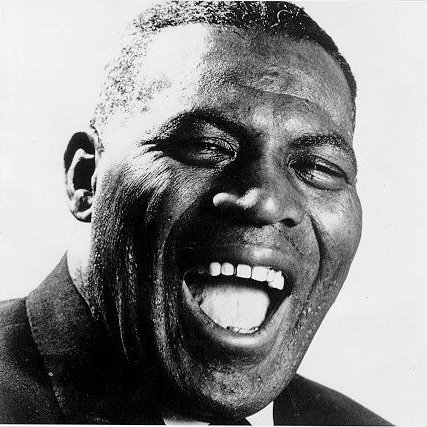
Howlin' Wolf-The Genuine Article (1995)


"Howlin’ Wolf ranks among the most electrifying performers in blues history, as well as one of its greatest characters. He was a ferocious, full-bodied singer whose gruff, rasping vocals embodied the blues at its most unbridled. A large man who stood more than six feet tall and weighed nearly 300 pounds, Howlin’ Wolf cut an imposing figure, which he utilized to maximum effect when performing. In the words of blues historian Bob Santelli, “Wolf acted out his most potent blues, becoming the living embodiment of its most powerful forces.” Howlin’ Wolf cut his greatest work in the Fifties for the Chicago-based Chess Records. Many songs with which he is most closely identified - “Spoonful,” “Back Door Man,” “Little Red Rooster” and “I Ain’t Superstitious” - were written for him by bluesmen , a fixture at Chess Records who also funneled material to Wolf’s main rival, . Howlin’ Wolf himself was an estimable songwriter, responsible for such raw classics as “Killing Floor,” “Smokestack Lightning” and “Moanin’ at Midnight.”

In 1910, Howlin’ Wolf was born on a Mississippi plantation in the midst of a blues tradition so vital it remains the underpinning for much of today’s popular music. His birth name was Chester Arthur Burnett; “Howlin’ Wolf” was a nickname he picked up in his youth. He was exposed to the blues from an early age through such performers as Charley Patton and Willie Brown, who performed at plantation picnics and juke joints. Wolf derived his trademark howl from the “blue yodel” of country singer , whom he admired. Although he sang the blues locally, it wasn’t until he moved to West Memphis in 1948 that he put together a full-time band. Producer recorded Howlin’ Wolf at his Memphis Recording Service (later Sun Records) after hearing him perform on radio station KWEM. Some of the material was leased to Chess Records, and in the early Fifties Howlin’ Wolf signed with Chess and moved to Chicago. He remained there until his death.

Howlin’ Wolf served to influence such blues-based rock musicians as and . In fact, he recorded a pair of albums - The London Howlin’ Wolf Sessions and London Revisited - with his British disciples in the early Seventies. Howlin’ Wolf’s distinctive vocal style and rough-hewn approach to the blues can also be heard in the work of such diverse artists as Captain Beefheart and His Magic Band and . Slowed down for much of the Seventies due to serious internal injuries suffered in an automobile accident, Howlin’ Wolf gave his last performance in Chicago in November 1975 with fellow blues titan B.B. King. He died of kidney failure two months later.”

That voice is really all you need. I mean, it's THE voice. The Wolf also took very good care of his band (paying them well, giving them health care-no joke) so all of the musicianship is top notch. They have this hypnotic quality to their playing and it is utterly orgasmic. I can't say enough things about the Howlin' Wolf and the band. So influential, so essential, pretty much what you expect when you think of electric blues. Insanely recommended.

I asked for water

Tuesday, December 1, 2009

Captain Beefheart & the Magic Band-It Comes To You In A Plain Brown Wrapper (1972/2008)


"The high-def vinyl, 2-LP set that is It Comes to You in a Plain Brown Wrapper was, in its original form, the blues-on-blues followup to Don Van Vliet and his mangy merrie men’s Safe as Milk debut. What it wound up as, in 1968, was the gutted-not-gutbucket Strictly Personal – a much despised item that got noodled and re-edited by Blue Thumb (Beef’s then label) to include cutesy psychedelic sound FX and other clichéd oddities.

Don’t get me wrong. As it stands, Strictly Personal is downright creepy. Not Trout Mask Replica odd/majestic; filled with mean gnarly blues and fragrant angled instrumentation (to say nothing of Beefheart’s Dada lyricism and crusty howl) it’s almost what the Captain ordered.

But what Beefheart really wanted as his second album was what fills the inside of this Sundazed package, featuring stunning cover art from Zappa/Straight Records house painter/collage maven Cal Schenkel. Here is the unadorned by echo-phase-outs and pop-psychedelic panning raw powered purity (if being swampy and skuzzy has that essence) of “Gimme Dat Harp Boy” and the menacing free “Beatle Bones ’n’ Smokin' Stones Pt. 1 & 2.” While the rangier of versions of “Safe as Milk” here outshine the Magic Band’s first crack at lyrics like “Yesterday’s paper headlines approach rain gutter teasing rusty cat sneezing/ Soppin wet hammer dusty and wheezing,” hearing Beefheart tear holes into the lustful “Big Black Baby Shoes” and a frightening “Trust Us” is worth the new price of admission."

If "Strictly Personal" sounds a little too tinny and flanged out to you, this is your calling. Fat and bluesy, it's everything I love about early Beefheart. And that harmonica playing! Goddamn. This serves as a pretty good introduction if you're uninitiated but it's not his best. But that doesn't really matter. I mean, it's Beefheart.Those of who who gobble this stuff up should know what to do.

Trust us

Sunday, October 11, 2009

Cecil Barfield-South Georgia Blues (1976/2009)


"
Ok, we aren't sure if this is the best blues album ever or the most ridiculous, it just depends on who you ask. When we first played it, some of us thought it couldn't be real, it had to be a parody. Perhaps someone making fun of how anyone can play the blues, because the singing sounds like complete mushmouth gibberish! Seriously, you and your pals can have a fun drinking game trying to figure out what the hell he's saying! But it's really no joke, Cecil Barfield (aka William Robertson, more on that in a minute...), one of the last surviving Southern Georgian bluesmen (according to the liner notes) was discovered in 1976 by George Mitchell, who was touring the state for field research in hopes of finding unknown ol' traditional rural bluesmen for a planned festival. One of the scant few left was Barfield, who to Mitchell's delight was previously unrecorded, living outside a tiny farm town on a meager disability check (in fact, the original lp was released under the name William Robertson, because Barfield was scared that he would lose his disability benefits if he released the record under his own name).
Born in 1922, he first started playing when he was just five years old, making his own
instruments by attaching a neck to a cooking oil can and tying a string to it. Learning music from what he could hear off records at parties, Barfield's style comes from what he calls "rag pieces", bits of popular tunes picked up from round dances and parties and often individually reworked according to the player. His moaning, wrenching vocal style lends a definite outsider quality to the performance, but supports the superstitious nature of some of the tunes, where he's singing about evil spells called "roots". He even refused to be photographed, because he feared anyone could turn the photo face down and kill him. But of course it's this oddball quality that we love in these records, and of course what makes them totally recommended in our book!"

This man has been infecting the very recesses of my mind. Haunting, beautiful blues music unlike any I've heard. Most definitely recommended.

Wowzas

Thursday, October 8, 2009

Califone-All My Friends Are Funeral Singers (2009)


"

My immediate reaction to All My Friends are Funeral Singers was that it was a step back from the increasingly frayed atmosphere of 2006’s Roots & Crowns. It came off much more like a stepping stone from the band’s Perishable Records era, a mid-point between Roomsound and Quicksand/Cradlesnakes. But then I kept listening. After three straight days of the Califone discography, an unquestionable observation was apparent: By Roomsound, Califone’s sound was fully realized. In eight years and five full-length records, the level of consistency and dedication to exploring that sound has been incredibly admirable.

That sound, of course, is an atypical blend of the pastoral and the clamorous. Appalachian folk, rustic blues-rock and somber country ballads tattered with feedbacking psychedelia and throbbing, dissonant electronic abstractions. It’s a strange world where the likes of Townes Van Zandt and Can live harmoniously.

“Giving Away the Bride” kicks the new album off with a rudimentary barrage of shakers, drum machine, deep synth gurgles and Califone’s typical kitchen-sink rhythm section. The song’s melody is left to Tim Rutili’s hushed vocals, a bucolic plea lost in a mess of electronic cacophony. The following track, “Polish Girls,” a more straight-ahead electric guitar-driven rock song, begins to shake off the less-acoustic materials. Unfortunately for fans of the more abstract side of the band, All My Friends progressively bends toward the rootsy. Except for a few awkward steel drum-laden interludes, there is a lot more violin and banjo than feedback and looped clatter.

“Alice Marble Gray” all but makes up for the album’s handful of indistinguishable songs. Built out of an all-too simple tom and snare-rim rhythm with a looped guitar melody overtop, Rutili’s nonsensical mumblings mingle sweetly with his own overdubbed coos. Undemanding synth effects amble in and out of the mix, while a muted horn section ushers out the song. It’s Califone at its finest: a pastoral countryside tinted with all the colors of the city.

All My Friends are Funeral Singers is a companion piece to a feature-length film of the same name also written and directed by Rutili. Many of the songs from the album were written in conjunction with the script, so that may be some of the reasoning behind the seemingly anachronistic sound in relation to Roots & Crowns. Regardless, it is another well-made and executed Califone album, and it stays completely true to their concept. Consistency is underrated."

I love this band. Tim Rutili's voice is like butter smothered all over my ears. If that sounds oddly sexual, I'm sorry. As mentioned, it's a soundtrack to a movie they made and by all indications, this movie will rule. Great "avant folk/blues" as they are commonly described, especially if you focus on the rhythm. They have failed to disappoint yet, even this being their third or fourth best album. Very highly recommended.

Also of note: All of you Chicagoland readers should pop by the Contemporary Art Museum either 10/10 or 10/11 as Califone will play the new album and screen their film as well. It's cheap for students with an ID. They're on a national tour doing this but I wanted to alert the (assumed) large Chicago contingent. I'm going Sunday and I hope many of you go too.

Funeral love

Thursday, September 17, 2009

Harvey Milk-The Singles (2006)


"Who would've though this would ever come to pass?! Those of you who love things slow and sludgy and heavy, should be on your knees, thanking whatever god you pray to, for allowing this divine musical covenant to be placed in your dirty, filthy unworthy hands!
Harvey Milk were Atlanta's answer to the Melvins, but slowed waaaaaaaay down and spaced waaaaaay out. Songs so spare but somehow so impossibly heavy, riffs so thick that they threaten to clog your speakers and rhythms so stretched out that they can barely be called rhythms. Add in a serious free jazz + ZZ Top obsession and you've got the recipe for one of the greatest, heaviest bands EVER. They recorded two brilliant full lengths (with their original lineup), one of which was re-issued on Andee's tUMULt label a couple years ago. And we thought then, sadly that we had heard the end of HM forever. But along comes Relapse to save the day, collecting all of Harvey Milk's impossibly rare 7"s and compilation tracks onto one black-hole-heavy chunk of aluminum. Most singles collections allow you to trace the development of a band, watching them slowly turn into the band you already know and love, but this collection proves that HM spontaneously combusted, emerging from their tarpit womb a fully formed, lumbering, molten, sludge rock colossus. From plodding, 3 mph sludgy, dirgey Melvins's worship, to chaotic noisy caveman thud, to Codeine-ish slow motion mood rock, to spare, rhythmic bass and drums space-scapes with demonic, anguished howls and Hendrix like riffs dipped in tar and sprinkled with wild peals of head-shearing feedback, to semi-acoustic tear jerkers, with warbly barely-in-key vocals, I mean, they even do a fucking Peter Criss solo song! How brilliant is that! Harvey Milk confounds as much as they just flat out destroy. How the fuck does a three piece rock band actually sound like they're playing on the wrong speed?! It's as if the entire band had a pitch control knob, and they keep turning it down and down and dooooown. And playing drums for this band must be utter hell. Massive expanses of space, demarcated by pounding beats, spread so far apart they just barely make up a rhythm, with enough space between beats for the drummer to get up, go to the bar, have a cigarette, and make it back in plenty of time for the next beat. So minimal and hypnotic and difficult and heavy, it just blows all other sludge rock hopefuls back to the stone age. And even in the context of a 'singles collection', songs that were never meant to be together on a record, this stuff falls so perfectly into place, you would never know this wasn't conceived as a proper record. Yet another testimony to the under-appreciated genius of the mighty Harvey Milk. Liner notes from AQ pal and Chunklet head honcho Henry Owings. Essential for those of you who love Boris, Corrupted, Earth, SUNNO))) and the like, as well as their massively head crushing opus Courtesy And Goodwill Towards Men!"


God what a fucking nasty band. I could go on forever. Everything from the bone crushing riffs to the earthquake bass rumble to the drum abuse that could split boulders to that fucking HOWL. Creston Spiers is easily one the most intense, heartfelt, honest vocalists in all of music. This band strikes one hell of a cord. You'd do well to get it.

Harry Owens from Chunklet deserves lifelong respect for being such an incessant Harvey Milk fanboy and getting all of these old unavailable 7" tracks together for mass consumption. Music fans are better off for it. A sincere thank you.

I do not know how to live my life

Tuesday, August 4, 2009

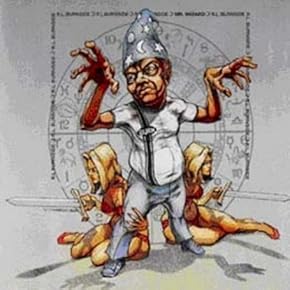
R.L. Burnside-Mr. Wizard (1997)


"On this release, R. L. bares all with his brazen, out-to-get-ya slide guitar and vocals. Compiled from various sessions from `94 to late `96, the intensity never stops pouring out of this man's soul. Mr. Wizard indeed, Mr. Burnside is a powerful entertainer and a seriously talented one as well. He goes back and forth from solo to group efforts here and seems not to really care what anyone thinks about the fury he conjures up during this or any other performance. Listening to this disc, you might just wonder if your speakers will take it! Leave it in the player regardless, as you won't be sorry. If you are the least bit squeamish about the Blues or if you think you should steer clear of any possible musical danger then buy some Lawrence Welk, if not then buy this CD! That's just what R. L. would want you to do. He's out to raise a ruckus and man, that's just what he always does.

A trend-setter and a purist of sorts all at the same time, he is and has been ready to whip you into a frenzy with his own brand of Delta Blues so when the Wizard comes to town, you better go and let him cast his spell on you. R. L. likes to travel and his touring schedule is incredible so there is a good chance you can check him out for yourself and see that I'm not exaggerating!

Kenny Brown is one of the main conspirators in this controlled mayhem and for that and his continual support of R. L., we salute him. He also plays a mean guitar. Cedric Jackson, R. L.'s grandson, is the drummer and a force all by himself while on some cuts Russell Simins does the honors quite well. Jon Spencer, of The Jon Spencer Blues Explosion is on guitar and theremin while Judah Bauer holds down the second guitar on two cuts. All of these musicians are powerful in their own right and likely candidates to accompany the likes of our Mr. Wizard."

Great jumping "punk blues" by one of the older northern Mississippi masters. All of you who like to get down to blues (read: Bob Log III, who was part of the touring band around the times of this release) need to get this! Awesome.

Love me some wizard


Sunday, July 5, 2009

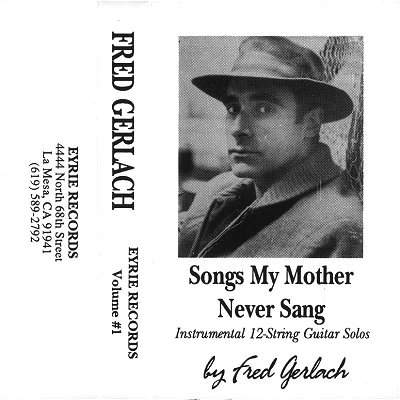
Fred Gerlach


"12 string guitar in the style of Huddie Ledbetter. Fred goes back to the era of the early 50's in New York city where he played and partied with the likes of Woody Guthrie, Pete Seeger, Big Bill Broonzy & Gary Davis. He drifted out to California in the late 50's, played San Diego coffee houses in those early days and eventually settled here. Fred has been a more or less regular at Adams Ave. Festivals where his virtuoso guitar playing never fails to amaze."

Awesome 12 string guitar playing. Essential for all youse folk fans. 2 albums.

Songs My Mother Never Sang

12 String Guitar


Wednesday, July 1, 2009

Zoltar's Playlist...Vol. II


1. Rafflesia-Boris and Michio Kurihara (A wall of blissed out sound)

2. Side B-Aluk Todolo (Kraut/Black madness...incredible drumming)

3. Saturday Night Rub-Big Bill Broonzy (Good ole fashioned ragtime with amazing melodies)

4. Cuttooth-Radiohead (Their best B-side in my opinion...those are some lyrics)

5. Soul Vibrations-Dorothy Ashby (Harp Jazz...why she's not more recognized, I'll never know)

6. Kassie Jones part II-Furry Lewis (Great blues for a hazy summer day...droney)

7. Lazy Comet-Polvo (Bad ass dissonant guitar work but very listenable indeed)

8. You're No Dub Baby-Niney the Observer (More dubbin' from Niney babeh)

9. Maui Wow Wow-Reeks and the Wrecks (funeral doom jazz, basement style? Who knows. But amazing)

10. I Love You-Spacemen 3 (psych masters...despite the lame drum machine, this song rules)

11. Content to Play Villain-Dalek (abrasive hip hop...blows my freaking mind)

12. As it Was-Melvins (perhaps my favorite Melvins song ever...but that's a tough one)

13. Dance of the Inhabitats of the Palace of King Phillip XIV of Spain-John Fahey (dude, that slide lick!)

14. Night of the Assassins-Les Rallizes Denudes (Japanese psych typhoon...must listen)

15. Dry the Rain-Beta Band (kinda out of place on here but just a damn good song)

16. The Stag Parts I & II-Mountainhood (very enjoyable psych folk)

17. Neon Lights-Kraftwerk (Man, they were so ahead of the curve it's not even funny)


Hope ya'll like this one...lemme know if any song catches your fancy and I'll toss ya the full link

Your leader awaits!

Wednesday, June 24, 2009

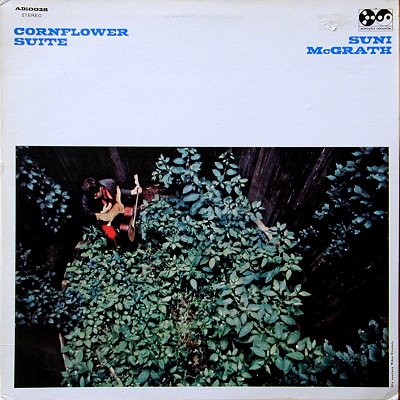
Suni Mcgrath-Cornflower Suite (1969)


From the sadly defunct Grown So Ugly blog....

"Biography of Suni McGrath . . .1956 Suni starts guitar, including lessons . . . 1960 Gives first performance at talent show, about 300 in audience As a pioneer of fingerpicking, he begins to create the fingerpicking style . . . 1961 One of the first 12 string solo artists, WYSO radio has Suni McGrath play his fingerpicked solo 12 string on radio at Antioch College where he becomes friends with Ian Buchanan and others at “the Bakery” . . . 1962 In Detroit, McGrath is asked by Detroit Folklore Society to give first concert on his 12 string Gibson. Many in 2005 still remember this . . . 1963, He takes lessons with Rev. Gary Davis and Mississippi John Hurt. A record scout. hears Suni McGrath at Newport, R.I. Festival where he came up from Greenwich Village his regular playing area, and signs him to first recording contract on the Piedmont label, Mississippi John Hurt’s label . . . 1965 Suni invents, far-out odd-time rhythms fingerpicking results in tape sent to Folkways Records . . . 1968 Suni McGrath, rediscovered by new and different label, taken to east coast to record first issued album . . . 1971 He records the earliest version of the Celtic/Irish/modal (he is Irish ! ) “The Star of County Down”, . . . 1972 Suni McGrath’s records fantastically reviewed in many magazines, newspapers, and played on many radio stations nationwide. Nominee for “Guitarist of the Year” for his three albums: Cornflower Suite, The Call of the Mourning Dove, and Childgrove . . . 2001 McGrath is shown to his surprise, to be on the WWW Internet,~27 entries, among others,WFMU radio in New York often and repeatedly plays his work including his 12 minute symphonic masterpiece, “Cornflower Suite”, the Renaisance/classical style “Love Abides”, also, the earliest version of the Celtic/Irish/modal “The Star of County Down”, and the world famous flower power ‘60s style piece:“On the Riverpath She Waited” . . . 2005 Suni McGrath’s track called “Train Z” gets great reviews from critics and magazines such as BILLBOARD and MoJo (England). His 45 rpm “Seven Stars” does also."

Absolutely fantastic guitar playing. Any Fahey/Basho/James Blackshaw fans surely need to hear this for all the great melodies and techniques. What a find this was for me. Some of the most fantastic folk music I've ever heard.

Cornflower Suite

Tuesday, June 23, 2009

Captain Beefheart & the Magic Band-The Mirror Man Sessions (1967/1971/1999)


"Originally, Captain Beefheart & the Magic Band's second album was intended to be a double-album set called "It Comes to You in a Plain Brown Wrapper." Although 1968's Strictly Personal has the same artwork that was mooted for the double album, it's a single disc. As part of the same post-Trout Mask Replica closet-cleaning that led to Buddah (the parent company of Blue Thumb Records, which released Strictly Personal) reissuing Safe As Milk as Dropout Boogie in the U.K. in 1970, the label released Mirror Man, the second disc that was intended for the Plain Brown Wrapper release. Recorded in November 1967 (an odd misprint on the sleeve claims it was recorded in 1965, when the band barely existed), the four lengthy tracks on Mirror Man are even more simplistic and primal than those on Strictly Personal. All four are worthwhile, but the key tracks are "Tarotplane Blues," a free-form jam in which Beefheart jumbles together the lyrics of at least half a dozen blues standards into a stream-of-consciousness ramble (adding musette and harmonica for good measure) as the Magic Band vamps on a slide guitar-based, two-chord groove for over 19 minutes, and the similarly expansive "Mirror Man," one of the key tracks of Beefheart's entire career. Probably the catchiest tune Beefheart ever wrote, "Mirror Man" has an almost funky, hip-swaying groove, and there's a playful lightness to the way Beefheart chants the simplistic lyrics that prefigures the flights of fancy on Trout Mask Replica and Lick My Decals off, Baby. The remaining two tracks, "25th Century Quaker" and "Kandy Korn," are less essential but interesting enough. The revitalized and properly spelled Buddha Records reissued an expanded version of this album in 1999 as The Mirror Man Sessions, adding five alternate takes of songs that later appeared on Strictly Personal. "

Beefheart's output between his debut "Safe as Milk" (probably my favorite album and available HERE courtesy of Alex over at Glowing Raw-RECOMMENDED) and the landmark insanity of Trout Mask Replica causes mass confusion. When "It Comes to You in a Brown Paper Bag" was scrapped by the label, many of the tracks disappeared while some ended up on the subsequent album "Strictly Personal," which feature strange phaser effects that Beefheart did not want and were added without his knowledge. Which brings us back the Mirror Man sessions. Essentially, all tracks are the original "Brown Paper Bag" takes before some of the songs ended up on "Strictly Personal."And let me tell you, it's that fat blues production you would totally want it to have and not the thin weak-kneed phased out junk in comparison. All you need to know is that these are some grooving weirdo blues like only Captain Beefheart himself can deliver. His backing band is amazing. Great fucking record.

Mirror Man!

Monday, June 22, 2009

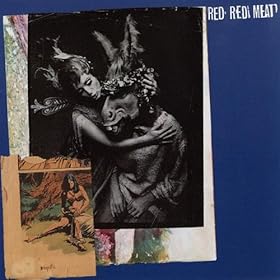
Red Red Meat-Jimmywine Majestic (1994)


"This Chicago, Illinois, USA-based quartet forged a healthy mix of lo-fi and blues rock over the space of a chaotic seven-year recording career during the 90s, in marked contrast to the alt pop direction of many of their contemporaries. Led from the beginning by vocalist/guitar player Tim Rutili, the band's roots lay in a previous Chicago-based outfit, Friends Of Betty. When the band's second drummer left, Rutili and the others (bass player Glynis Johnson, guitarist Glenn Girard, and drummer Ben Massarella) immediately launched Red Red Meat, in 1990. Although there was some line-up tweaking along the way, with Massarella replaced by Brian Deck, Red Red Meat quickly built a local buzz, which led to a recording contract with the hip indie label, Sub Pop Records. What should have been a happy time for the band was one of uncertainty, as Johnson was diagnosed with AIDS around this time, and died in 1992 (friends of the band, the Smashing Pumpkins, penned a tribute song, "Glynis', to Johnson a year later). Rutili decided to keep the band going, with Tim Hurley replacing Johnson in the line-up, as their self-titled debut followed the same year. Red Red Meat's follow-up, Jimmywine Majestic, proved that the band had studied their early 70s Rolling Stones albums thoroughly, and went on to be widely considered their finest recording. Massarella returned to the line-up and Neil Rosario replaced Girard. Two further releases followed during the mid- to late 90s, 1995's Bunny Gets Paid and 1997"s There's A Star Above The Manger Tonight, but neither succeeded in expanding their audience beyond a small but dedicated cult, and Red Red Meat quietly disbanded shortly after. Rutili concentrated on his own indie imprint, Perishable, and often guests/produces other artists for the label. He also began recording with a new band, Califone."

Great album by a very overlooked band. One of the Sub Pop bands that somehow never got the exposure or the credit they deserved...I'll post some Califone here too, I love these bands.

Drink that jimmywine

Thursday, April 9, 2009

Mississippi Fred McDowell


Probably my favorite blues musician. The music just has that feeling that you can't possibly ignore. The man's had style, that's for sure. One of the premier slide guitarists, McDowell was discovered in Como, MS by famed ethnomusicologist Alan Lomax in 1959. These songs are preserved on the First Recordings. McDowell cut his self-titled album in his home in 1962. This is the album for me. All of the songs begin slow before picking up speed as McDowell gets increasingly into each track. To put it bluntly, it's a joy to listen to. Words do not do it justice. Absolutely mandatory.

The First Recordings (1959)
Mississippi Fred McDowell (1962)

Sunday, March 22, 2009

Big Blood Falls For a Thousand Thousand Years


The last record with the Bleedin' Hearts got a good response so I figured I would post everything I have. The more I listen to them, and it's been a good year since I neglected them in any sort of way, the better it gets. These are CD-R home recordings of live setlists that the have used for shows since late 2006. Tunes range from completely psychedelic to spellbinding pastoral folk and everything in between. They're music is beyond words. This is a futile exercise. It stomps, strusts, runs, crawls, and stays stationary depending on the song. It's a soundtrack to life. Or maybe just my life.

Tell me of a band that covers Skip James and Can? That's right, there are none. Get this stuff. My favorite songs in parentheses.

Big Blood+The Grove ("The Grove is Hotter..." "In the Light of the Moon" "Low Gravity Blues)

Sew Your Wild Days Vol. I ("Adversaries & Enemies" "Spit Shine" "Wrinkles and Ribbons")

Sew Your Wild Days Vol. II ("Rodin Deadpan" "I'm So Glad" "Haystack AP"

Strange Maine 11/04/06 ("Under the Concourse" "Full of Smoke" "All Operations"

Strange Maine 01/20/07 ("The Fall of Quinnisa Rose" "Sovreignty You Bitch" "Indang Pariman")

Space Gallery 01/27/07 ("The Rise of Quinnisa Rose" "She Said Nothing" "Don't Trust the Ruin")


I got a couple other tidbits by them to upload actually but in the meantime, enjoy. Also, here are links to their main band Fire on Fire. HERE and HERE.

Thanks to Nitty Gritty too.

Thursday, March 19, 2009

Big Blood & The Bleeding Hearts-S/T

This band is so godly in so many ways. I'm afraid I know absolutely nothing about the Bleeding Hearts but I'll go about trying to explain the glory of Big Blood. Imagine a band of bizarre music loving people playing avant garde tunes for the better part of ten years. Imagine them going on hiatus before two of the members, a cute married couple with a child, emerge as a psych folk band with a whole range of influences and a keen ear for the most beautiful heartfelt melodies I've ever heard in music. Seriosuly. Colleen Kinsella has quite the interesting voice but it's so full of emotion. Caleb Mckulerin ain't a bad singer himself. Their bizarre influences, like Sun City Girls, blend perfectly with their traditional folk influences and plenty of smart banjo licks. Lots of people tell me this stuff is weird but if you want a hell of a listening experience at the very least, give this one a shot.

Not my link but I owe someone out there...

PLEASE CHECK IT OUT

Wednesday, February 18, 2009

Junior Kimbrough


From the somewhat underground North Mississippi blues area (like Mississippi Fred McDowell and R.L. Burnside), Kimbrough plays a very unique droning style with emphasis on the bass strings and dreamy melodic flourishes in between. The percussion is usually somewhat mid paced and considering how popular some of these bluesy garage rock bands have gotten, makes Kimbrough way ahead of the times even if he didn't put anything to tape until the 1990s. It's dark, gloomy, comforting, strange and peaceful in a way that only the blues can be.

The Black Keys did a whole EP of just his songs, Iggy Pop did a cover, etc etc. ESSENTIAL

I'll just put up the greatest hits for now, leave a comment if ya'll want more

Meet me in the city

Monday, February 16, 2009

Bob Log III


"

When Bob Log III was a child, he lost his left hand in a boating accident. It was soon replaced with a monkey paw, and a new guitar style was born.

"It's my own personal style, see," Log says, "the paw moves much quicker than a normal hand, so my real hand has to flop around a lot to compensate."

And what about the helmet?

"What helmet?" he asks, his voice muffled by a helmet.

Bob Log III is an enigma wrapped in a riddle and riding a wave of futile guessing and searching as people around the globe are trying to figure out just one thing. Who is this man? Rumours have started to circulate that he is anyone from Tom Waits to one of the Strokes.

"He's Bob Log, an enigma." a spokesperson told NME. "He's not one of The Strokes. None of them have monkey paws."

In the April 24-May 1 issue of Time Out London, Tom Waits is asked who he is listening to right now. He says, "Well, I really like Wu Tang Clan, those guys kill me. And then there's this guy named Bob Log, you ever heard of him? He's this little kid -- nobody ever knows how old he is -- wears a motorcycle helmet and he has a microphone inside of it and he puts the glass over the front so you can't see his face, and plays slide guitar. It's just the loudest strangest stuff you've ever heard. You don't understand one word he's saying. I like people who glue macaroni on to a piece of cardboard and paint it gold. That's what I aspire to basically."

The chances that his identity will be found in our lifetime are slim, but this one man, bass drum/slide guitar, band continues to mystify everyone who hears him play. As long as there are bars, Bob Log will be there ready to let a lady sit in his lap, or if they're lucky, allow them to slip a boob in his scotch."


That's the official bio. Dude is freaking hilarious and awesome. I put three of his albums together for all those times you need stomping shit drunk as shit music. Break out the whiskey for this.


Shit on my leg

Saturday, January 31, 2009

The Blues is the Roots...Everything Else is the Fruits Part II

I said I'd be back with some more sweet Blues albums and here I am. Nothing more to say except that these are all exceptional, transcendental and most certainly required.

Mississippi Fred McDowell-S/T

Recorded in his home three years after being discovered by Alan Lomax. He was ripped off by all the usual suspects (Page, Richards, etc.) but he always proclaimed "I do not play no rock and roll." I love his progressions and his focus on droning notes in the style of Northern Mississippi Blues. And who can argue with that slide playing? I'll post his sessions with Alan Lomax which are rawer and also has a lot of what sounds like kazoo playing some other time.

Robert Johnson-The Complete Recordings (Disc 1) (Disc 2)

Come on. Everyone's heard of this guy, he's like THE bluesman. While more research reveals the image he's so famous for is actually lifted from less famous bluesman, that doesn't make his an entirely too short career any less important to music as a whole. The man was terrifying in his delivery and his playing was among the best of the Delta musicians. Listen to him belt out "Sweet Home Chicago" and tell me I'm wrong. You're a fool if you don't want this.

Blind Lemon Jefferson-Best of Blind Lemon Jefferson

The man had quite an output before dying in a blizzard in Chicago but this is a great starting point. The originator of Texas Blues, BLJ was one of the few to get rich and famous in his heyday. His very indivdualistic and acute songwriting skills mirrors Skip James in a way and is very strange weaving in and out of different time signatures. At the same time, the music is quite different. By far one of my favorite bluesman.

Charley Patton-Pony Blues

Another one of the originators and recognized as "The Father of the Blues." He was an inspiration to most blues musicians (Robert Johnson first layed guitar at his home, Howlin' Wolf, John Lee Hooker) and one was one of the first to establish the showmanship image as a part of the genre. He was quite proficient and covered many times but this collection has 23 of his most well known songs.

Until next time...

Tuesday, December 30, 2008

The Blues is the Roots...Everything Else is the Fruits Part I

The weather is getting cold, I'm living in a ghost town, and life is feeling the need to repeatedly kick me in the teeth. What better way to deal with it all than to post some original sad bastard music? These are essential Blues recordings from the 1930s and 40s that you can sure as hell bet I'll post again. Because no wordiness can do these men justice, Ill critique in my typical fanboy style.

Son House-Library of Congress Sessions

Field recordings from 1941 and 1942. The so-called "Father of the Delta Blues" had an enormous influence on Robert Johnson and the like but of all the bluesman, Son House had the THE voice. There was so much power and anger behind it that it's impossible to ignore and, consequently, impossible to accurately describe. You feel the weight of his world when you listen to him.

Robert Petway-Catfish Blues: Mississippi Blues Vol. 3

Idolized by Jimi Hendrix and Muddy Waters, Petway was like many blues musicians who didn't become popular in the 60s Blues Revival but remained important. This collection has all of Petway's material with a few other respectable artists. His guitar playing is fantastic and while his singing is weaker than other popular bluesman, the guy knew what to do with an axe. His licks turn heads.

Mississippi John Hurt-Avalon Blues: The Complete 1928 Sessions

I don't even know how to describe this. It makes me feel really strange because it doesn't sound like he has the blues but something isn't quite right. His voice is this warm, soothing instrument in itself but there is a subtle sadness dripping from each word. The guitar playing is wonderful as well. I hate throwing a term like shoegaze at an old blues album but its what I feel like doing when I hear this. Quite hypnotic indeed.

From an older post...

Skip James-1931 Sessions

That weepy high voice makes my knees shake and sends a shiver down my spine each time. My personal favorite. Far more depressing than any of the others in my humble opinion. His guitar playing goes into some legitimate freak out sessions as far as Blues concerned. He's a great piano player as well but all I can stress is his voice, his voice, his voice...

Next up: Some Charley Patton (he's an original, I just don't feel like uploading all of it), Robert Johnson, Tommy Johnson, Furry Lewis, and moooooorrreeeeee